Porsche Brakes: Common Problems, Warning Signs, and Expert Repair in Golden, Colorado
EuroX Performance | Golden, Colorado
Porsche vehicles are built around performance, precision, and control—and the braking system is a major part of that experience. Whether you drive a Porsche 911, Cayenne, Macan, Panamera, Cayman, or Boxster, your brakes are engineered to deliver consistent stopping power under conditions that would put far less stress on an ordinary vehicle.
But Porsche brakes are not maintenance-free. Brake pads wear, rotors develop grooves or vibration, sensors fail, calipers can stick, and brake fluid deteriorates over time. Ignoring the early signs of Porsche brake problems can reduce braking performance, damage more expensive components, and turn a relatively straightforward brake service into a much larger repair.
At EuroX Performance in Golden, Colorado, we diagnose and repair Porsche braking systems for drivers throughout Golden, Arvada, Wheat Ridge, Evergreen, Lakewood, Colorado, and surrounding Front Range communities.
If your Porsche has started squeaking, vibrating, pulling while braking, showing a brake warning, or simply not stopping the way it used to, here is what you need to know.
Why Porsche Brake Systems Require Specialized Service
Porsche does not design its brakes like those on an average commuter vehicle. Even standard Porsche models are designed to handle higher speeds, greater braking forces, and more demanding driving conditions.
Depending on the model and options, a Porsche braking system may include:
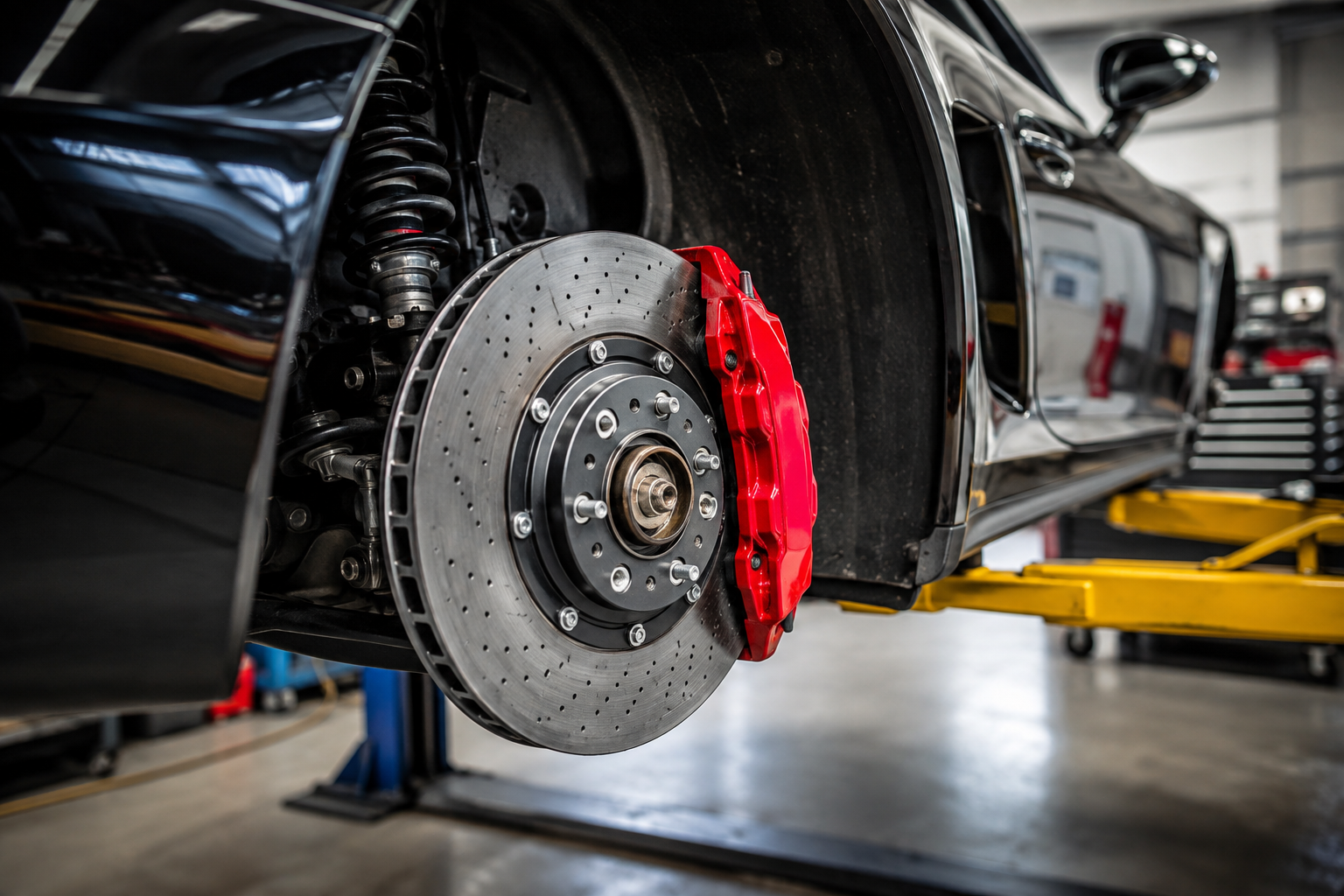
- Large multi-piston brake calipers
- Performance brake pads
- Ventilated or cross-drilled brake rotors
- Electronic brake pad wear sensors
- ABS and Porsche Stability Management integration
- Electronic parking brake systems
- High-performance brake fluid
- Porsche Ceramic Composite Brakes on certain models
These components work together as a system. That means proper Porsche brake repair requires more than simply replacing worn pads.
The technician needs to inspect pad thickness, rotor condition, caliper operation, brake hoses, brake fluid, electronic sensors, and related ABS components before determining exactly what the vehicle needs.
Porsche owners seeking specialized European automotive service can review the services available at EuroX Performance European Automotive Services.
Common Porsche Brake Problems
Porsche braking systems are durable when properly maintained, but several problems appear regularly as mileage increases.
Worn Porsche Brake Pads
Brake pads are among the most frequently replaced components in the braking system.
How quickly Porsche brake pads wear depends heavily on the vehicle, driving style, road conditions, and driving type.
A Porsche Cayenne driven primarily around town may experience different brake wear than a 911 regularly driven through mountain roads near Golden and Evergreen. Frequent braking, steep grades, aggressive driving, and stop-and-go traffic can all shorten brake pad life.
Common signs of worn Porsche brake pads include:
- Squealing or squeaking while braking
- Increased stopping distance
- Brake warning messages
- Reduced brake response
- Grinding when the pads become severely worn
Grinding should never be ignored. Once the friction material is gone, the backing plate can contact the brake rotor and quickly damage it.
Replacing pads before they reach this stage can prevent unnecessary rotor and caliper damage.
Porsche Brake Rotor Wear
Porsche rotors handle significant heat.
Every time you slow the vehicle, the braking system converts motion into heat through friction between the brake pads and rotors. Performance driving, mountain descents, repeated hard braking, and heavier vehicles such as the Cayenne can generate substantial temperatures.
Over time, rotors can develop:
- Excessive wear
- Grooves
- Heat spots
- Cracks
- Uneven surfaces
- Thickness variation
One of the most noticeable symptoms is vibration through the brake pedal or steering wheel during braking.
Drivers sometimes describe this as “warped rotors.” In reality, the vibration may result from rotor thickness variation or uneven brake pad material deposited across the rotor surface.
Either way, inspect the braking system rather than assuming the pads alone need replacement.
Porsche Brake Pad Warning Light
Many Porsche models use brake pad wear sensors.
When the brake pads reach a predetermined wear point, the sensor can trigger a dashboard warning telling the driver that brake service is needed.
Do not reset a Porsche brake warning without inspecting the system.
The warning may indicate worn brake pads, but technicians should also inspect:
- Brake pad sensors
- Sensor wiring
- Rotor condition
- Brake fluid level
- Caliper operation
- ABS-related faults
If the pads are replaced after the wear sensor activates, the sensor may also need replacement.
Proper diagnosis prevents situations where new brakes are installed, but the warning remains on the dashboard.
Porsche Brake Squeaking and Squealing
Not every brake squeak means the brakes have failed.
Performance brake systems can occasionally make more noise than conventional brakes, particularly when cold. Certain performance-oriented pad compounds are naturally more prone to producing noise at low speeds.
However, persistent squealing can also indicate:
- Worn brake pads
- Glazed pads
- Contaminated braking surfaces
- Improperly installed hardware
- Uneven pad contact
- Rotor wear
The important question is not simply whether the brakes make noise, but why.
A professional inspection can determine whether the sound is a normal characteristic of the brake system or evidence that maintenance is required.
Porsche Brake Vibration
If your steering wheel shakes or the brake pedal pulsates when you slow down, there is likely an issue in the braking or suspension system.
Possible causes include:
- Rotor thickness variation
- Uneven brake pad deposits
- Worn rotors
- Loose wheel hardware
- Worn suspension components
- Wheel bearing problems
Suspension problems can sometimes create symptoms that feel surprisingly similar to brake problems.
For example, worn control arm bushings or suspension components can cause movement during braking that a driver may initially interpret as a rotor problem.
This is one reason replacing parts based only on symptoms is a bad strategy. Inspect the vehicle before deciding what needs repair.
Sticking Porsche Brake Calipers
A sticking brake caliper is another issue that Porsche owners should take seriously.
The caliper must apply pressure evenly when the brake pedal is pressed and release properly when braking stops. If a piston or related component begins sticking, one brake may remain partially applied.
Possible symptoms include:
- Vehicle pulling while braking.
- One wheel becoming unusually hot.
- Burning smell after driving
- Uneven brake pad wear
- Reduced fuel economy
- Excessive brake dust on one wheel
- Premature rotor wear
A dragging brake can generate extreme heat and damage pads, rotors, seals, and other surrounding components.
If one wheel is noticeably hotter than the others after normal driving, inspect the braking system promptly.
Brake Fluid Matters More Than Many Porsche Owners Realize
Brake fluid is often overlooked because drivers tend to focus on pads and rotors.
Brake fluid is hygroscopic, meaning it absorbs moisture over time. As moisture accumulates, the fluid’s boiling point can decrease.
Under normal commuting conditions, drivers may not notice a difference right away. Under repeated braking, mountain driving, or performance conditions, degraded brake fluid can contribute to a softer or less consistent brake pedal.
Colorado driving makes this particularly important.
Drivers traveling between Golden and Evergreen or frequently using mountain roads can put considerably more thermal stress on their brakes than those driven exclusively on flat roads.
Brake fluid condition should therefore be part of regular Porsche maintenance, not something considered only after a braking problem appears.
Porsche ABS and Stability Control Problems
Modern Porsche braking systems integrate ABS and Porsche Stability Management.
A warning light may therefore indicate something beyond mechanical brake wear.
Possible problems include:
- Wheel speed sensors
- Damaged sensor wiring
- ABS module faults
- Low system voltage
- Brake pressure sensor problems
- Communication faults between control modules
These problems require diagnostic equipment that can communicate properly with Porsche electronic systems.
Replacing pads or sensors without scanning the vehicle can lead to unnecessary repairs while leaving the actual problem unresolved.
Porsche Cayenne Brake Problems
The Porsche Cayenne deserves special attention because of its size and weight.
Cayenne brakes work hard, particularly during mountain driving or frequent stop-and-go traffic. As mileage increases, owners may notice worn pads, rotor vibration, brake sensor warnings, or uneven wear.
Because the Cayenne is heavier than a 911 or Cayman, properly functioning calipers and rotors are especially important.
A dragging caliper or severely worn pad can quickly generate excessive heat.
Regular inspections let technicians spot uneven wear before it damages other braking components.
Porsche Macan Brakes
The Porsche Macan combines sports-car-inspired performance with compact SUV practicality.
That combination also means the brakes experience significant demands.
Macan owners should pay attention to:
- Brake squealing
- Brake warning messages
- Steering vibration while braking
- Changes in pedal feel
- Uneven brake dust
- Reduced braking response
Because many Macans are driven daily throughout Golden, Arvada, Wheat Ridge, and Lakewood, Colorado, brake wear can accumulate gradually. Drivers often become accustomed to small changes in pedal feel without realizing braking performance has deteriorated.
Routine inspections help catch these changes early.
Porsche 911 Brakes
The Porsche 911’s braking system is a defining part of the vehicle.
Precise brake modulation and strong stopping power are essential to the 911 driving experience. Even relatively minor brake or suspension problems can therefore be noticeable.
Owners should investigate changes such as:
- New vibration
- Pulling during braking
- Unusual pedal travel
- Grinding
- Persistent squeaking
- Brake warning messages
Performance-oriented 911s may also use specialized braking components that require correct service procedures and replacement parts.
Colorado Driving Can Be Hard on Porsche Brakes
Driving conditions around Golden, Colorado, can be demanding on braking systems.
Mountain roads, elevation changes, steep grades, winter conditions, road debris, temperature swings, and repeated braking all contribute to wear.
A Porsche driven from Lakewood through Golden and into the foothills toward Evergreen may experience very different brake demands than the same vehicle operating in a flat environment.
Descending long grades is particularly demanding because repeated braking creates heat.
Drivers should not ignore subtle changes in braking performance just because no warning light has appeared.
Mechanical wear can exist before the vehicle displays an electronic warning.
When Should Porsche Brakes Be Inspected?
No single mileage interval applies perfectly to every Porsche.
Brake wear depends on the vehicle and how it is driven.
Instead of relying solely on mileage, Porsche owners should watch for changes in braking behavior and have the brakes inspected during routine maintenance.
Schedule an inspection if you notice:
- Brake warning light
- Grinding
- Persistent squealing
- Steering wheel vibration
- Brake pedal pulsation
- Soft brake pedal
- Vehicle pulling during braking.
- Burning smell near a wheel
- Increased stopping distance
- Uneven brake dust
Early diagnosis usually provides more repair options and can help prevent damage to expensive components.
Why Quality Porsche Brake Parts Matter
Porsche braking systems are engineered around specific friction, heat, and performance characteristics.
Low-quality replacement components can affect:
- Brake feel
- Noise
- Stopping performance
- Rotor wear
- Brake dust
- Component longevity
The cheapest brake pad is rarely the best choice for a Porsche.
Replacement components should match the vehicle, braking system, and intended driving conditions.
For drivers who use their Porsche primarily on the street, the ideal setup may differ from what a vehicle used for spirited canyon driving or track events needs.
Porsche Brake Repair in Golden, Colorado
When your Porsche’s braking changes, accurate diagnosis matters.
At EuroX Performance, we work with European vehicles and understand the specialized systems found in Porsche models. Instead of automatically replacing parts based on a warning light or noise, we evaluate the braking system as a complete system.
That can include inspecting:
- Brake pads
- Rotors
- Calipers
- Brake hoses
- Brake fluid
- Wear sensors
- ABS components
- Wheel speed sensors
- Related suspension components
Finding the actual cause prevents unnecessary repairs and helps restore the braking performance Porsche engineered into the vehicle.
Porsche Brake Service for Golden, Arvada, Wheat Ridge, Evergreen & Lakewood
If you own a Porsche in Golden, Colorado, Arvada, Wheat Ridge, Evergreen, Lakewood, Colorado, or the surrounding Denver area, treat brake maintenance as an important part of protecting both the vehicle and its performance.
A Porsche should feel controlled and predictable every time you press the brake pedal.
Grinding, vibration, warning lights, pulling, excessive brake dust, unusual pedal feel, or persistent squealing are all reasons to have the system inspected.
EuroX Performance in Golden, Colorado specializes in European automotive repair, including Porsche maintenance, diagnostics, suspension work, and brake service.
Do not wait until worn pads damage expensive rotors or a sticking caliper overheats the entire brake assembly.
Schedule your Porsche brake inspection with EuroX Performance and have the system diagnosed correctly before a small problem becomes an expensive repair.
EuroX Performance
15985 S Golden Rd Unit F, Golden, CO 80401
Phone: 303-562-1800
If you’re in Golden, Arvada, Wheat Ridge, Lakewood, or Evergreen, and your Porsche needs attention, bring it to a shop that understands these engines inside and out.
👉 Schedule service or diagnostics:
https://euroxperformance.com/
Schedule professional diagnostics and fix the issue correctly — the first time.
European engines demand precision. Get it serviced by specialists who understand them.
👉 Schedule service with EuroX Performance in Golden, Colorado
https://euroxperformance.com/services/
EuroX Performance in Golden, Colorado, is here to help keep your BMW, Audi, Mercedes-Benz, Volkswagen, Porsche, or MINI running at the temperature it was engineered for.
Schedule expert diagnostics with EuroX Performance in Golden, Colorado, proudly serving drivers in Arvada, Wheat Ridge, and Lakewood.
View all European automotive services offered by EuroX Performance here:
👉 https://euroxperformance.com/services/
FAQs
Q:How often should Porsche brakes be replaced?
A:There is no fixed replacement interval for Porsche brakes because wear depends on the model, driving habits, road conditions, and driving environment. Mountain driving around Golden, Colorado and Evergreen can increase brake wear due to frequent braking and steep grades. Regular inspections can determine when Porsche brake pads or rotors actually need replacement.
Q:Why are my Porsche brakes squeaking?
A: Porsche brakes can squeak because of worn brake pads, glazed friction surfaces, brake dust, rotor wear, or the characteristics of performance brake compounds. Occasional noise does not always indicate a problem, but persistent or worsening squeaking should be inspected, especially if accompanied by vibration or reduced braking performance.
Q:Why does my Porsche shake when braking?
A:A Porsche that vibrates or shakes during braking may have rotor thickness variation, uneven brake pad deposits, worn rotors, or a suspension-related problem. If you feel vibration through the steering wheel or brake pedal, a professional brake inspection can identify the actual cause before additional components are damaged.
At EuroX Performance, serving Golden CO, Wheat Ridge CO, Arvada and Westminster CO, we use mechanical gauges and diagnostic scanners to pinpoint the exact cause. We never guess or replace parts blindly.
If you noticed any of the signs that might indicate your European car needs attention, don’t wait. Call EuroX Performance at (303) 719-8888 or schedule an appointment online at www.euroxperformance.com. We’ll get your Audi, Mercedes, BMW or European vehicle back to running like new.
🛠️ Ready for Diagnostic?
Please don’t wait for a warning light to tell you it’s time. Keep your European engine running like new, book your following diagnostic with EuroX Performance today.
👉 Schedule Service | 🚘 Performance You Can Feel