Table of Contents
- Why Generic Diagnostics Fall Short for European Vehicles
- The Real Cost of Misdiagnosis on Your European Import
- What Sets Dealer-Level Diagnostics Apart
- Our Diagnostic Technology and Capabilities
- How We Use Advanced Diagnostics to Prevent Costly Repairs
- Performance Tuning and ECU Diagnostics
- Hybrid and EV Diagnostic Expertise
- The EuroX Difference: Veteran-Owned Precision
- When to Seek Dealer-Level Diagnostics for Your Vehicle
- Common European Vehicle Issues We Diagnose and Resolve
- Your Next Step: Schedule Your Diagnostic Service
Why Generic Diagnostics Fall Short for European Vehicles
European vehicles demand a different approach to diagnostics. A BMW M440i isn’t serviced the same way as a Ford F-150, and a quick scan at a generic repair shop won’t catch the nuanced issues that plague high-performance European imports. That’s where dealer-level diagnostics make the real difference. We’ve built our Golden, Colorado shop around precision diagnostic technology and deep European vehicle expertise because your car deserves more than surface-level troubleshooting.
Most independent shops rely on basic OBD-II scanners that read generic fault codes. These tools work fine for simple problems, but European vehicles operate on proprietary systems that generic equipment simply can’t access. Porsche, BMW, Audi, and Mercedes-Benz have manufacturer-specific diagnostic protocols, adaptive learning systems, and integrated modules that communicate in ways standard scanners don’t understand.
Consider a scenario: Your Porsche throws a check engine light. A generic scanner might read “oxygen sensor fault” and recommend replacement. But what if the real issue is a fuel injector running rich, throwing off your oxygen sensor readings? Or a failing mass airflow sensor upstream? Without dealer-level access to live data, freeze frame information, and manufacturer-specific parameters, a technician is guessing. European vehicles integrate hundreds of sensors and modules that talk to each other constantly. Missing one piece of that conversation leads to misdiagnosis and wasted money.
We use manufacturer-grade diagnostic interfaces that connect directly to your vehicle’s entire network, not just the engine control unit. This gives us visibility into transmission logic, suspension systems, infotainment modules, safety systems, and climate control networks. That comprehensive view prevents the costly guessing game.
The Real Cost of Misdiagnosis on Your European Import
A misdiagnosis on a European vehicle doesn’t just cost you one repair. It costs you time, frustration, and often multiple repair attempts at different shops before the real problem surfaces.
Let’s say your Audi A6 is running rough. A shop without proper diagnostics replaces spark plugs and fuel injectors (two grand). The roughness remains. You take it elsewhere, and they suggest the transmission control module needs software updates (another fifteen hundred). Still rough. Finally, you arrive at us, and within an hour our diagnostics reveal a failing camshaft sensor sending conflicting data to the engine management system. A three-hundred-dollar part and recalibration solve it.
European vehicles often hide root causes beneath layers of secondary symptoms. A failing alternator might trigger battery voltage warnings, which trigger fuel delivery adjustments, which trigger oxygen sensor faults. Without tracing the actual source, you chase symptoms instead of solving problems. On a luxury import, that chase costs serious money fast.
Beyond the financial impact, misdiagnosis delays you getting back on the road. Performance enthusiasts and daily drivers alike need reliable vehicles. Wrong repairs extend downtime and erode trust in service providers. We’ve seen owners spend thousands on unnecessary work at shops without proper European diagnostic capability.
What Sets Dealer-Level Diagnostics Apart
Dealer-level diagnostics differ from standard shop scanning in depth, precision, and manufacturer access. Here’s what separates the tiers:
Generic shop scanners read basic fault codes and live engine data. Dealer-level systems access manufacturer-specific modules, read advanced parameters, perform component tests, reprogram modules, and extract detailed historical data. We can access systems that consumer-grade equipment doesn’t even know exist on your vehicle.
Manufacturer specifications matter enormously. When we scan your BMW, we’re not just looking at whether a sensor is “reading high” or “reading low.” We’re comparing its output against BMW’s exact specifications for your specific engine, model year, and market variant. A reading that looks acceptable on a generic scanner might fall outside BMW’s tolerance window and indicate an upcoming failure.
We also read and clear manufacturer-specific codes. European vehicles generate codes that don’t show up on consumer scanners because they’re manufacturer-proprietary. Our equipment speaks the native language of each brand we service.
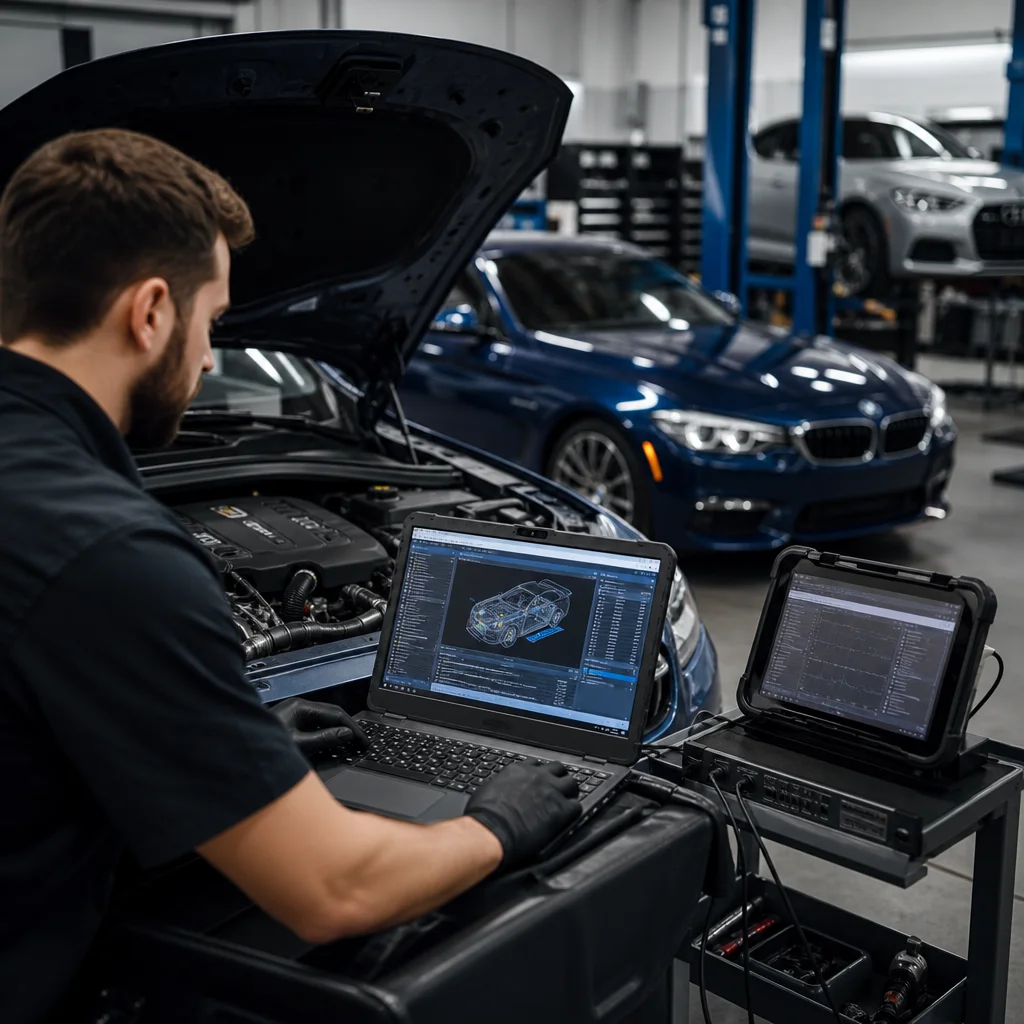
Additionally, dealer-level diagnostics enable reprogramming and recalibration. Modern vehicles aren’t just mechanical anymore. They’re computers that happen to have wheels. If your transmission control module needs recalibration after repairs, or your engine management software needs a manufacturer update, we can do that in-house with dealer-level hardware and software access. Most independent shops can’t.
Our Diagnostic Technology and Capabilities
We operate with the same diagnostic platforms that European dealerships use, giving us equivalent technical capability and manufacturer database access. Our diagnostic suite includes manufacturer-specific software for BMW, Porsche, Audi, Mercedes-Benz, Volkswagen, and other European brands, plus universal diagnostic hardware that supports multi-brand scanning.
Our technicians can perform live data streaming across all vehicle systems, read and clear manufacturer-specific fault codes, access hidden modules and subsystems, perform component activation tests, conduct module reprogramming, retrieve detailed freeze frame data, and generate comprehensive diagnostic reports. This isn’t a quick scan and guess. It’s methodical electronic investigation that leaves no system overlooked.
We also maintain current manufacturer software updates and technical bulletins. European automakers release regular updates addressing known issues, service bulletins highlighting common problems, and recalls requiring specific diagnostic steps. We stay current with all of it. Your vehicle benefits from decades of manufacturer experience and documented fixes.
Beyond scanning capability, our technicians have hands-on experience with thousands of European vehicles. That experience teaches us which sensors fail first on certain models, which software quirks create false readings, and which intermittent issues require specific diagnostic procedures. Technical knowledge plus proper equipment equals accurate diagnosis.
How We Use Advanced Diagnostics to Prevent Costly Repairs
Preventive diagnostics is one of our core strengths. Rather than waiting for a fault code to appear, we use advanced diagnostics to spot degrading components before they fail.
Suppose you bring in your Porsche 911 for routine maintenance. Beyond standard oil and filter service, we can run a comprehensive diagnostic baseline. This scan captures current readings from your oxygen sensors, fuel injectors, ignition coils, cooling system sensors, and hundreds of other parameters. We document what healthy looks like for your specific vehicle.
On your next service six months later, we run the same diagnostic scan and compare results. If oxygen sensor output has drifted ten percent, or if an ignition coil is showing early wear patterns, or if your transmission fluid temperatures are creeping higher than normal, we catch it. You address the issue before it cascades into bigger problems.
This approach saves money because replacing one component preventively costs far less than replacing that component plus the damage it causes when it finally fails. A degrading ignition coil that you replace at our recommendation costs five hundred dollars. That same coil failing on the road and causing cylinder misfires that destroy your catalytic converter costs three thousand.
We recommend preventive diagnostics annually for high-mileage European vehicles, or more frequently if you track your car or run aggressive tuning. The diagnostic fee is modest compared to the expensive repairs it helps you avoid.
Performance Tuning and ECU Diagnostics
Performance tuning requires sophisticated ECU diagnostics. We’re not just uploading a generic tune file and calling it done. Our ECU remapping process begins with detailed diagnostics that read your engine’s current state, fuel delivery patterns, ignition timing, boost levels, and adaptation data.
From there, we customize tuning around your specific engine’s characteristics. Two BMW M440i engines might require slightly different tuning parameters based on manufacturing variations, mileage, fuel system condition, and turbo condition. Proper diagnostics ensure your tune is optimized for your particular engine, not a one-size-fits-all approach.
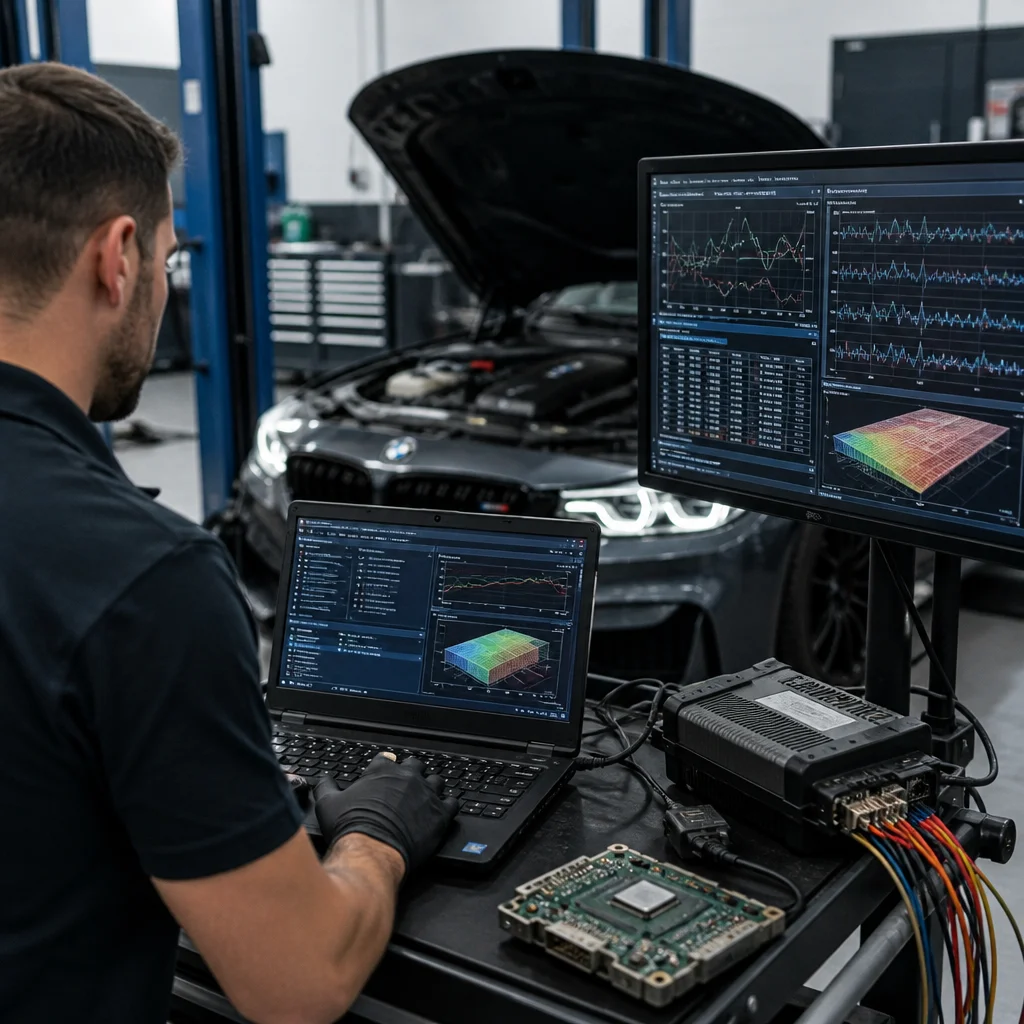
ECU diagnostics also reveal what your engine can safely handle. We assess boost threshold limits, fuel injector headroom, transmission torque handling capacity, and cooling system adequacy. This determines realistic power increase targets. Some vehicles can safely handle twenty percent horsepower gains. Others top out at ten percent before reliability suffers. Diagnostics tell us where your engine stands.
Post-tune diagnostics ensure everything still operates within specification. We monitor knock detection, fuel trims, boost accuracy, and temperature control. If anything drifts outside acceptable parameters, we adjust the tune accordingly. This keeps your vehicle reliable while maximizing performance.
Hybrid and EV Diagnostic Expertise
Hybrid and electric vehicles introduce completely new diagnostic complexity. These powertrains involve high-voltage battery systems, regenerative braking networks, thermal management computers, and intricate power distribution logic that conventional diagnostic approaches don’t address.
We maintain specialized diagnostic equipment for hybrid and EV systems. We can assess battery state of health, monitor cell balancing, test high-voltage contactors and relays, diagnose regenerative braking issues, evaluate thermal management systems, and reprogram hybrid-specific control modules.
A hybrid BMW X5 with a check engine light might be experiencing any number of issues specific to its dual-power architecture. Generic diagnostics can’t untangle that complexity. We identify whether the fault originates in the high-voltage battery system, the regenerative braking network, the power split device, or the traditional combustion engine side.
As European automakers push deeper into electrification, we’ve invested in the diagnostic capability to support modern hybrid and electric vehicles. Your next European import, whether it’s hybrid or full EV, will receive the same precision diagnostic attention we give to conventional powertrains.
The EuroX Difference: Veteran-Owned Precision
We operate as a veteran-owned shop with a commitment to precision that extends beyond just having the right equipment. Our founder and lead technicians bring military background into their approach. That means attention to detail, systematic process, reliability under pressure, and accountability for results.
We don’t cut corners on diagnostics to save time. If a thorough investigation takes three hours instead of one, we perform the thorough investigation. That precision mentality, combined with dealer-level capability, means you get accurate answers the first time.
We’re also transparent about what we find. Diagnostic reports include clear explanation of findings, what they mean, what repairs we recommend, and why. You understand not just what’s wrong, but why fixing it matters for your vehicle’s reliability and longevity.
Our veteran background also means we understand quality, reliability, and standing behind our work. Your European vehicle deserves that level of commitment.
When to Seek Dealer-Level Diagnostics for Your Vehicle
Several situations warrant dealer-level diagnostics rather than generic shop scanning:
Check engine lights on European vehicles almost always warrant dealer-level investigation. A simple scan might read “oxygen sensor fault,” but that’s often a symptom, not the cause. Dealer-level diagnostics identify the root issue.
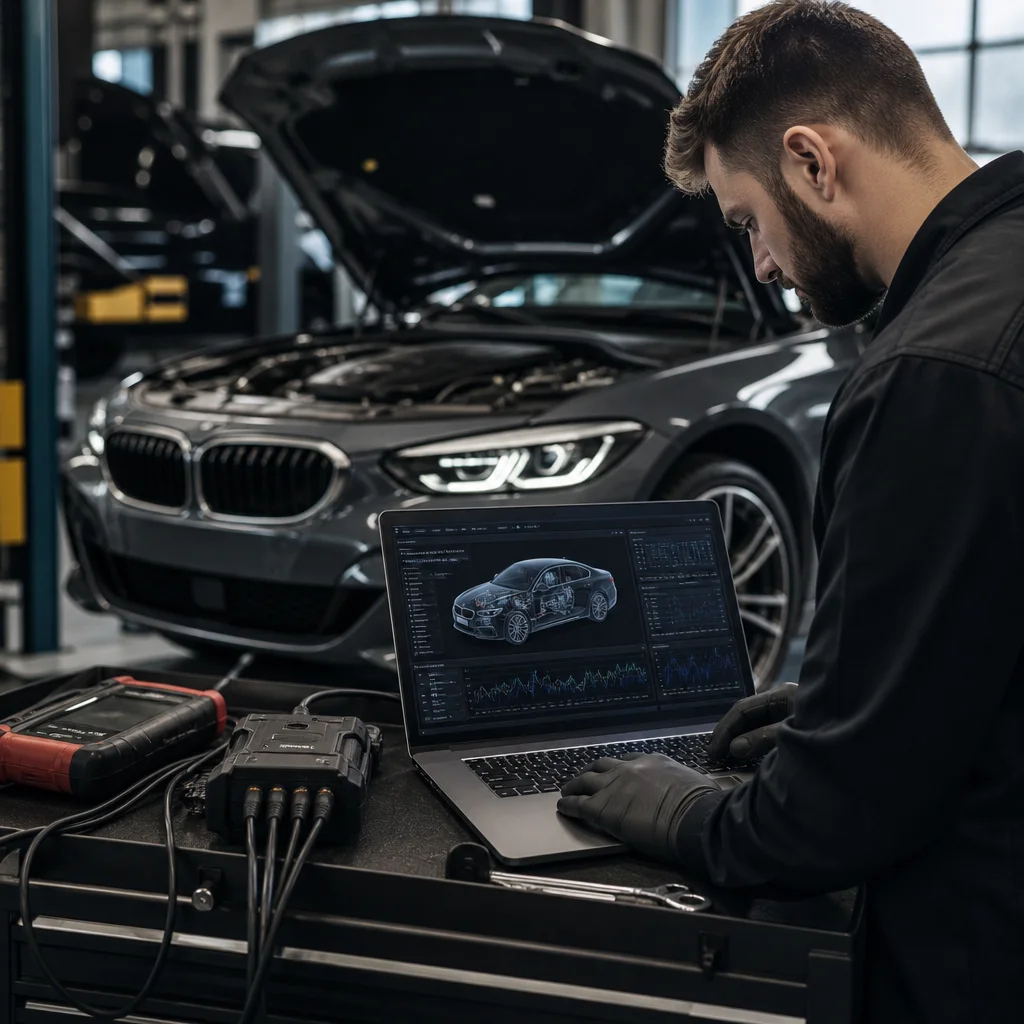
Performance problems like rough idle, hesitation, or lack of power deserve precision diagnostics. These symptoms typically involve multiple interacting systems, and generic scanning won’t identify all the contributors.
Intermittent issues are prime diagnostic territory. Your vehicle runs fine most of the time but occasionally stumbles. Generic equipment often can’t capture intermittent faults. Dealer-level hardware and software can log detailed data over extended periods, catching gremlins that occasional scanning misses.
If you’re considering performance modifications, diagnostics should precede the work. We assess your engine’s current state and determine what modifications it can safely support.
Finally, after major repairs, dealer-level post-diagnostic verification ensures everything still operates correctly. A transmission rebuild or engine work should be verified by precision diagnostics confirming all systems adapted properly to the changes.
Common European Vehicle Issues We Diagnose and Resolve
We regularly diagnose and resolve issues specific to European vehicles:
Fuel delivery problems plague many BMWs and Audis, from failing fuel injectors to inadequate fuel pump pressure. Diagnostics pinpoint whether the issue originates in the fuel pump, injectors, fuel pressure regulator, or fuel system control module.
Transmission issues in PDK and ZF automatic gearboxes require manufacturer-specific diagnostics to identify whether problems stem from valve body wear, torque converter degradation, control module adaptation issues, or sensor failures. Audi RS5 diagnostics reveal similar patterns across the Audi lineup.
Cooling system failures in high-performance engines often involve thermostat logic, cooling fan control, or water pump operation. Diagnostics confirm which component is misbehaving and whether the issue is mechanical or electronic.
Carbon buildup on direct injection valves causes hesitation and rough operation, especially in BMW, Porsche, and Audi models. We diagnose whether fuel additives and cleaning might resolve it, or whether physical valve cleaning becomes necessary.
Check engine light service addresses faults across all these systems. Rather than guessing, we diagnose.
Your Next Step: Schedule Your Diagnostic Service
Your European vehicle performs best when supported by precision diagnostics. Whether you’re experiencing a specific problem, considering performance modifications, or simply want a preventive health assessment, we provide dealer-level diagnostic capability right here in Golden, Colorado.
Contact us to schedule your diagnostic service. We’ll connect your vehicle to our dealer-grade equipment, perform comprehensive investigation, and provide you with clear answers about what’s happening under the hood. You’ll understand your vehicle’s condition and what repairs or modifications truly serve your needs.
Precision diagnostics is how we support European vehicle ownership. Let’s get started.