Table of Contents
- Why European Vehicle Owners Are Vulnerable to Bad ECU Tuning
- The Real Consequences of Improper ECU Remapping on High-Performance Engines
- Red Flag #1: Tuners Without Manufacturer-Specific Expertise
- Red Flag #2: Generic Tuning Maps Instead of Custom Solutions
- Red Flag #3: Inadequate Diagnostic Technology and Testing Protocols
- Red Flag #4: Ignoring OEM Specifications and Component Limitations
- Red Flag #5: Rushing the Tuning Process Without Proper Verification
- Why We Approach ECU Tuning Differently at EuroX Performance
- How Our Dealer-Level Diagnostics Protect Your Investment
- The Right Way to Verify Safe and Effective Performance Gains
- Taking the Next Step: Getting Your European Car Tuned Safely
Why European Vehicle Owners Are Vulnerable to Bad ECU Tuning
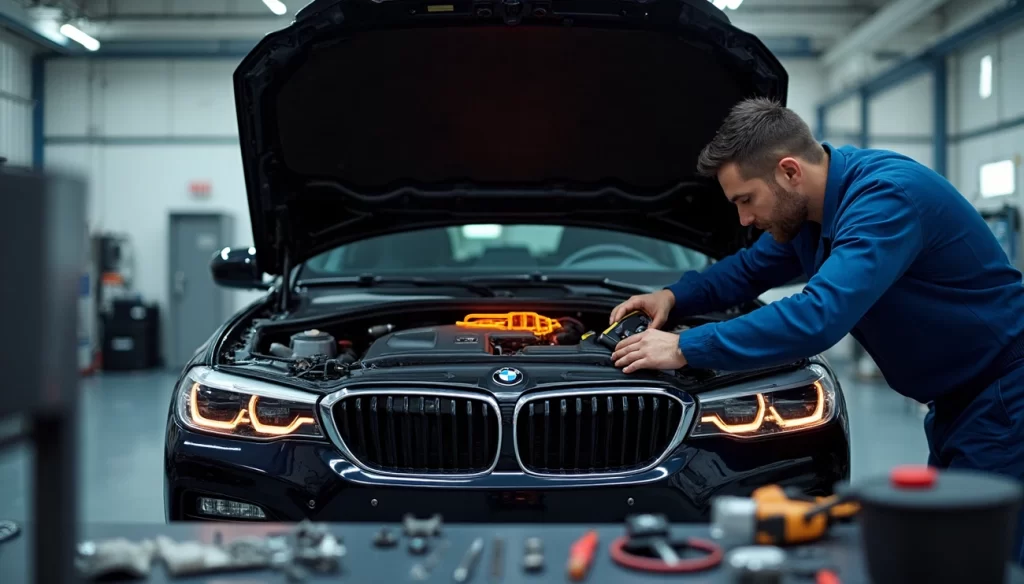
ECU tuning promises real performance gains, but it also carries real risks. The difference between a successful tune and an expensive repair often comes down to who’s holding the keyboard when your engine’s computer gets reprogrammed. We’ve seen both outcomes at our Golden, CO shop, and the distinction is stark.
European performance vehicles are precision instruments. A BMW M440i, Porsche 911, or Audi S4 represents years of engineering refinement, with OEM calibrations built on thousands of hours of testing across extreme conditions. Yet ECU tuning exists in a less regulated space than engine building or transmission work, attracting operators with varying levels of expertise.
The vulnerability intensifies because ECU remapping changes the fundamental behavior of your engine in ways that aren’t immediately visible. A poor tune might produce impressive dyno numbers for a day, then trigger catastrophic damage months later when operating conditions align in an unexpected way. By then, the tuner who modified your car is often unreachable or unaccountable.
European car owners face an additional challenge: these vehicles are more sensitive to improper calibration than mass-market domestic cars. Their turbos run higher boost pressures, their fuel systems operate at tighter tolerances, and their transmission software coordinates more precisely with engine output. This means mistakes hit harder and faster.
Actionable step: Before considering any ECU work, verify that your potential tuner has factory-level diagnostics and multi-year experience specifically with your vehicle’s platform and model year.
The Real Consequences of Improper ECU Remapping on High-Performance Engines
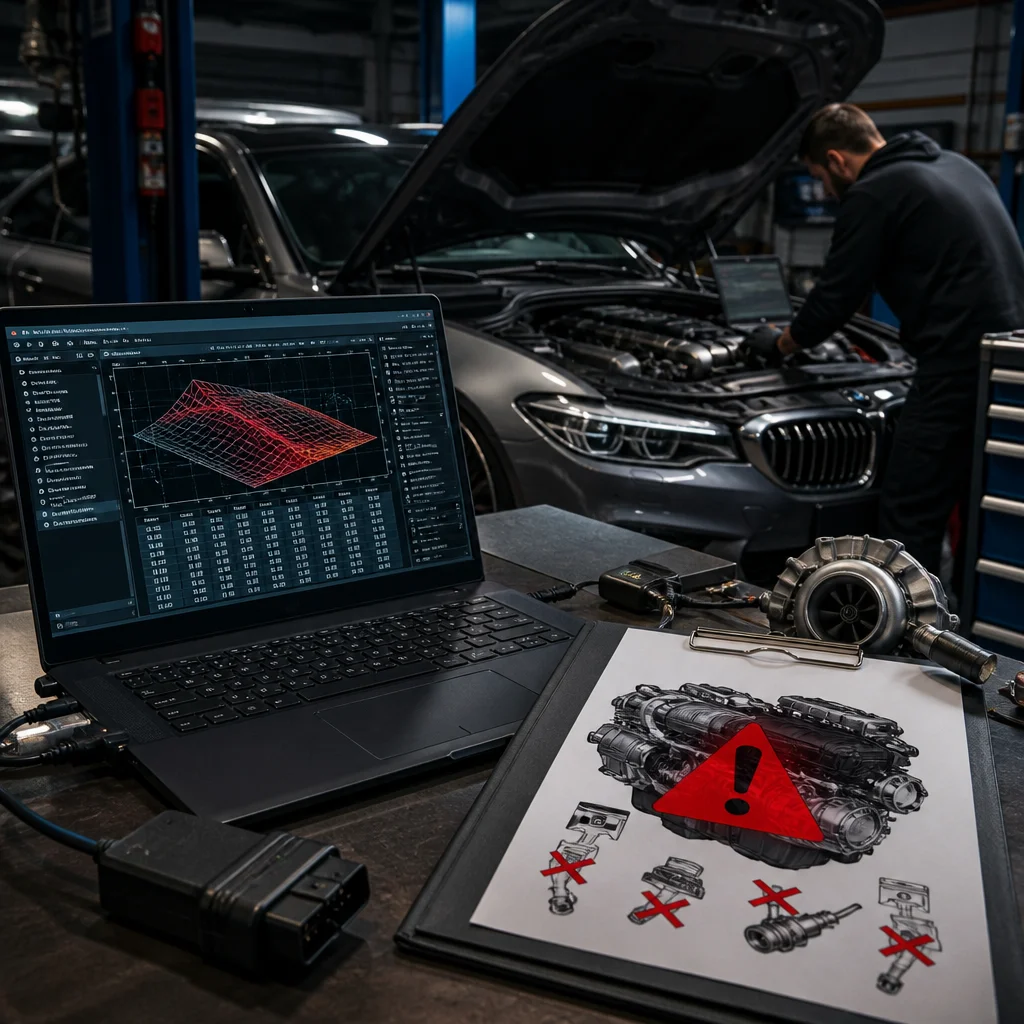
Bad ECU tuning doesn’t always announce itself with warning lights. Sometimes damage unfolds gradually: fuel trims drift out of range, injector spray patterns shift, combustion temperatures creep higher than designed tolerances. By the time symptoms appear, the harm is already done.
Common outcomes include:
- Catastrophic engine knock and detonation, leading to piston and rod damage
- Turbocharger seal failure from excessive boost pressure
- Transmission fluid breakdown and internal clutch erosion
- Fuel system degradation and injector coking
- Catalyst overheating and substrate collapse
- Valve float and timing chain slack from over-aggressive lift profiles
The financial impact is severe. A single engine rebuild on a high-end European vehicle can cost 8,000 to 15,000 dollars or more. Turbocharger replacement alone runs 3,000 to 6,000 dollars. These aren’t hypothetical figures; we handle the repairs regularly.
Perhaps most frustrating: many manufacturers will deny warranty coverage if they detect unauthorized ECU modification, even if the tune wasn’t responsible for the specific failure. You assume total liability the moment a tuner flashes your car.
Red Flag #1: Tuners Without Manufacturer-Specific Expertise
Generic tuning shops often work from a toolkit of maps they’ve collected or purchased, applying variations based on intake and exhaust modifications rather than deep platform knowledge. This approach might work for a naturally aspirated Honda Civic, but it’s dangerously inadequate for European turbocharged engines.
Legitimate tuners invest years learning how BMW’s VANOS variable timing interacts with turbo strategy, or how Porsche’s direct injection system requires calibration around fuel quality variations. They understand why Audi’s seven-speed transmissions need specific shift logic adjustments to prevent mechatronic issues.
Red flags include:
- Tuners who work equally on Japanese, American, and European vehicles without specialization
- Shops that can’t explain how their specific tune addresses your platform’s engineering
- Claims of identical performance gains across different model years (which have different calibrations)
- References primarily from owners of budget performance cars rather than high-end European vehicles
Ask your tuner to walk you through how they adapted their tune for your specific engine code, transmission, and model year. If the answer is vague or generic, keep looking.
Red Flag #2: Generic Tuning Maps Instead of Custom Solutions
Off-the-shelf performance maps represent thousands of dollars in development cost, and tuners feel pressure to recoup that investment by applying them broadly. But “custom tuning” isn’t just marketing language; it describes a fundamentally different process.
Custom calibration means measuring your specific vehicle’s characteristics: ambient temperature, altitude (critical in Golden), fuel quality assumptions, intake air temperature behavior, and real-time engine response. A tuner then adjusts boost curve, fuel timing, and ignition advance based on what your engine actually does, not what an average engine in a database does.
Generic maps ignore variables that matter enormously for European vehicles. A 50-state emissions ECU tune differs significantly from a European-spec calibration, yet a tuner applying one map across both versions is cutting corners. Altitude changes boost behavior; Golden sits at 5,280 feet, which affects air density and combustion characteristics differently than sea-level tuning would.
The difference shows up in reliability. Custom tunes account for component wear, fuel quality variance, and individual engine tolerance stack-up. Generic tunes rely on statistical margins that don’t account for your specific car’s history and condition.
Next step: Request that your tuner explain how they’re customizing the calibration for your vehicle’s specifications, not just its engine size.
Red Flag #3: Inadequate Diagnostic Technology and Testing Protocols
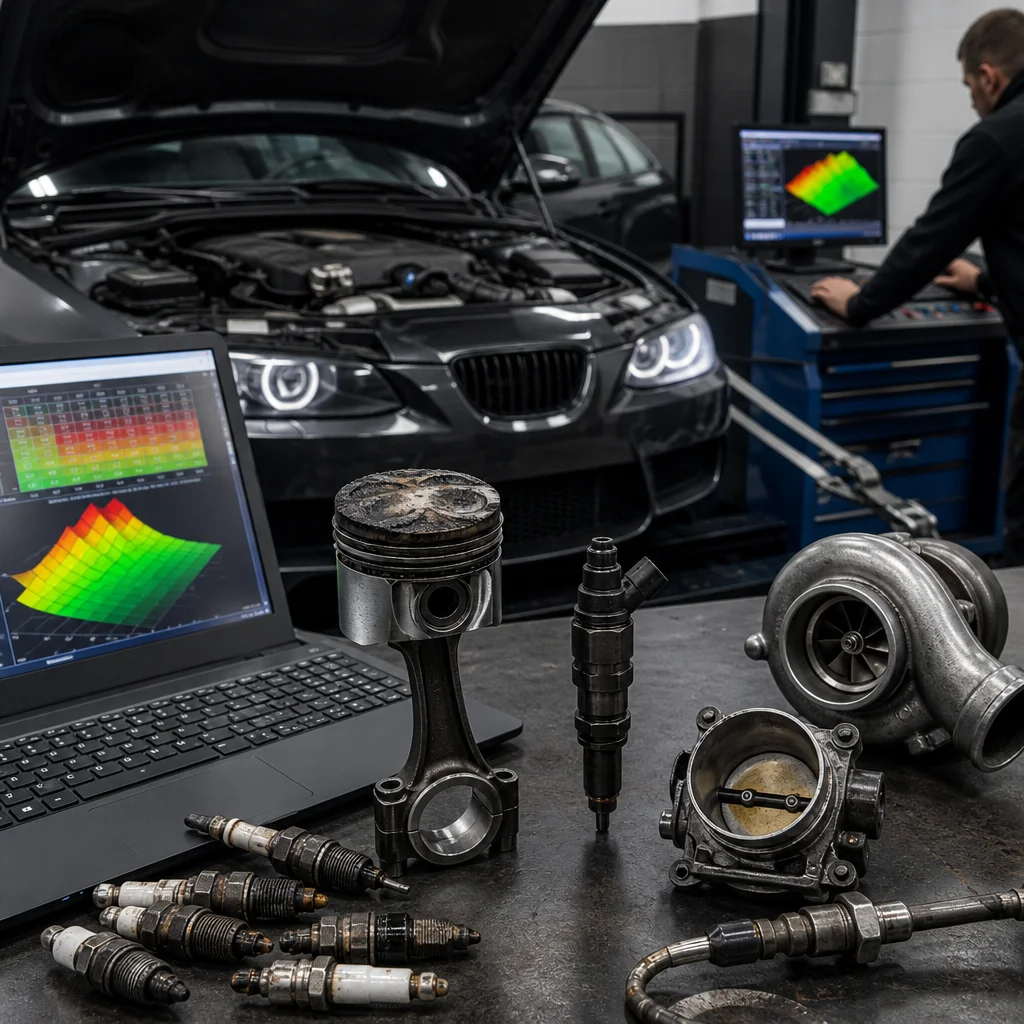
Professional ECU tuning requires dealer-level diagnostic equipment, not the aftermarket scan tools sold at auto parts stores. A proper tuning house uses equipment that can read live combustion timing, fuel trim corrections, boost pressure curves, and dozens of other parameters in real time during testing.
Without this capability, tuners operate partially blind. They might know peak horsepower on a dyno, but they can’t see whether fuel trims are within spec, whether knock sensors are detecting detonation, or whether transmission pressure solenoids are responding correctly to new engine output.
Red flags include:
- Tuners who perform all work remotely without connecting to your vehicle
- Shops that rely solely on dyno testing without live data logging during road testing
- No documented before-and-after diagnostic comparisons
- Inability to show you real-time fuel trim, boost, and timing data during tuning
- No long-term monitoring protocols post-tune
We use the same diagnostic platforms as BMW, Porsche, and Audi dealerships specifically because they reveal what’s actually happening inside the engine and transmission during tuning adjustments. This visibility prevents mistakes.
Red Flag #4: Ignoring OEM Specifications and Component Limitations
Every component in your European car operates within engineered tolerances. Fuel injectors have maximum flow rates; turbochargers have surge and choke limits; transmissions have pressure band specifications. Ignoring these boundaries is where theoretical performance becomes actual damage.
A tuner who promises 50 additional horsepower without evaluating your fuel system’s capacity, your turbo’s compressor map, and your transmission’s thermal limits is making promises they can’t safely keep. Many European vehicles max out at 30 to 40 reliable additional horsepower before component strain becomes unmanageable.
Consider fuel quality: European gasoline typically has different detergent packages and octane stability than U.S. fuel. A tune optimized for 98 RON European fuel might produce constant knock and fueling instability on 91 or 93 AKI American gasoline. Professional tuners adjust for this; amateurs don’t.
Similarly, transmission software modifications must respect the mechatronic unit’s pressure ratings and solenoid response times. Over-aggressive shift logic can accelerate clutch wear or cause hydraulic spikes that damage internal components. We’ve seen transmissions fail within 10,000 miles of aggressive aftermarket tunes because no one verified that the shift strategy aligned with OEM pressure specifications.
Check engine light symptoms sometimes emerge as a delayed consequence of tuning that violates component specifications, so addressing them requires understanding whether the tune itself is the root cause.
Red Flag #5: Rushing the Tuning Process Without Proper Verification
Legitimate ECU tuning isn’t a two-hour job. Proper work includes baseline diagnostics, initial calibration, controlled testing with live data monitoring, iterative refinement, extended road testing across varied conditions, and documentation for your records.
Tuners who promise a quick turnaround are skipping verification steps. Tuning a turbocharged European engine safely requires logging drive cycles at multiple ambient temperatures, load conditions, and throttle positions to confirm that fuel trims, knock detection, and boost response remain within spec throughout normal operation.
Red flags include:
- Offers to complete tuning in a single day
- No requirement for extended road testing before final delivery
- Reluctance to provide detailed logged data from the tuning process
- Guarantee of results without conditional language about fuel quality or driving conditions
- No pre-tune and post-tune diagnostic comparison documents
We budget five to seven days for comprehensive ECU tuning because verification can’t be rushed. Each drive cycle reveals whether adjustments are holding stable or whether conditions during normal driving expose edge cases that dyno testing didn’t catch.
Why We Approach ECU Tuning Differently at EuroX Performance
Our ECU tuning process starts before we touch your car’s computer. We perform complete baseline diagnostics using the same platforms the OEMs use, documenting every relevant parameter. This establishes what your specific vehicle does in stock form, accounting for age, mileage, fuel quality assumptions, and any existing wear patterns.
We then build custom calibrations for your platform, altitude, and driving goals. Rather than applying generic maps, we adjust boost curves, fuel timing, and ignition advance specifically for how your engine responds. We test iteratively on our dyno, then verify stability during real-world road testing before sign-off.
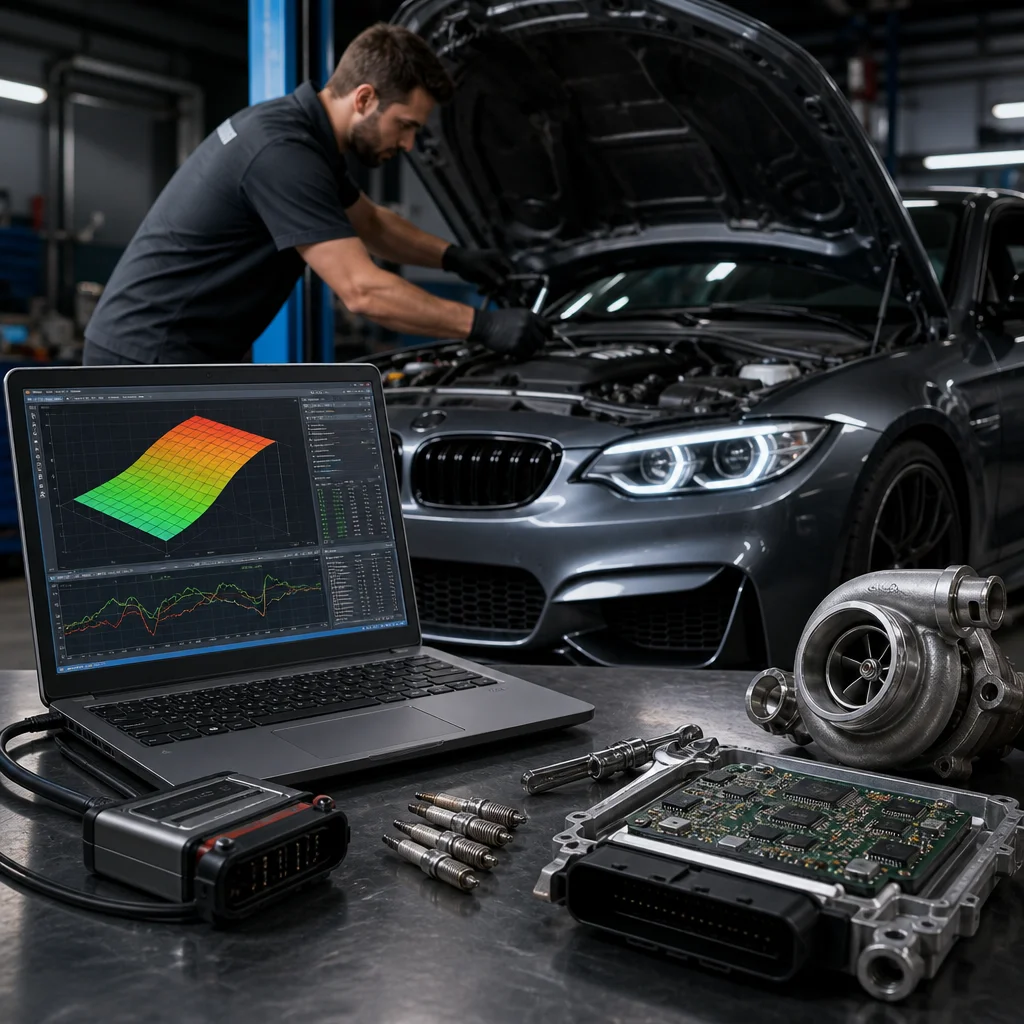
Our tuning approach includes component stress analysis: we evaluate whether your fuel injectors, turbocharger, and transmission can safely handle the new output without exceeding OEM limits. If they can’t, we’re direct about it rather than pushing a tune that will damage your car.
Because we’re veteran-owned and focused exclusively on European and exotic vehicles, we don’t have incentive to cut corners. Your vehicle’s safety and our reputation are tied together.
How Our Dealer-Level Diagnostics Protect Your Investment
Dealer-level diagnostic equipment isn’t just faster; it’s fundamentally more capable. We can read manufacturer-specific parameters, clear faults with proper context, and modify calibrations at the system level rather than applying broad aftermarket patches.
This technology means we catch issues before they become expensive problems. We identify weak fuel trims suggesting injector wear, detect boost creep indicating turbo degradation, and spot transmission pressure anomalies that suggest mechanical stress. For vehicles already experiencing check engine light issues, we determine whether the root cause can coexist with tuning, or whether your car needs correction work first.
When we perform ECU tuning, we log comprehensive data before, during, and after the process. This documentation serves as verification that we operated within safe parameters and as a record if any future issues arise. It also means you have objective evidence that any subsequent problems weren’t caused by the tune.
The Right Way to Verify Safe and Effective Performance Gains
Verification isn’t a single dyno pull. Real safety confirmation requires:
- Before-and-after diagnostic baseline comparisons showing fuel trims, boost response, and transmission pressures in stock and tuned states
- Multiple drive cycles in varied conditions (cold starts, highway cruise, aggressive throttle) with data logging to confirm stability
- Documentation that knock sensors remained inactive and fuel timing held spec throughout testing
- Post-tune inspection of physical components: fuel injector spray patterns, turbo boost response, transmission fluid condition
- Conditional performance guarantees that account for fuel quality and driving behavior
This isn’t bureaucratic overkill. Each step catches problems before they become catastrophic failures. A tuned BMW M440i that’s been thoroughly verified performs safely for years; one that hasn’t might produce impressive numbers for weeks before internal damage emerges.
Taking the Next Step: Getting Your European Car Tuned Safely
If you’re considering ECU tuning for your European vehicle, start by scheduling a comprehensive diagnostic evaluation. We’ll establish your car’s baseline condition, identify any existing issues that should be addressed first, and discuss realistic performance goals based on your specific platform and component status.
From there, we’ll outline a custom tuning strategy rather than applying pre-built maps. You’ll receive detailed documentation of the work, performance verification data, and ongoing support if questions arise.
ECU tuning can deliver genuine performance gains, but only when approached with the precision and accountability that European vehicles demand. That’s how we handle it at EuroX Performance in Golden, and it’s the only approach we’d recommend for your car.
Contact us to discuss your specific vehicle and tuning goals. We’ll walk you through the process, answer your technical questions, and help you understand exactly what safe, professional tuning looks like for your European import.