Table of Contents
- Why Generic Diagnostics Fail Your European Performance Vehicle
- The Complexity of Modern European Engine Management Systems
- Dealer-Level Diagnostic Technology: Our Competitive Advantage
- ECU Remapping and Advanced Tuning Diagnostics
- Transmission and Drivetrain Diagnostic Capabilities
- Hybrid and EV-Specific Diagnostic Solutions
- How Our Diagnostic Approach Prevents Costly Repairs
- Real-World Examples: Solving Complex European Vehicle Issues
- The Investment in Precision Diagnostics Pays Off
- Get Your European Import Properly Diagnosed Today
Why Generic Diagnostics Fail Your European Performance Vehicle
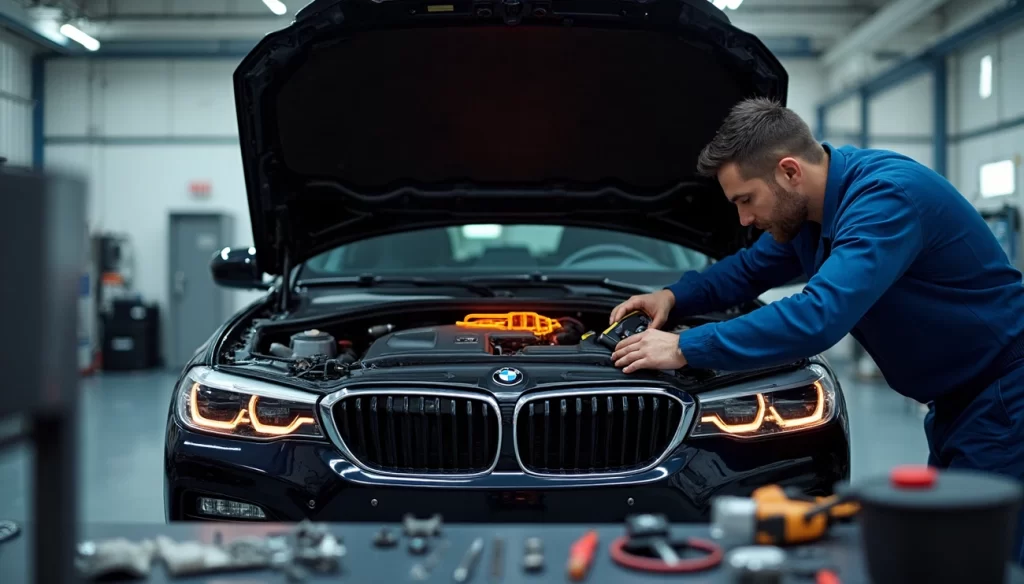
Your BMW, Audi, or Porsche isn’t built the same way as a domestic sedan. When something goes wrong, plugging into a basic code reader at a quick-lube shop won’t cut it. Generic diagnostic equipment reads standardized OBD-II protocols, but European manufacturers layer proprietary systems, brand-specific fault codes, and manufacturer-defined thresholds on top of those standards.
A check engine light might indicate “oxygen sensor malfunction” to a generic scanner, but our dealer-level equipment tells us whether it’s the sensor itself, a wiring issue, fuel trim problems, or a faulty sensor connector causing intermittent signal loss. The difference between a $200 sensor replacement and a $2,000 fuel system diagnosis hinges entirely on the depth of your diagnostic capability.
European vehicles also employ multiple control modules communicating across CAN bus networks. Pulling a single code doesn’t reveal the full story. You need equipment that can interrogate all modules simultaneously, compare their data streams, and identify which system initiated the fault. Without that capability, you’re troubleshooting blind.
Action item: Before taking your European import to any shop, ask specifically what diagnostic equipment they use and whether they have manufacturer-level access to your vehicle’s control modules.
The Complexity of Modern European Engine Management Systems
Modern European engines run on integrated systems that would have seemed like science fiction a decade ago. Variable valve timing, direct fuel injection, turbocharging with electronic boost control, and adaptive combustion mapping all operate in real-time coordination. A single sensor feeding inaccurate data can cascade across five different systems, creating symptoms that point nowhere near the actual problem.
Consider a fuel pressure regulator on a direct-injection engine. When it drifts out of specification, it doesn’t always trigger an immediate fault code. Instead, you might experience rough idle, hesitation during acceleration, or poor cold-start behavior. A technician without deep European engine knowledge might chase oxygen sensors, ignition coils, or fuel injectors for weeks. Our diagnostic systems can log fuel pressure data in real-time, compare it against factory specifications for that specific engine variant and ambient conditions, and pinpoint the regulator in minutes.
The same complexity applies to emission control systems. European manufacturers use selective catalytic reduction, particulate filters, and nitrogen oxide sensors in configurations that vary by model year and market. Misdiagnosing these systems leads to expensive aftermarket repairs that don’t solve the root cause.
Practical insight: Temperature, fuel quality, driving patterns, and even altitude affect how European engine management systems behave. Proper diagnosis requires tools that capture this contextual data, not just fault codes.
Dealer-Level Diagnostic Technology: Our Competitive Advantage
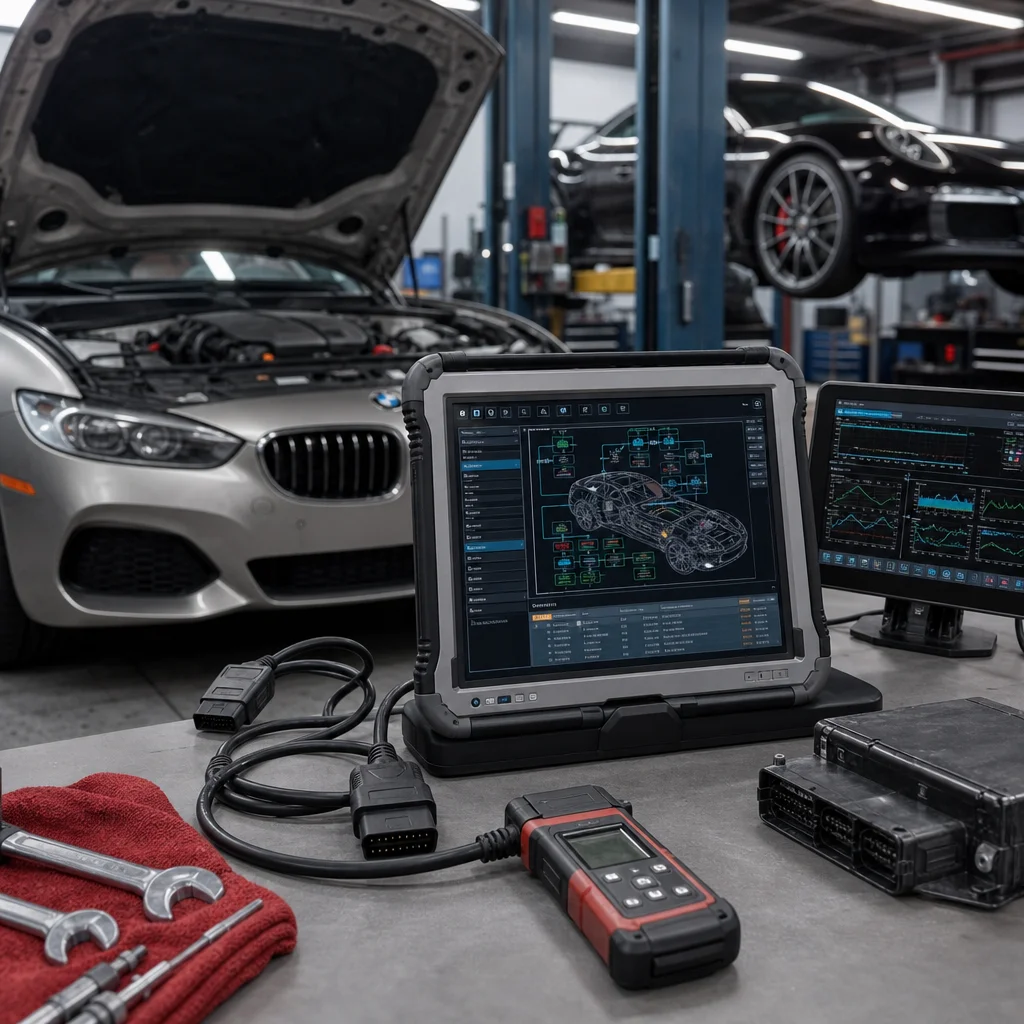
We’ve invested in the same diagnostic platforms that European manufacturers use in their own service centers. These systems connect directly to manufacturer databases, pulling factory specifications, technical service bulletins, and real-time performance data specific to your vehicle’s build date, production location, and configuration.
Our diagnostic approach includes:
- Full module interrogation across all vehicle systems (engine, transmission, ABS, stability control, infotainment)
- Live data streaming to compare sensor readings against factory baselines
- Manufacturer-specific fault code libraries with repair procedures
- Access to TSBs (technical service bulletins) that explain known issues
- Capability to clear codes only after confirming the underlying problem is resolved
This isn’t about having more equipment in the shop. It’s about having the right equipment that speaks the language your European vehicle was designed to speak. When we connect to your BMW’s control modules, we’re not interpreting; we’re reading manufacturer-encoded data in its native format.
ECU Remapping and Advanced Tuning Diagnostics
If you’ve invested in performance upgrades or ECU tuning, diagnosing issues becomes exponentially more complex. Modified software interacts with hardware in ways stock systems never encounter. A knock sensor that’s perfectly acceptable in a stock configuration might trigger false readings in a tuned engine running higher boost or different fuel timing.
We can read and compare your vehicle’s current ECU programming against factory baselines, identify what modifications were made, and determine whether they’re interacting correctly with other systems. This diagnostic depth matters tremendously when troubleshooting performance issues on tuned vehicles.
Most shops can’t do this at all. They see a modified vehicle and assume the tuning shop created the problem. We can actually verify what’s happening inside the ECU and whether modifications are functioning as intended or conflicting with other control systems.
Next step: If your European import has performance modifications, bring complete documentation about what was changed. Combined with our diagnostics, this helps us validate whether the tuning is executing correctly or contributing to any symptoms you’re experiencing.
Transmission and Drivetrain Diagnostic Capabilities
European automatics and dual-clutch transmissions operate at precision levels that make most generic transmission scanners look crude by comparison. Adaptive shift patterns, clutch wear compensation, and torque converter modulation all adjust dynamically based on driving input and mechanical condition.
We perform comprehensive drive train diagnostics that examine not just shifting behavior but the actual hydraulic pressures, clutch engagement timing, and control module adaptation data. A transmission that feels sluggish might have perfectly normal pressure readings but incorrect adaptive values, or vice versa.
This level of detail prevents unnecessary transmission rebuilds. We once diagnosed what looked like imminent transmission failure in an Audi as a failing shift solenoid. Proper diagnostics saved the customer thousands in unnecessary rebuild costs.
Hybrid and EV-Specific Diagnostic Solutions
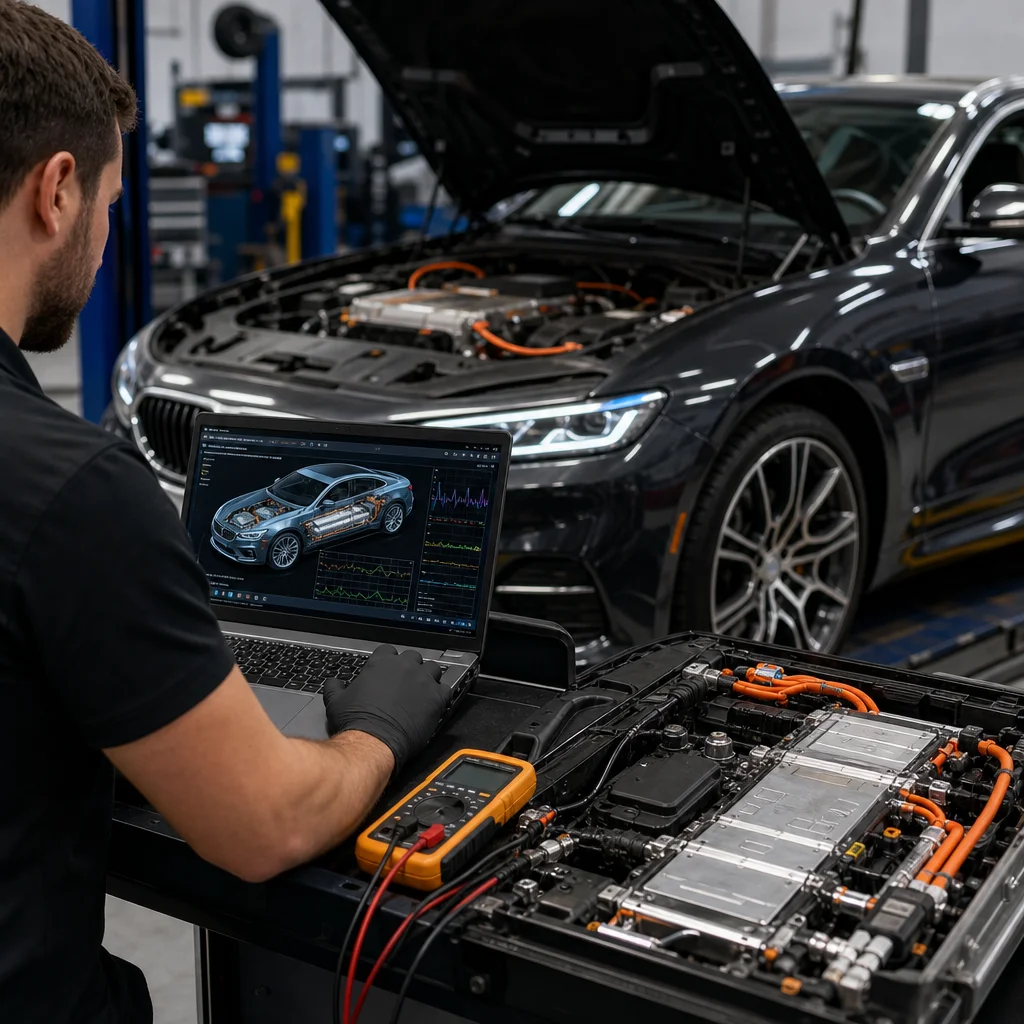
Hybrid and electric European imports add layers of complexity that standard automotive diagnostics simply don’t address. Battery management systems, high-voltage contactor operation, regenerative braking calibration, and motor controller coordination require manufacturer-specific diagnostic tools.
We maintain diagnostic capabilities for hybrid and EV powertrains across Porsche, BMW, Audi, and Mercedes platforms. This includes battery state-of-health assessment, high-voltage isolation testing, and electric motor performance validation. As more European manufacturers shift to electrification, this expertise becomes essential for proper vehicle maintenance.
How Our Diagnostic Approach Prevents Costly Repairs
Accurate diagnosis is the foundation of cost-effective repairs. When you know exactly what’s wrong, you replace exactly what needs replacing. No guessing, no trial-and-error parts swaps, no discovering additional problems halfway through the job.
A European vehicle with a check engine light could need anything from a $50 sensor to a $5,000 control module replacement. Our diagnostic process narrows that range dramatically by examining the actual data, not just interpreting codes.
Beyond individual repairs, accurate diagnostics reveal emerging problems before they become catastrophic. We can see sensor drift that hasn’t triggered a fault code yet, transmission fluid condition changes before slipping occurs, or electrical connection degradation before it causes intermittent failures.
Real-World Examples: Solving Complex European Vehicle Issues
A Porsche 911 arrived with intermittent power loss at highway speeds. Three other shops had replaced fuel pumps, fuel filters, and ignition coils without solving the problem. Our diagnostics revealed that the fuel pump was cycling based on fuel line pressure fluctuations caused by a loose connection in the fuel rail assembly, not pump failure. A $20 hose clamp solved a problem that had already consumed $1,500 in unnecessary parts.
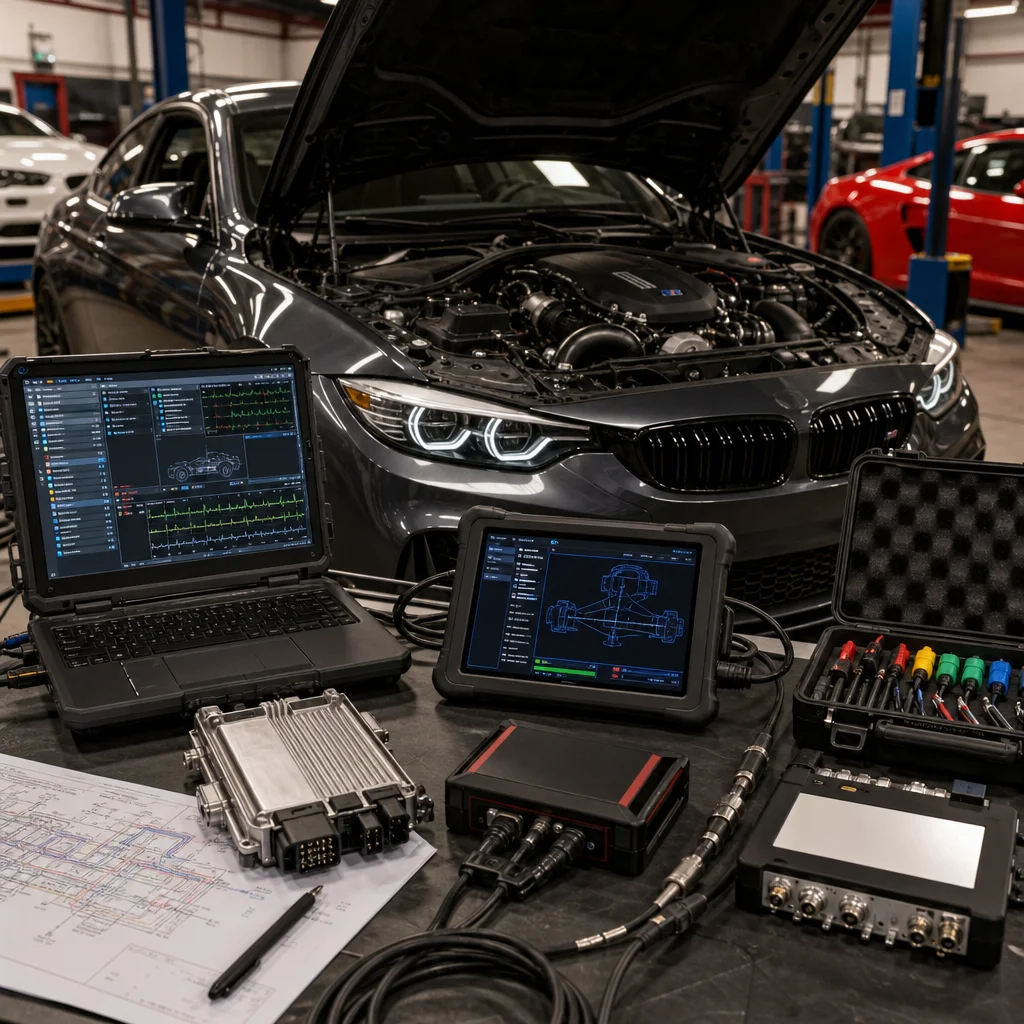
A BMW M440i presented with rough idle and hesitation. The owner had already replaced the spark plugs and had an injector cleaning performed. Our diagnostics showed that adaptive fuel trim had learned incorrect values during a brief fuel pressure issue weeks earlier. The control module was over-correcting fuel delivery. We reset the adaptation values, and the vehicle ran perfectly.
A Mercedes E-Class hybrid owner reported poor fuel economy and intermittent electric motor operation. Dealer diagnostics suggested battery replacement at $8,000. Our analysis revealed that the battery management system had disabled the electric motor due to a faulty cooling line sensor, not battery degradation. Replacing the sensor restored full hybrid function.
These examples illustrate why diagnostic depth matters. Surface-level code reading leads to expensive guesses. Manufacturer-level diagnostics reveal the actual problem.
The Investment in Precision Diagnostics Pays Off
Quality diagnostic equipment costs tens of thousands of dollars. Maintaining current software licenses and manufacturer database access requires ongoing investment. These expenses exist because accurate diagnosis demands precision infrastructure.
However, the cost-benefit analysis is straightforward: precision diagnostics prevent misdiagnosis, eliminate unnecessary parts replacement, and reduce repair time. A vehicle correctly diagnosed on the first attempt saves both money and frustration. Over the ownership life of a European import, that savings compounds significantly.
We view diagnostic capability as foundational to our service, not an add-on charge. Proper diagnosis determines whether your repair investment solves your actual problem or compounds it.
Get Your European Import Properly Diagnosed Today
If your European or exotic vehicle is showing symptoms that other shops haven’t been able to resolve, the problem might be diagnostic capability, not the vehicle itself. We invite you to bring your import to EuroX Performance and experience the difference that manufacturer-level diagnostic equipment makes.
Contact us today to schedule a comprehensive diagnostic evaluation. We’ll connect to your vehicle’s systems with the same tools and databases that European manufacturers use, identify exactly what’s happening, and provide a clear repair plan based on actual data, not guesswork.
Your European performance vehicle deserves precision diagnostics from technicians who understand its engineering. That’s what we deliver.