Table of Contents
- Why European Vehicle Owners Need a Specialized Upgrade Strategy
- Understanding Your Performance Goals and Budget
- How We Assess Your Vehicle's Current Capabilities
- Engine and Transmission Upgrade Options Explained
- ECU Remapping and Advanced Tuning Solutions
- Building Your Custom Upgrade Timeline and Phases
- OEM Parts Selection and Manufacturer Specifications
- Performance Testing and Optimization Process
- Maximizing Reliability Through Precision Engineering
- Investment Protection and Long-Term Value
- Getting Started With Your Consultation
Why European Vehicle Owners Need a Specialized Upgrade Strategy
European and exotic vehicles operate under different engineering principles than domestic cars. BMW, Porsche, Audi, and Mercedes designs emphasize precision tolerances, integrated electronic systems, and manufacturer-specific calibration protocols that generic repair shops simply don’t understand. When you modify one system, you’re affecting fuel delivery, transmission mapping, suspension geometry, and brake balance simultaneously.
Without a specialized strategy, upgrades can compromise warranty coverage, trigger limp-mode conditions, or create reliability issues that cost far more to fix than the original modification. We’ve seen owners spend significant money on performance parts only to discover their vehicle runs worse or faces unexpected failures because the changes weren’t coordinated properly.
A proper upgrade plan accounts for your vehicle’s architecture, manufacturer specifications, and how each modification layers onto the next. This approach protects your investment while maximizing the performance gains you’re actually seeking. The difference between a scattered upgrade path and a strategic one often determines whether you’re proud of your build or frustrated by it.
Understanding Your Performance Goals and Budget
Before any work begins, we need clarity on what “performance” means to you. Are you chasing track-day lap times, smoother daily driving with more responsive acceleration, increased horsepower for weekend driving, or improved handling characteristics? The answer changes everything about which upgrades make sense.
Budget planning requires honesty about total investment, not just the first phase. A comprehensive build might span several months and involve multiple stages. Breaking this into phases lets you spread costs while maintaining a coherent plan. Consider this example: upgrading to performance brakes costs $3,000 to $5,000, but waiting until after engine tuning means we can optimize brake balance to match your new power delivery.
We typically work through these questions during an initial consultation:
- What’s your realistic total budget for the entire build?
- Is performance the priority, or are you balancing it with reliability and daily usability?
- How many miles per year will you drive, and what’s your ownership timeline?
- Are there specific competitors or reference vehicles you want to match or exceed?
- What’s your mechanical skill level, and will you do any work yourself?
Honest answers here guide us toward solutions that keep you satisfied long-term.
How We Assess Your Vehicle’s Current Capabilities
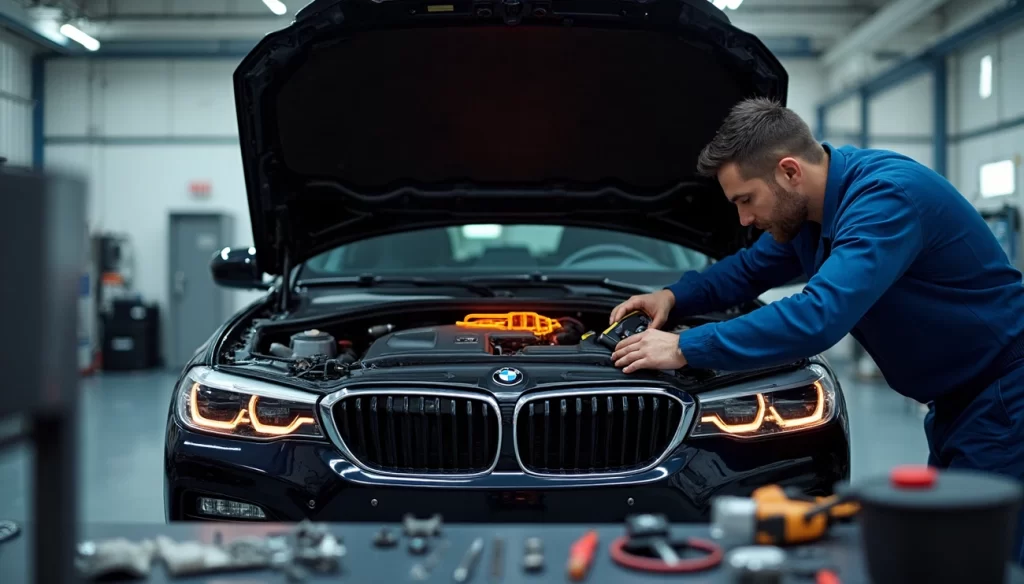
We begin with dealer-level diagnostic scanning that reads your vehicle’s complete electronic architecture. This reveals existing fault codes, performance limitations built into factory programming, and how much headroom your engine management system has for optimization.
Physical inspection covers:
- Engine block condition and any signs of wear or previous modifications
- Fuel system pressure and delivery rate under load
- Transmission fluid condition and shift characteristics
- Suspension geometry and ride height specifications
- Brake system performance and pad/rotor quality
We also run a baseline dyno pull to measure current horsepower, torque, and power delivery curves. This data point becomes critical later because it lets us quantify exactly what each upgrade actually achieved. Too many shops make claims without baseline measurements.
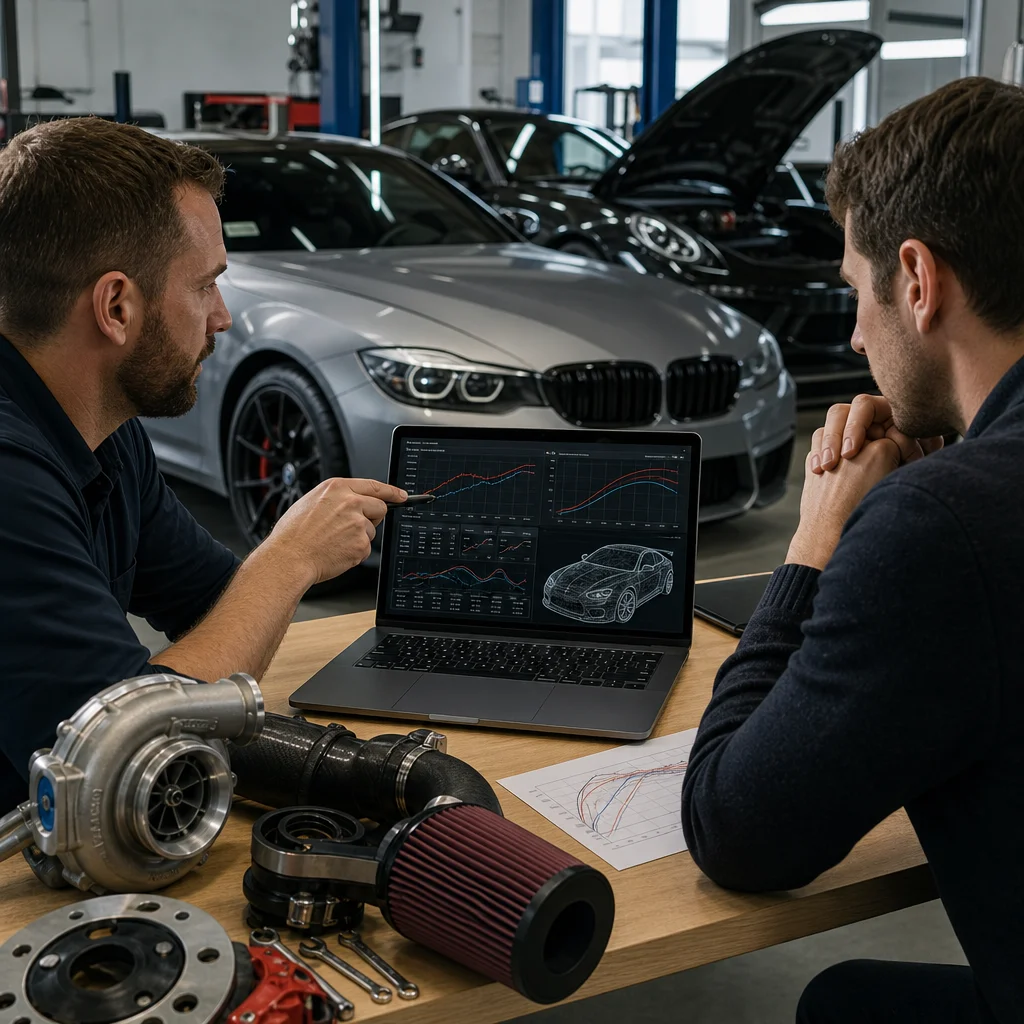
Fuel quality and octane rating matter tremendously with turbocharged European engines. We verify your fuel system meets current upgrade requirements and identify any weak points that could fail under increased boost or higher fuel flow rates.
Engine and Transmission Upgrade Options Explained
Engine modifications range from bolt-on improvements to complete internal rebuilds. Intake and exhaust upgrades typically add 10-20 horsepower with minimal complexity. Turbocharger upgrades can transform performance but require supporting fuel system and cooling changes to remain reliable.
More aggressive builds involve:
- Forged internals and reinforced rotating assemblies for higher boost tolerance
- Advanced engine management tuning that optimizes ignition timing and fuel injection across the entire RPM range
- Hybrid turbocharger systems combining larger turbos with upgraded compressor wheels
- Intercooler and heat management upgrades that maintain consistent power delivery
Transmission work ranges from fluid and shift-point optimization to complete rebuilds with upgraded internals. We’re honest about transmission limits. A stock transmission might handle a modest power increase, but pushing beyond factory design parameters eventually means failure. Planning a transmission rebuild before problems develop saves money and prevents downtime.
For hybrid and EV vehicles, we work with regenerative braking integration and battery management system optimization that maximizes efficiency gains alongside performance modifications.
ECU Remapping and Advanced Tuning Solutions
ECU remapping is where most performance gains happen, and where mistakes create expensive problems. The factory calibration prioritizes emissions compliance and warranty coverage over performance potential. Strategic remapping optimizes ignition timing, fuel delivery, boost pressure, and shift logic within your engine’s safe operating envelope.
We use a multi-step approach rather than aggressive single-tune modifications. An initial conservative tune establishes reliability, then subsequent refinements target specific power bands or driving conditions. This staged approach lets us validate each change before moving forward.
Different tuning strategies serve different purposes:
- Street tuning balances power gains with drivability and fuel economy
- Track tuning prioritizes ultimate performance under controlled conditions
- Efficiency tuning reduces consumption on long-distance driving
- Season-specific tuning accounts for fuel availability and air temperature effects
We custom calibrate everything rather than applying generic off-the-shelf maps. Your specific engine, transmission, intake, and exhaust combination requires individual attention. We also retain your original factory programming so you can revert if needed.
Building Your Custom Upgrade Timeline and Phases
A realistic timeline prevents budget shock and allows technical validation between phases. Most comprehensive builds develop across 4-8 months, though simpler modifications complete much faster.
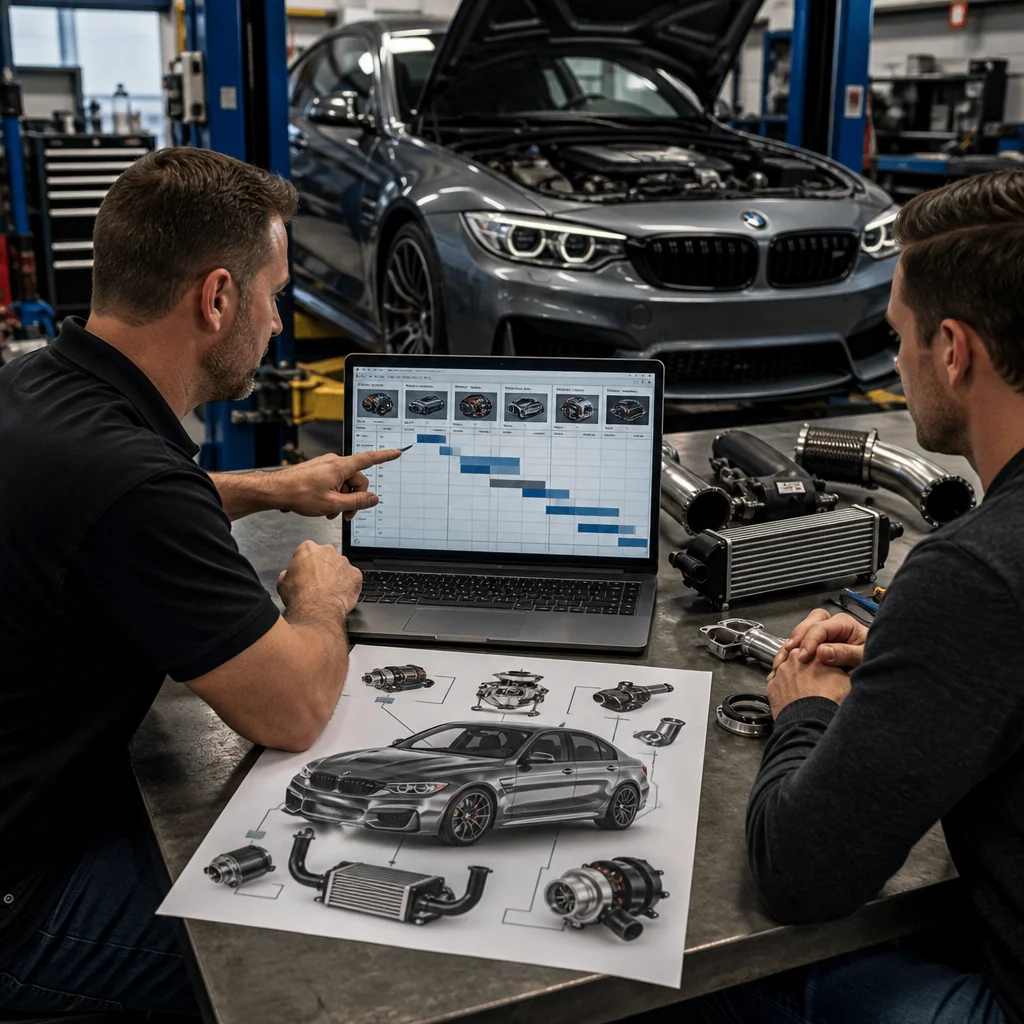
A typical phased approach looks like this:
Phase 1 involves diagnostics, baseline testing, and foundational ECU tuning (2-3 weeks). This establishes your starting point and validates that your vehicle can safely handle the planned upgrades.
Phase 2 adds bolt-on components like intake and exhaust systems plus turbocharger upgrades if planned (4-6 weeks). Each component receives dyno testing before moving to the next piece.
Phase 3 tackles suspension, brake, and drivetrain upgrades that match your new power levels (3-4 weeks). We validate handling balance and braking consistency throughout.
Phase 4 focuses on advanced tuning refinement, cooling system optimization, and final performance validation (2-3 weeks).
Spacing prevents cascading failures where one poorly-executed modification destabilizes everything else. It also gives you time to enjoy each stage of improvement.
OEM Parts Selection and Manufacturer Specifications
We specify manufacturer-approved components rather than compromising with aftermarket equivalents unless performance advantage clearly justifies the trade-off. BMW, Porsche, and Audi parts are engineered to specific tolerances that matter at performance levels.
This means using Bosch fuel injectors instead of cheaper alternatives, specifying OEM seals that handle higher boost pressures, and selecting brake pads formulated for your specific vehicle’s mass and braking profile. Cutting corners on components that see extreme stress during performance driving creates reliability problems that cost far more than the parts savings.
We maintain current manufacturer specifications and cross-reference technical bulletins for your model year. Engine bay components change across production runs, and using outdated specifications can create fitment issues or functional problems. Our technical library stays current through direct manufacturer relationships and continuous training.
Performance Testing and Optimization Process
Dyno testing happens at critical checkpoints. After baseline measurement, we test following major modifications to quantify actual gains. This prevents assumptions and validates that money spent achieved the intended results.
We measure:
- Peak horsepower and torque figures
- Power delivery across the entire RPM range
- Boost curve consistency under load
- Air/fuel ratio stability
- Engine knock detection and safety margins
Data from dyno runs guides next-phase decisions. If expected gains don’t materialize, we investigate root causes before proceeding. Maybe intercooler temperature management needs improvement, or fuel pressure requires adjustment.
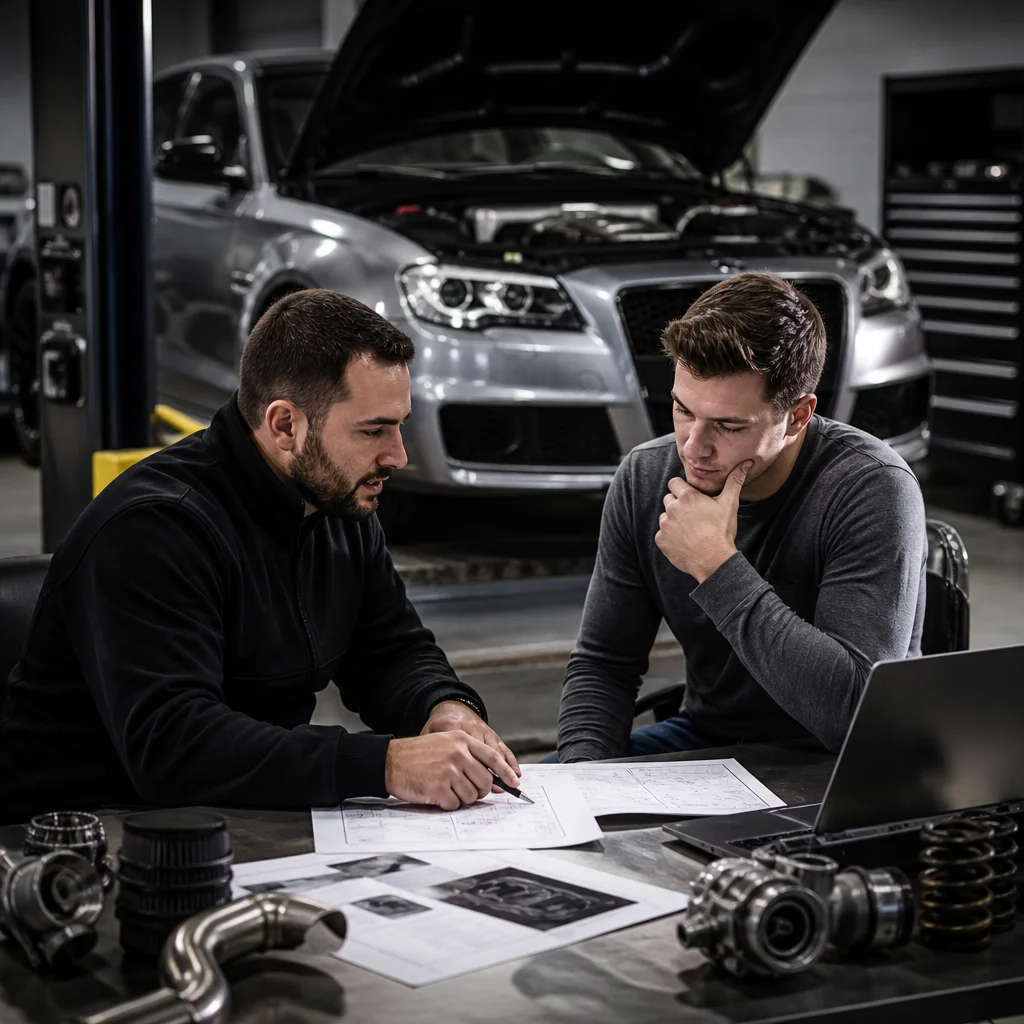
Real-world testing supplements dyno work. Track sessions reveal how power delivery translates to actual performance, whether handling balance matches expectations, and if braking confidence matches acceleration capabilities. We’ll often recommend professional track time or performance driving instruction to validate the build matches your skill development.
Maximizing Reliability Through Precision Engineering
Performance and reliability aren’t opposing forces. Properly executed upgrades improve reliability because they optimize stress distribution and reduce temperature extremes. A well-tuned engine runs cooler and more efficiently than a factory-limited version pushing against governor limits.
Cooling system upgrades matter tremendously. Larger capacity radiators, upgraded fans, and optimized coolant flow paths maintain stable temperatures under sustained performance driving. We spec cooling components that handle your intended use, whether that’s occasional track days or regular spirited driving.
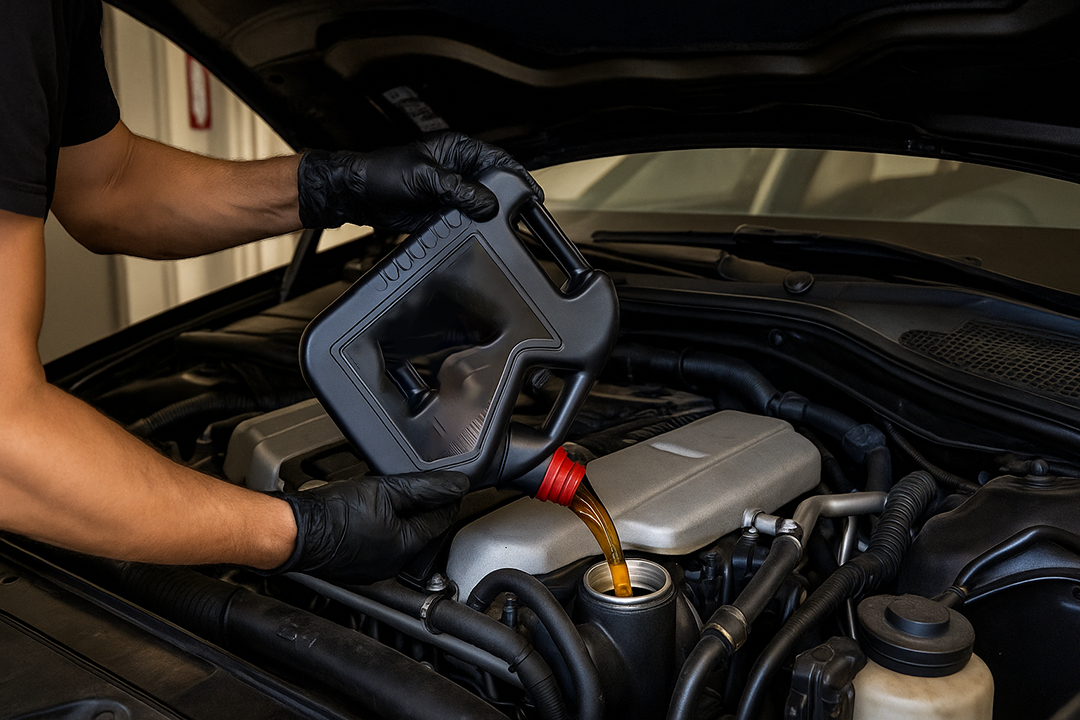
Oil cooling systems become critical with turbocharged engines under boost. We install thermostatically controlled oil coolers that maintain optimal viscosity regardless of driving conditions. Proper oil temperature prevents internal component wear and extends engine service life significantly.
Durability also means planning maintenance intervals appropriate to your modified power levels. A tuned engine producing 450 horsepower has different service requirements than the 300-horsepower factory spec. We establish individualized maintenance schedules that keep your investment performing reliably.
Investment Protection and Long-Term Value
Strategic upgrades enhance resale value with the right buyer audience. A well-documented performance build with quality components and professional execution appeals to enthusiasts who understand the work involved. Sketchy modifications or cheap parts do the opposite.
We maintain detailed build documentation including baseline measurements, all modifications completed, dyno test results, and warranty information for every component. This documentation becomes valuable when eventually selling your vehicle because it proves work quality and investment authenticity.
Warranty considerations matter throughout the build. While modifications void manufacturer coverage on modified systems, OEM part selection and proper installation protect systems you haven’t modified. A high-quality fuel pump still has a legitimate warranty even though you’ve upgraded your engine.
Insurance also factors into long-term value. Some policies cover modified vehicles while others don’t, and documentation helps prove your build’s safety and legitimacy to insurers. We recommend discussing modifications with your insurance agent early.
Getting Started With Your Consultation
Your next step is scheduling a performance upgrade consultation where we discuss your goals, assess your vehicle, and develop a concrete plan. Bring your vehicle and any specific performance aspirations you’re considering.
During the consultation, we’ll perform initial diagnostics, discuss budget options, and outline a phased timeline with detailed cost estimates for each phase. This meeting costs nothing, and you’ll leave with a clear understanding of what’s possible for your specific vehicle.
Contact us at EuroX Performance in Golden, CO to schedule your consultation. We’ll make sure your upgrade path aligns with your vision while protecting your investment through precision engineering and manufacturer-approved standards.