Table of Contents
- Why Your Porsche 911 Engine Needs Professional Rebuilding
- Understanding Engine Failure Signs in 996 and 997 Models
- What We Include in Our Complete Engine Rebuild Process
- Cost Breakdown for 996 Model Engine Reconstruction
- Cost Breakdown for 997 Model Engine Reconstruction
- Timeline Expectations for Your Engine Rebuild Project
- Our Advanced Diagnostic Approach Before Rebuild Work
- Quality Standards and OEM Specification Compliance
- Performance Optimization Opportunities During Your Rebuild
- How Our Rebuild Service Extends Engine Lifespan
- Getting Started with Your Engine Rebuild Consultation
Why Your Porsche 911 Engine Needs Professional Rebuilding
Porsche 911 ownership brings undeniable prestige and driving satisfaction, but it also carries specific maintenance responsibilities that generic repair shops simply aren’t equipped to handle. The 996 and 997 generations represent some of the most sought-after modern 911s, yet both have documented engine characteristics that demand specialized knowledge. When your engine shows signs of wear or requires reconstruction, the cost and timeline depend heavily on your model year, the extent of damage, and the technical precision applied during the rebuild process.
At EuroX Performance, we’ve rebuilt hundreds of high-performance European engines, including countless Porsche 911 powerplants. We understand that you’re not just replacing parts; you’re restoring the heart of a precision machine. This guide walks you through what a professional Porsche engine rebuild actually entails, what you should expect to pay, and how we approach every project with OEM specifications and performance integrity at the forefront.
Not every engine problem demands a complete rebuild. However, certain conditions make rebuilding the most cost-effective and reliable path forward. Internal wear, bearing damage, valve seat recession, and cylinder wall scoring all compromise performance and fuel efficiency, but they don’t necessarily render your engine worthless. A professional rebuild addresses these issues comprehensively, restoring your 911’s original power output and reliability.
We choose rebuilding over replacement in most cases because it preserves your vehicle’s authenticity and originality while delivering superior value. Replacement short-blocks carry warranty limitations and may not match your engine’s original specifications as precisely. A rebuild lets us inspect every component, replace what’s worn, and return your engine to factory performance standards using manufacturer-specification parts and tolerances.
The alternative—attempting a patch-and-pray approach with partial repairs—typically costs more over time due to repeated trips back to the shop and incomplete problem resolution. Your Porsche engine deserves comprehensive attention from specialists who understand its unique requirements.
Understanding Engine Failure Signs in 996 and 997 Models
The 996 generation (1998-2005) carries a specific reputation around intermediate shaft bearing issues, particularly in the early model years. Low oil pressure warnings, metal shavings in your oil, and ticking noises under acceleration are telltale signs of bearing wear. The 997 generation (2005-2012) generally enjoys better reliability in this area, though cylinder wall issues and valve-related problems still occur across certain years.
Watch for these warning indicators:
- Persistent low oil pressure readings even after an oil change
- Visible metal particles or sludge in your oil during inspection
- Rough idling, misfires, or loss of power delivery
- Excessive blow-by or oil vapor from the breather system
- Blue smoke from the exhaust or unusual oil consumption
- Knocking or ticking sounds that increase with engine load
Some owners notice gradual performance decline rather than sudden failure. Your 911 might feel slightly softer on acceleration or require premium fuel adjustments to maintain smooth running. These incremental changes often signal internal wear progressing toward more serious damage. The sooner we inspect and diagnose the issue, the better your options become. Catching problems early sometimes allows for targeted repairs rather than full reconstruction.
What We Include in Our Complete Engine Rebuild Process
Our engine rebuild services follow a methodical process that treats each component as part of an integrated system. We don’t simply replace worn parts; we restore your engine to factory performance specifications.
Our rebuild scope includes:
- Complete engine disassembly and inspection under magnification
- Cylinder head resurfacing and valve seat machining
- Block boring and honing to precise OEM tolerances
- Crankshaft polishing and bearing installation with correct clearances
- Piston and ring installation matched to cylinder specifications
- Intermediate shaft bearing replacement (996 models specifically)
- Complete gasket and seal replacement throughout
- Oil pump inspection and replacement if needed
- Flywheel resurfacing and clutch evaluation
- Full pressure testing and performance verification before reassembly
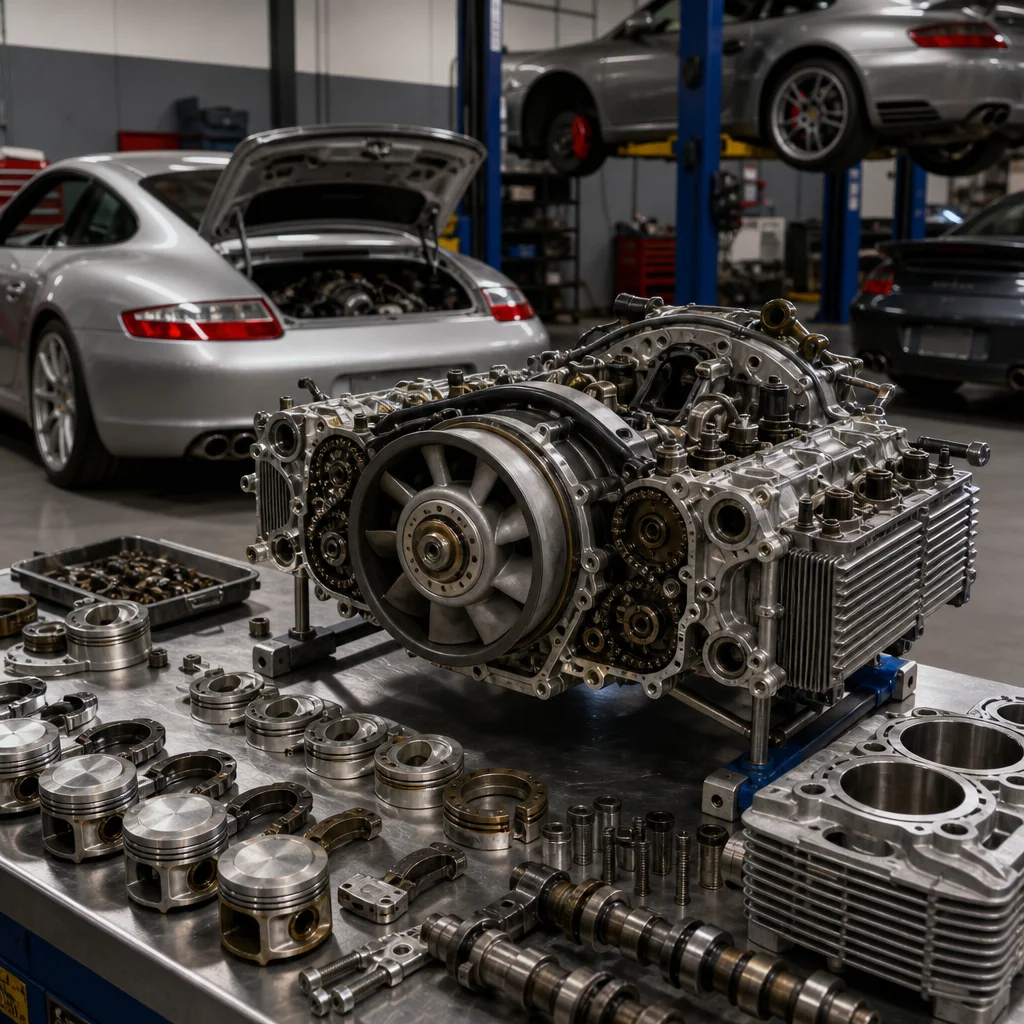
We also conduct a detailed inspection of your cooling system, fuel injectors, and intake valves during the rebuild. Small issues discovered during disassembly get addressed now rather than forcing you back into the shop in six months. This comprehensive approach prevents common situations where owners invest in a rebuild only to encounter unrelated failures shortly after.
Cost Breakdown for 996 Model Engine Reconstruction
A complete 996 engine rebuild typically ranges from $8,500 to $12,000, depending on the specific damage found during inspection and your performance goals. This price reflects the reality that initial inspections often reveal complications beyond what external diagnostics can detect.
Here’s how costs typically distribute:
Labor: $4,200-$5,800 (machine shop processes, assembly, and testing) Machine work: $1,200-$1,800 (boring, honing, head resurfacing) Parts and gaskets: $1,800-$2,800 (bearings, seals, fasteners, gasket set) Intermediate shaft bearing: $600-$900 (996-specific item frequently replaced) Performance upgrade components (optional): $1,500-$2,500
The 996’s intermediate shaft bearing issue frequently necessitates replacement during any rebuild, adding to your base cost. If your inspection reveals cylinder wall scoring requiring boring, or if your crankshaft needs grinding, expect movement toward the higher end of that range. Many owners discover that their timing chains are better served by replacement while the engine is apart, another consideration that affects final pricing.
We provide a detailed estimate after our diagnostic inspection, with full transparency on what we’re replacing and why. No surprise charges emerge once we’ve begun work.
Cost Breakdown for 997 Model Engine Reconstruction
A 997 engine rebuild generally ranges from $7,500 to $11,000, reflecting slightly better overall condition and fewer model-specific vulnerabilities than its 996 predecessor. The 997 benefits from improved intermediate shaft bearing design, which eliminates that common failure point in most examples.
Expected cost allocation:
Labor: $3,800-$5,200 (assembly, machining coordination, testing) Machine work: $1,000-$1,500 (refinishing and precision tolerances) Parts and gaskets: $1,700-$2,500 (seals, bearings, hardware, gasket set) Cooling system components: $400-$700 (water pump, thermostat housing) Performance enhancements (optional): $1,500-$2,500
The 997 often requires less corrective work in critical areas, which can lower your overall rebuild cost compared to a 996. However, valve stem seal issues and timing chain wear appear more frequently than in earlier generations, so those repairs might be incorporated into your rebuild pricing.
We assess your specific engine condition before quoting, ensuring your estimate reflects actual needs rather than assumptions based on model year alone.
Timeline Expectations for Your Engine Rebuild Project
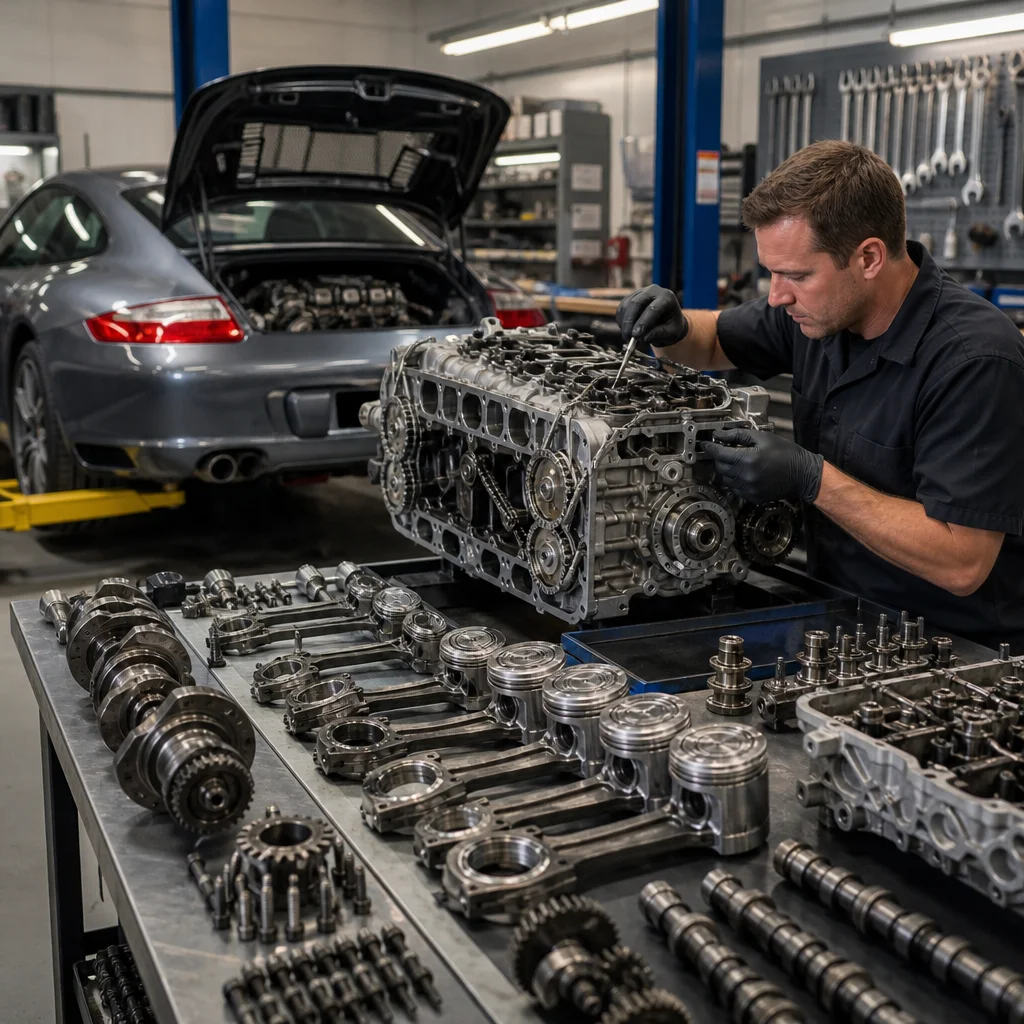
A complete Porsche 911 engine rebuild typically requires 6 to 10 weeks from the day we receive your core engine through completion and pressure testing. This timeline accounts for machine shop scheduling, parts procurement, and our meticulous assembly and verification processes.
The breakdown typically flows like this:
Week 1-2: Complete disassembly, inspection, and machine work planning Week 3-4: Machine shop processes (boring, honing, resurfacing) Week 5-7: Component restoration and precision assembly Week 8-9: Final assembly, gasket installation, and system checks Week 10: Dyno testing, pressure verification, and quality sign-off
Rush timelines are possible but require premium scheduling and may limit our ability to source optimal OEM components. We’ve found that the standard timeline actually serves you better, allowing us to coordinate with suppliers for genuine Porsche parts and perform thorough quality verification without pressure.
The timeline can extend if your inspection reveals additional issues like crankshaft regrinding or cylinder block repair. We always communicate these discoveries upfront rather than letting you wait indefinitely.
Our Advanced Diagnostic Approach Before Rebuild Work
We never begin an engine rebuild based solely on symptoms or customer descriptions. Our diagnostic process uses dealer-level equipment to determine exactly what’s failing and what’s merely showing normal wear.
Our protocol includes:
- Borescope inspection of all cylinders (visual evidence of scoring, carbon buildup, valve condition)
- Oil analysis testing for bearing metals, ferrous particles, and contamination
- Cylinder pressure testing to identify leaking rings or valve issues
- Coolant system inspection for contamination or combustion gas intrusion
- Compression testing and leak-down diagnostics
- Magnetic inspection of internal components when appropriate
- Digital documentation of findings for your review
This diagnostic phase takes 2-3 days and costs between $400-$600, but it prevents costly mistakes. We’ve occasionally discovered that a smaller repair would resolve the problem more cost-effectively than a complete rebuild, information that serves your budget better than our revenue.
Quality Standards and OEM Specification Compliance
Every component we install meets or exceeds Porsche’s original manufacturing specifications. We specify OEM bearings, gaskets, and seals throughout the rebuild rather than sourcing aftermarket alternatives that might compromise reliability.
Our quality standards include:
- Bearing installation with Plastigage verification of correct clearances
- Cylinder-to-piston clearance measurement within factory tolerances
- Head torque sequences followed with calibrated wrenches
- Valve timing verification against factory specifications
- Oil pressure testing at operating temperature before delivery
- Complete documentation of all specifications achieved during rebuild
We recognize that your 911 represents a significant investment, and its future reliability depends on precision work during this critical phase. Generic rebuilds sometimes deliver acceptable performance, but they won’t match the durability and precision you’ll experience from our process.
Performance Optimization Opportunities During Your Rebuild
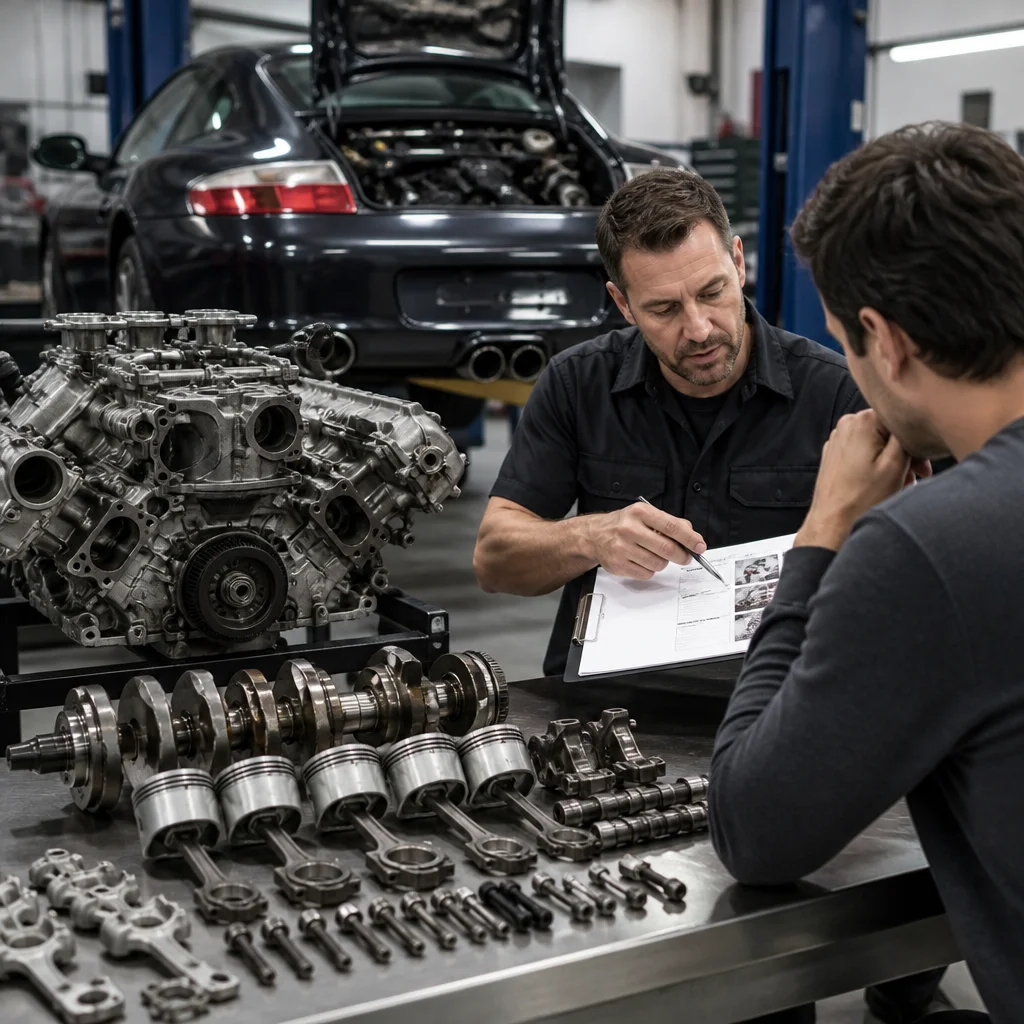
While we always prioritize restoration to OEM specification, a rebuild also presents the ideal time to consider performance enhancements. Your engine is completely disassembled, so adding modest performance improvements costs significantly less than retrofitting them later.
Common optimization options include:
- Higher-flowing cylinder head porting (adds 8-12 horsepower)
- Performance piston and ring packages (improves efficiency)
- Upgraded valve springs and components (supports higher RPM stability)
- Optimized oil circulation improvements (extends bearing life)
- ECU remapping coordination (maximizes the rebuild’s potential)
These enhancements typically add $1,500-$3,000 to your rebuild cost but deliver measurable performance gains. We discuss your performance goals during the consultation phase and provide specific recommendations based on your driving style and vehicle’s intended use.
How Our Rebuild Service Extends Engine Lifespan
A properly executed rebuild doesn’t simply restore your engine to its original condition; it establishes a foundation for significantly extended service life. We install modern seal designs and gasket materials that handle contemporary fuel additives and synthetic oils more effectively than original components.
Your rebuilt engine benefits from:
- Fresh bearing surfaces with correct oil clearances (eliminates bearing wear progression)
- New gasket materials that resist thermal cycling better than originals
- Modern seal compounds rated for extended service intervals
- Thorough system flushing that removes contaminants before reassembly
- Complete inspection of supporting systems (cooling, fuel, ignition)
Many owners report that rebuilt engines outlast the original powerplant by a substantial margin, sometimes delivering 150,000+ miles of reliable service. This longevity reflects the thoroughness of professional rebuilding compared to original manufacturing, which prioritizes cost-efficiency over maximum durability.
Regular maintenance after your rebuild maintains this extended lifespan. We recommend synthetic oil changes every 10,000 miles, coolant system flushing every three years, and periodic fuel system cleaning to prevent deposit formation.
Getting Started with Your Engine Rebuild Consultation
The first step is scheduling a comprehensive diagnostic evaluation. Bring your Porsche in and let us perform the thorough inspection that reveals exactly what your engine requires. This consultation typically takes a full business day and results in a detailed report with repair options, pricing, and timeline.
We’ll discuss your budget constraints, performance goals, and timeline expectations openly. If a complete rebuild seems excessive, we’ll say so and recommend a targeted repair approach instead. Our primary objective is delivering the right solution for your specific situation, not maximizing the invoice.
To get started, contact us through our website or call directly. Describe your symptoms or concerns, and we’ll schedule your engine assessment at a time that works with your schedule. We’ll arrange a loaner vehicle if you need transportation during the rebuild process, ensuring you stay mobile while we restore your 911’s heart.
Your Porsche deserves expertise that goes beyond routine service. We’re ready to rebuild your engine with the precision and care it demands.