Table of Contents
- Why Performance Tuning Preparation Matters for European Imports
- Critical Pre-Tuning Diagnostic Requirements
- Engine and Transmission Baseline Assessment
- Fuel System Optimization Before Tuning
- Cooling System and Thermal Management Upgrades
- Electrical System Verification and Battery Health
- Suspension and Brake System Readiness
- Our Complete Pre-Tuning Inspection Process
- Performance Tuning Success Criteria and Timeline
- Getting Started with EuroX Performance Tuning
Why Performance Tuning Preparation Matters for European Imports
Performance tuning transforms your European vehicle’s capabilities, but only when the foundation is solid. We’ve seen countless owners rush into ECU remapping or turbo upgrades without properly assessing their engine’s condition, only to face component failures weeks later. European vehicles, especially high-performance models like BMW M-series, Porsche 911s, and Audi RS models, demand precision preparation because their engineering tolerances are tighter and their systems more interconnected than mass-market vehicles.
The difference between a successful tune and a costly mistake often comes down to preparation. A properly prepared vehicle can safely gain 30-50 horsepower with ECU remapping alone, while an unprepared one risks detonation, transmission slip, or fuel system strain. We approach every performance upgrade project by treating preparation as the most critical phase, not an afterthought. This methodical approach protects your investment and ensures the tuning work delivers the results you’re expecting.
What you should do: Before contacting us about any performance upgrade, honestly assess your vehicle’s maintenance history. Consistent service records and recent major repairs signal readiness; neglected maintenance indicates you need our pre-tuning diagnostics first.
Critical Pre-Tuning Diagnostic Requirements
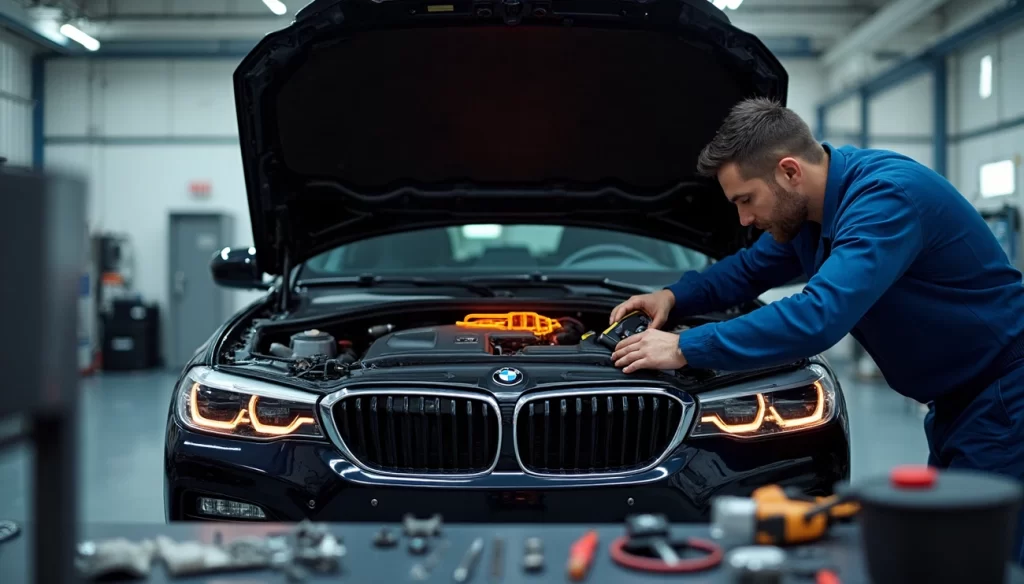
Our first step in any tuning project is running a comprehensive diagnostic scan that goes far beyond basic code-reading. We use dealer-level equipment connected to your vehicle’s multiple control modules to establish a complete baseline of how your engine, transmission, and emissions systems are currently performing. This isn’t the same as clearing a check engine light and hoping for the best; it’s about understanding every parameter your ECU is monitoring.
We specifically look for stored codes, pending codes, and system parameters that fall outside normal ranges. A vehicle with active faults will respond unpredictably to tuning changes, and the ECU’s safety protocols may limit boost or fuel delivery anyway, neutralizing your upgrade investment. Conditions like a weak oxygen sensor, faulty mass airflow sensor, or vacuum leak directly undermine tuning effectiveness. If your vehicle has a Check Engine Light Services, addressing it before tuning is non-negotiable.
Additionally, we verify fuel trims, ignition timing stability, and boost pressure consistency (if applicable). These real-world readings tell us whether your engine is already running lean, rich, or unstable, which dramatically influences what tuning parameters are safe.
What you should do: Schedule a diagnostic appointment and bring any documentation of previous repairs or warning lights. This costs less than adjusting a failed turbo later.
Engine and Transmission Baseline Assessment
Understanding your engine’s current state requires more than visual inspection. We perform a compression test on all cylinders to identify any wear in the bore, rings, or valves. Low compression in even one cylinder signals internal damage that will worsen under increased boost pressure. For turbocharged vehicles, we also check turbocharger spool-up speed and wastegate function to confirm everything is operating within OEM specifications.
Transmission assessment depends on whether you have a manual or automatic. Manual boxes need clutch health evaluation and synchronizer function testing; a worn clutch will slip under increased engine torque, wasting your tuning gains. Automatic transmissions require fluid condition analysis, shift response testing, and torque converter lockup verification. Modern DSG and ZF automatics in European performance vehicles are remarkably robust, but only if they’re not already showing signs of strain from towing, aggressive driving, or deferred maintenance.
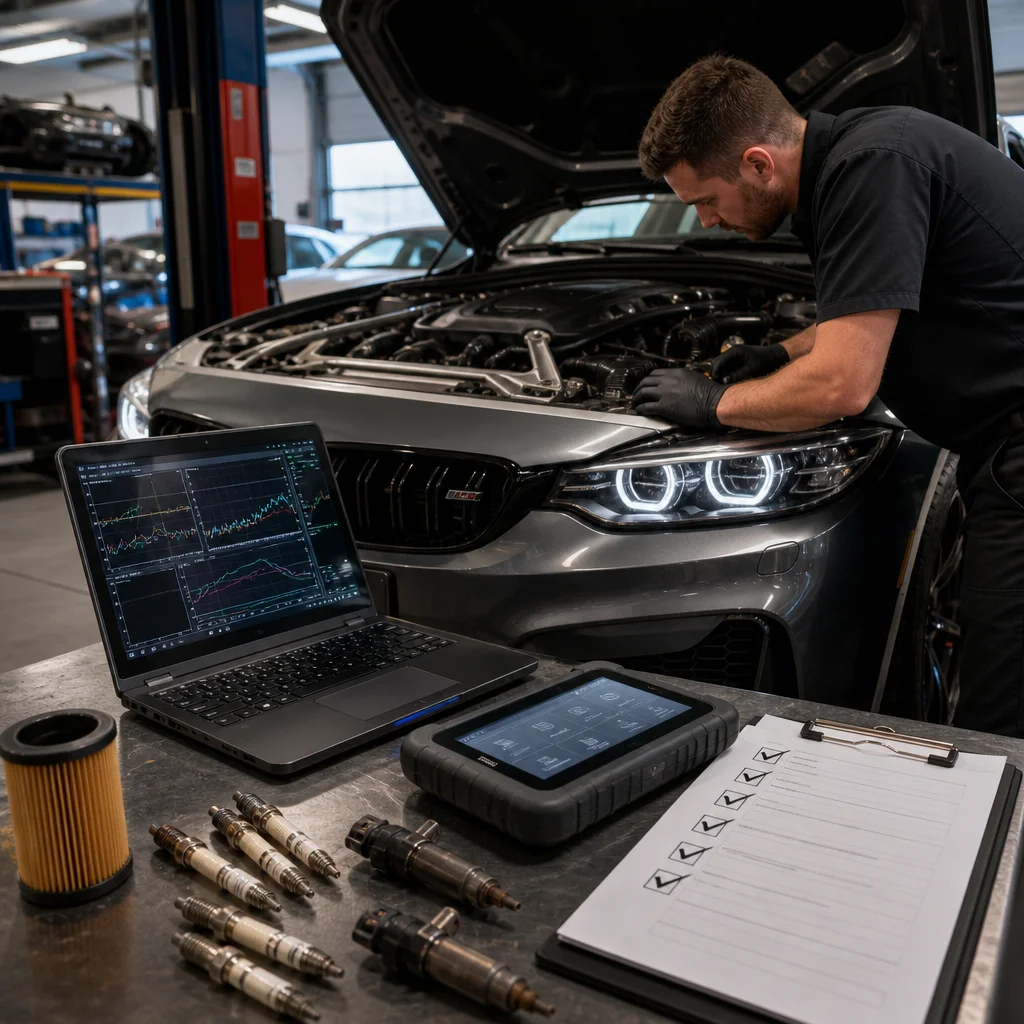
We also measure crankcase blow-by pressure and PCV system function. Excessive blow-by indicates internal engine wear and can cause fuel mixture problems after tuning.
What you should do: Request a detailed pre-tuning engine and transmission report. If compression is below spec or transmission response is sluggish, address those issues before spending money on ECU work.
Fuel System Optimization Before Tuning
Your fuel system is the limiting factor for how much power tuning can safely add. Many European vehicles arrive for tuning with fuel filters that haven’t been changed in 50,000 miles, fuel injectors that are partially clogged, or fuel pressure regulators that don’t maintain spec. These conditions force the engine to run richer than intended, masking fuel system weakness.
We perform fuel pressure testing at idle and under load to confirm your fuel pump and regulator are holding steady within manufacturer specifications. We inspect the fuel filter condition and, when necessary, professionally clean injectors using ultrasonic equipment. For vehicles going beyond 50 horsepower gains, we recommend upgrading to an in-tank pump with higher flow capacity and fitting stainless steel fuel lines to reduce vapor lock risk under sustained high load.
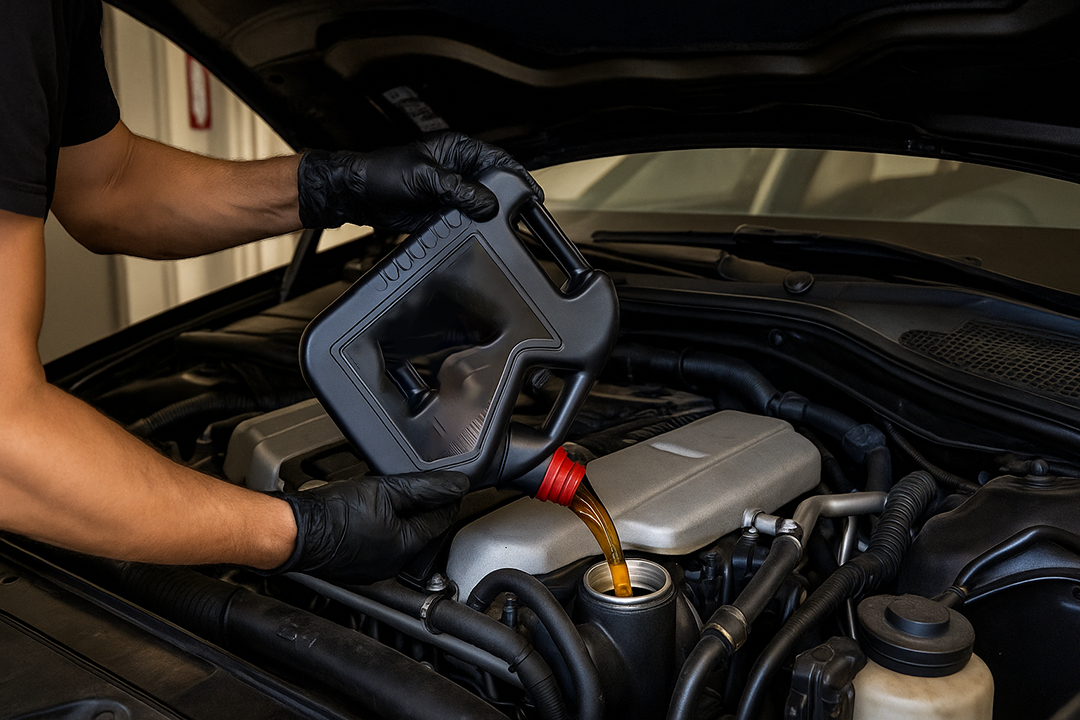
Flex-fuel systems (ethanol-compatible) require additional attention. If your European vehicle can run E85, we verify ethanol sensor function and fuel pump compatibility before adjusting maps for E85 operation, which burns hotter and requires richer fuel mixtures.
What you should do: Have your fuel pressure tested and document the results. If it’s below 55 PSI at idle on a gasoline vehicle, the fuel system needs work before tuning commences.
Cooling System and Thermal Management Upgrades
Performance tuning increases heat output by 20-40 percent compared to stock operation. Many owners assume their factory cooling system will handle this, then discover overheating issues during summer driving or track days. We evaluate coolant condition, thermostat operation, radiator core cleanliness, and water pump function before approving any power increase.
European vehicles often benefit from upgraded radiators and high-capacity thermostat housings that improve coolant flow. We check whether your current setup includes an electric fan or engine-driven viscous fan; electric fans are more efficient and maintain stable temps under varying engine loads. Hose routing and clamp condition also matter; we’ve traced overheating issues to kinked coolant hoses that restrict flow.
For serious tuning projects, we sometimes recommend auxiliary oil coolers or transmission coolers. An oil cooler protects turbo bearings and engine internals when sustained boost operation heats oil beyond 220 degrees Fahrenheit. Transmission coolers prevent automatic gearbox fluid degradation under repeated high-torque shifts.
What you should do: Flush your cooling system and replace the thermostat if it hasn’t been serviced in 3-5 years. Confirm your radiator cap holds pressure and isn’t just sitting loose from wear.
Electrical System Verification and Battery Health
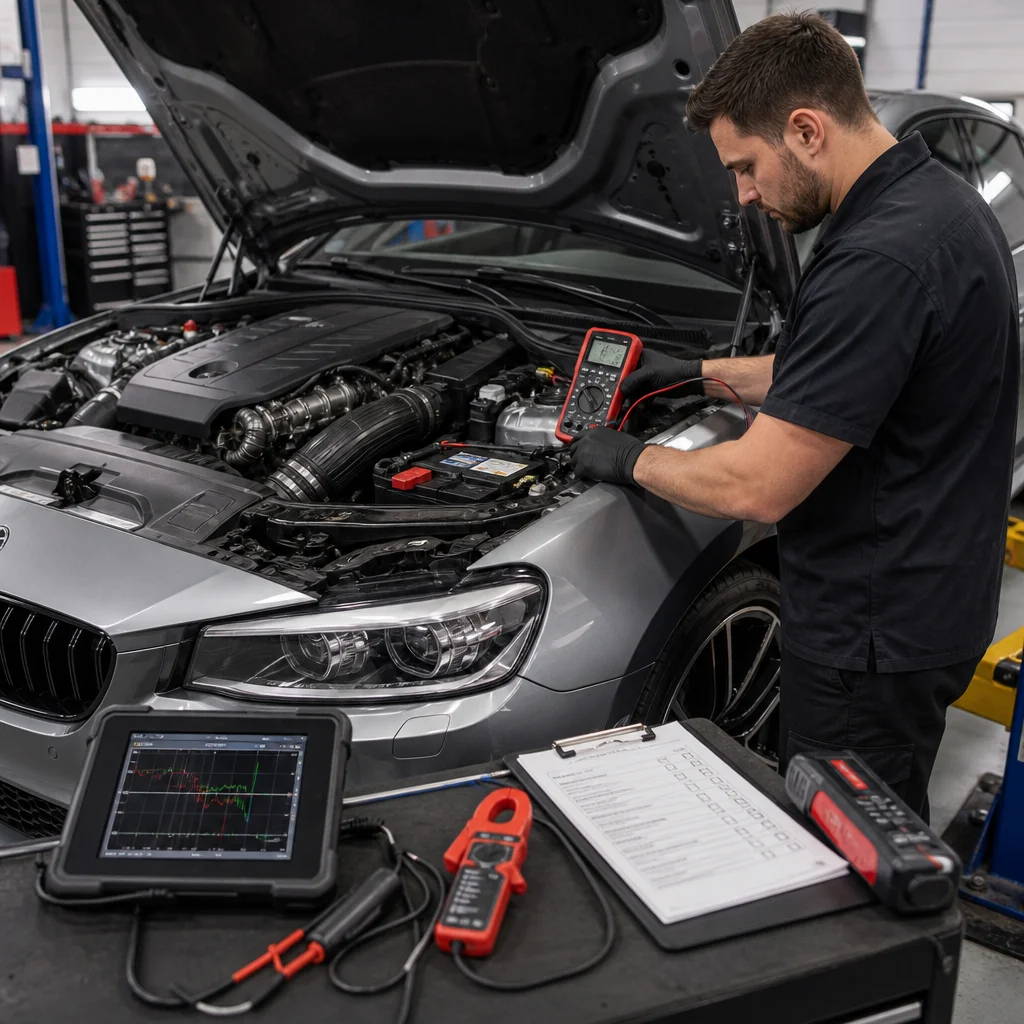
Modern European vehicles rely on robust electrical systems to manage turbochargers, variable valve timing, fuel injectors, and ignition timing. Tuning amplifies the demand on these systems. A weak alternator can’t keep up with increased injector duty cycle; a corroded battery terminal creates voltage drops that affect sensor accuracy and ECU response time.
We perform a complete electrical load test to confirm your alternator output meets OEM specifications (typically 100-130 amps on modern vehicles) and verify your battery maintains above 13.8 volts under full engine load. Corroded terminals are cleaned and protected. We also inspect engine ground straps and frame grounds, which are critical for sensor signal integrity.
For vehicles receiving aggressive tuning, we sometimes recommend upgrading to a higher-capacity battery with better cold-start amperage. This improves ECU stability and ensures fuel injector timing remains crisp even during peak torque delivery.
What you should do: Have your alternator and battery tested at a parts store or with our diagnostic equipment. If alternator output is below 90 amps or battery voltage drops below 13V at 2,000 RPM, have those items refreshed before tuning.
Suspension and Brake System Readiness
More power demands more stopping power and suspension stability. We evaluate brake pad thickness, rotor condition, and brake fluid age before tuning. Brake fluid absorbs moisture over time and loses boiling point; aged fluid can vapor-lock under repeated hard braking after your vehicle’s power increases. Many owners find their brakes feel soft or grabby after tuning, only to discover the brake fluid was three years past its service interval.
Suspension components influence how your vehicle handles added torque. We check control arm bushings, tie rod ends, wheel bearings, and shock absorber function. Worn bushings transmit torque through compromised geometry, causing unpredictable handling even if your engine makes perfect power. We also verify that your current wheel and tire combo can handle the increased cornering loads; a performance tune on worn suspension feels unstable and dangerous.
Vehicles destined for track use need more aggressive evaluation. We may recommend coil-over upgrades, sway bars, or brake pad and fluid packages designed for sustained heat cycling.
What you should do: Have brake pads inspected and brake fluid tested. If pads are below 4mm or fluid appears dark brown, budget for brake work alongside your tuning project.
Our Complete Pre-Tuning Inspection Process
We’ve developed a methodical inspection process that takes 4-6 hours and costs less than one repair failure after incomplete tuning. Our checklist covers engine and transmission baseline data, fuel system pressure and quality, cooling system function under load, electrical system capacity, and suspension and brake system readiness. We also run a full OBDII scan on all vehicle modules and verify that your specific vehicle’s year, model, and trim are documented for correct tuning map selection.
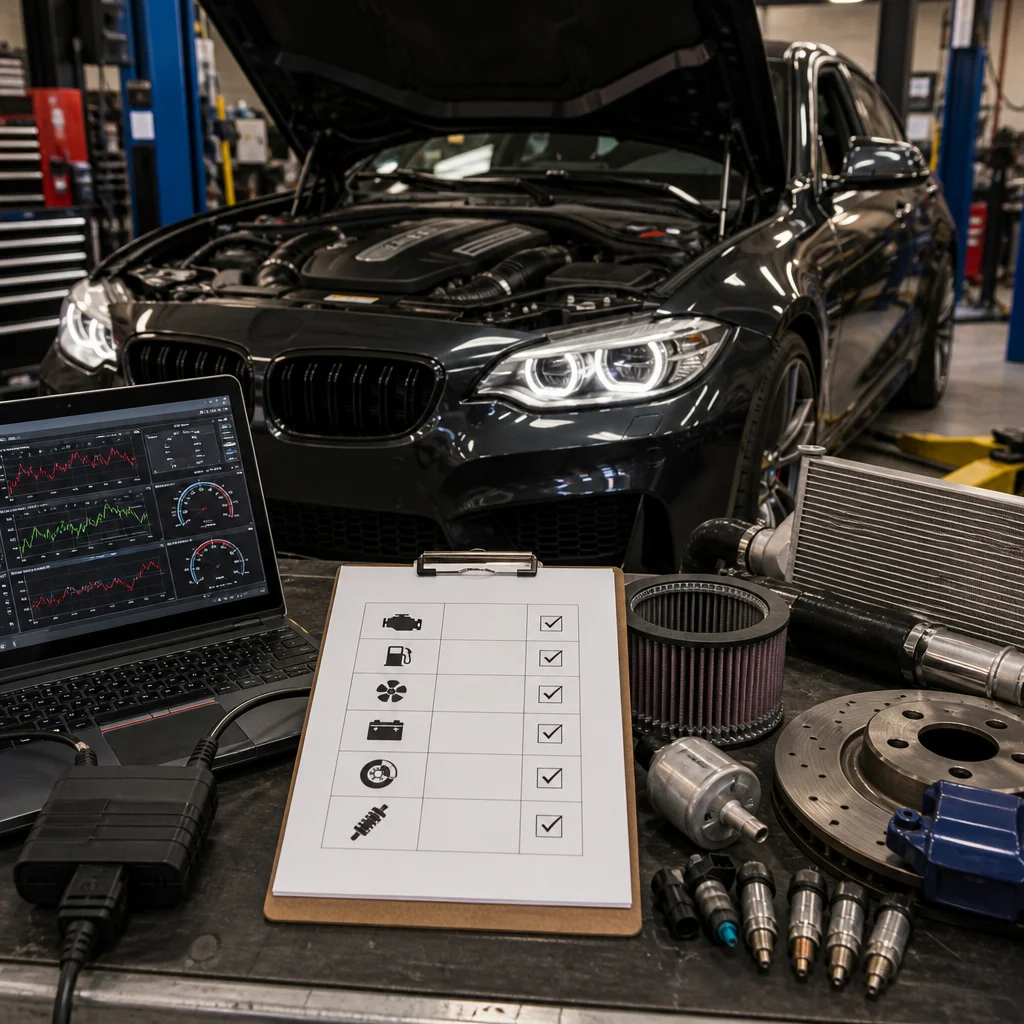
You’ll receive a written report detailing each finding, with recommended repairs prioritized by impact on tuning safety. This transparency lets you make informed decisions about what to address immediately and what can wait. Many owners discover that a few hundred dollars in preventive maintenance now saves thousands in component replacement after a tuning failure.
Our inspection also identifies any aftermarket modifications or previous repairs that might conflict with the tuning map we’re planning. A previous bad ECU tune, an incorrectly installed turbo, or mismatched fuel injectors all need attention before we proceed.
What you should do: Schedule this inspection before committing to a tuning package. The insight you’ll gain about your vehicle’s true condition is worth every penny.
Performance Tuning Success Criteria and Timeline
A successful tune delivers consistent power gains without triggering component failures or warranty issues. We define success as smooth power delivery across your operating range, stable idle quality, normal cold-start behavior, and no new warning lights appearing within 500 miles of completion. Most owners notice the difference immediately; acceleration feels sharper, throttle response tightens, and overall drivability improves even at part-throttle.
The timeline for our complete process typically spans 1-2 weeks. Initial diagnostics and repairs take 3-5 days, depending on whether pre-tuning issues are found. The actual tuning session takes 2-3 hours of dyno time, including map loading, baseline power measurement, calibration, and verification runs. We then recommend a 200-mile break-in period at moderate driving intensity before unleashing full tuning on your vehicle.
Post-tuning, we schedule a follow-up diagnostic scan two weeks out to confirm the ECU’s learned parameters have stabilized and no new fault codes have appeared. This follow-up is included in our tuning service, not an add-on charge.
What you should do: Plan at least 10 business days from your initial appointment to completion. Don’t schedule a tune the week before a road trip or track event; give your vehicle time to adapt to its new calibration.
Getting Started with EuroX Performance Tuning
You’re ready for tuning when you’ve addressed the foundation: confirmed your fuel system, cooling system, electrical system, brakes, and suspension meet specifications; established baseline engine and transmission health; and cleared any active fault codes. We’re here to guide you through every step of this preparation, not just the glamorous ECU remapping stage.
Contact us to schedule your pre-tuning inspection, and we’ll assess your specific vehicle against our comprehensive checklist. If your vehicle is well-maintained and mechanically sound, you might be ready to proceed within a few days. If we uncover pre-existing issues, we’ll explain exactly what needs attention and why it matters for your tuning success. This honest, methodical approach is why European vehicle owners trust EuroX Performance for performance upgrades. We’re veteran-owned, dealer-trained, and equipped with the diagnostic technology to ensure your tuning delivers real results without surprises.
Your European performance vehicle deserves precision engineering from a shop that understands its complexity. Let’s prepare it properly.