Table of Contents
- When Your BMW's Transmission Signals Trouble
- Understanding Transmission Failure vs. Clutch Wear
- Our Advanced Diagnostic Process for BMW Drivetrains
- Transmission Rebuild: When Complete Overhaul Is Necessary
- Clutch Replacement: Targeted Solutions for Wear and Damage
- Cost Comparison: Rebuild vs. Replacement Decisions
- Our Transmission Rebuild Expertise and Standards
- Performance Upgrades During Transmission Service
- Preventing Future Transmission and Clutch Issues
- Why We're Your BMW Transmission Specialists
When Your BMW’s Transmission Signals Trouble
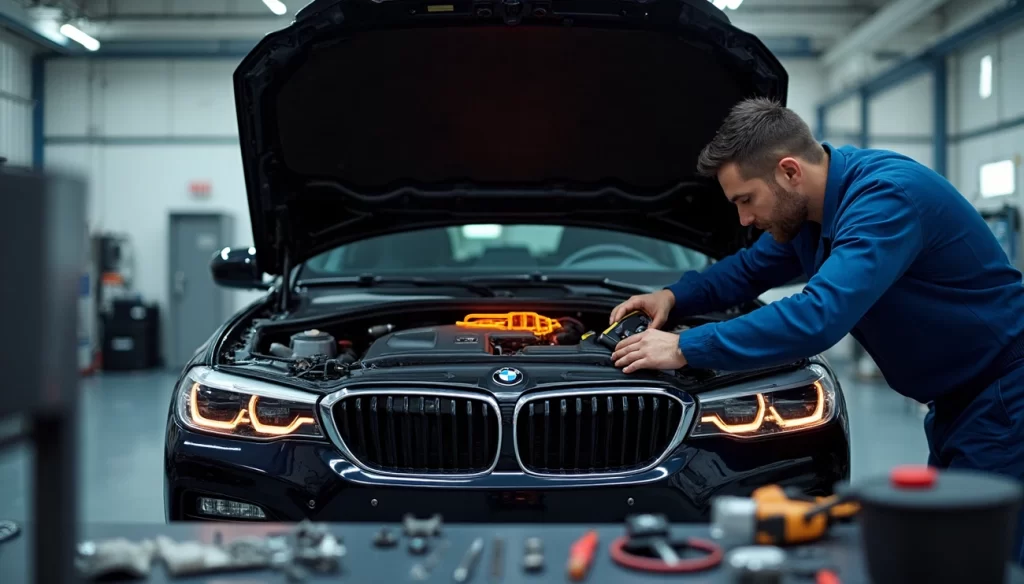
Your BMW’s transmission is one of its most sophisticated systems. Unlike generic vehicles, BMW drivetrains integrate multiple electronic components with mechanical precision that demands specialized attention. When something goes wrong, the symptoms can feel ambiguous.
You might notice hesitation during gear changes, a grinding sensation, or difficulty engaging first gear. Some owners report a burning smell when accelerating, while others experience sudden loss of power delivery. The check engine light may illuminate with transmission-related fault codes, or the problem might manifest as a vague feeling that something is off.
The challenge is distinguishing between early-stage clutch wear and serious transmission damage. Both create similar driving experiences, yet they require fundamentally different repair strategies. Misdiagnosing which component is failing leads to unnecessary expenses and incomplete repairs.
What to do next: If you notice transmission symptoms, schedule a diagnostic appointment before the problem escalates. Continuing to drive with transmission issues often causes cascading damage to other drivetrain components.
Understanding Transmission Failure vs. Clutch Wear
The clutch and transmission work together but fail independently. Your BMW’s clutch is a wear item designed to gradually degrade over time. Depending on driving habits, clutch packs typically last 80,000 to 150,000 miles. When they wear out, the friction material thins, reducing the clutch’s ability to grip and transfer engine power to the transmission.
Transmission failure is different. It involves internal damage to gears, synchros, bearings, or hydraulic systems. This typically results from clutch failure left unchecked, contaminated fluid, lack of maintenance, or manufacturing defects in specific BMW model years.
Here’s the practical distinction: A worn clutch slips under load, making the engine rpm rise without proportional acceleration. Your transmission itself still functions mechanically. A failing transmission exhibits metal shavings in the fluid, grinding noises, harsh shifts, or complete loss of a gear. The internal mechanical components are breaking down.
Some owners confuse symptoms. A soft clutch pedal, for instance, often signals clutch wear rather than transmission failure. Conversely, delayed engagement after shifting and transmission fluid that smells burnt typically point to transmission trouble.
Our Advanced Diagnostic Process for BMW Drivetrains
We don’t rely on guesswork. Our diagnostic approach combines sophisticated computer analysis with hands-on inspection to pinpoint exactly what’s happening.
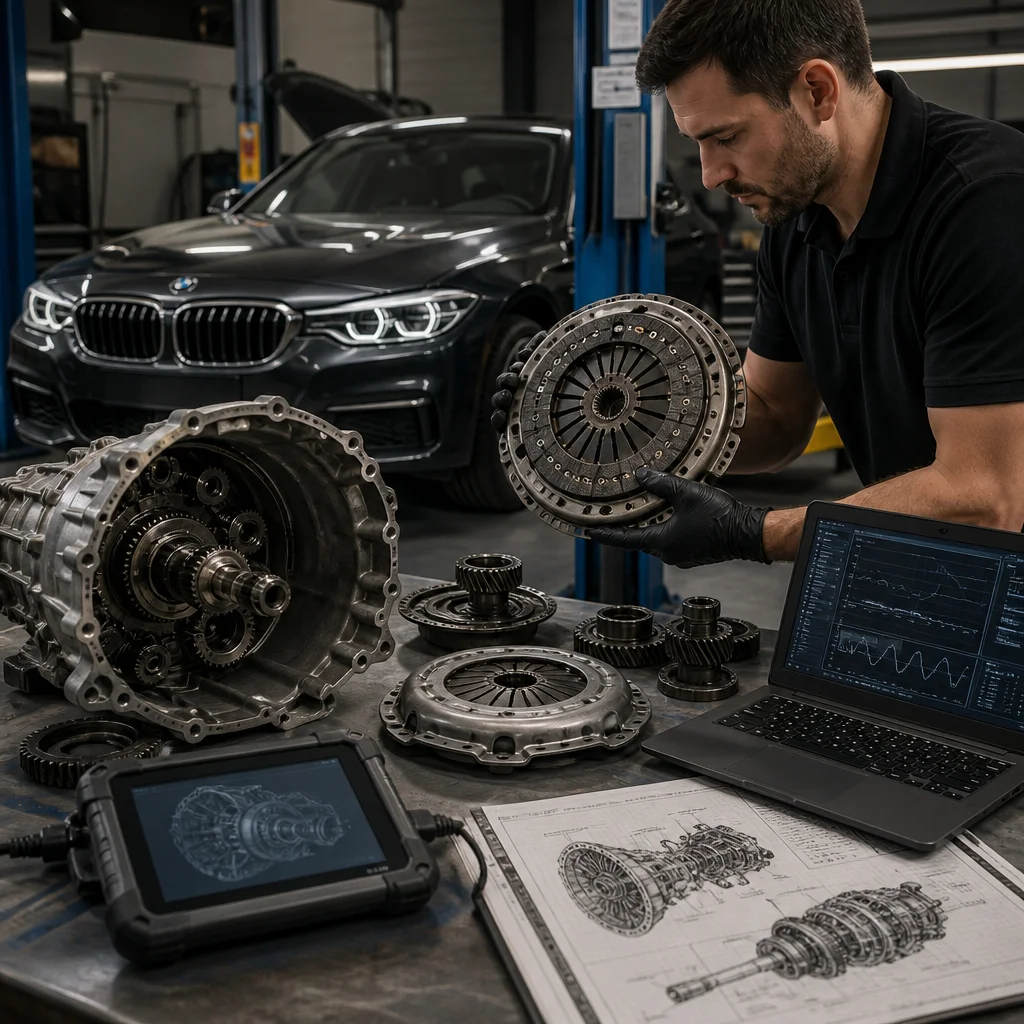
First, we pull diagnostic trouble codes using dealer-level equipment. This gives us specific fault information that generic scanners miss. BMW transmissions communicate dozens of parameters electronically, and these codes tell us whether the problem originates in the clutch actuator, transmission solenoids, or mechanical gearbox components.
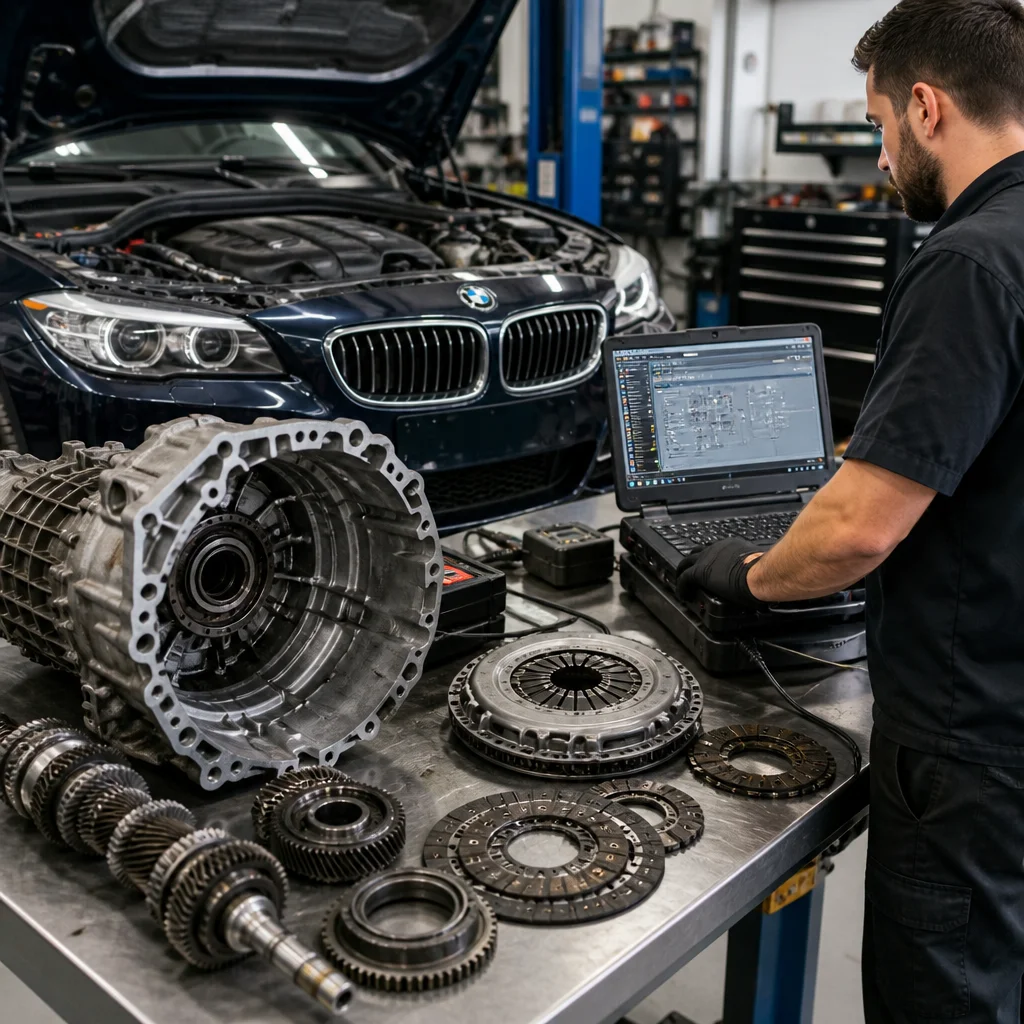
Next, we perform a comprehensive drivetrain diagnostics evaluation that includes:
- Transmission fluid analysis (color, viscosity, metal content, and contamination particles)
- Clutch pedal pressure and engagement point assessment
- Test driving under various load conditions to reproduce symptoms
- Physical inspection of transmission mount condition and any visible leaks
- Gear engagement response analysis
We also examine your service history. A transmission that’s never had a fluid change behaves differently from one that’s been properly maintained. BMW specification fluid matters more than generic alternatives.
Based on this multi-step process, we determine whether your transmission needs a full rebuild, whether a clutch replacement addresses the core issue, or whether both components require attention simultaneously.
Transmission Rebuild: When Complete Overhaul Is Necessary
We recommend a transmission rebuild when internal components are damaged beyond repair. This involves complete disassembly, inspection of every gear, bearing, and synchro ring, replacement of worn parts, and reassembly to manufacturer specifications.
Typical scenarios requiring rebuild include:
- Gear tooth breakage or visible scoring on gear surfaces
- Bearing failure with metal debris throughout the transmission
- Multiple synchro failures affecting smooth shifts
- Transmission fluid contaminated with ferrous material
- Catastrophic failure after clutch failure wasn’t addressed
The rebuild process takes our technicians 3 to 5 days, depending on BMW model complexity. We replace all seals, gaskets, and wear-prone components. We use OEM parts or equivalent quality components, never substandard alternatives that would compromise performance.
A rebuilt transmission from us comes with a 24-month warranty. This reflects our confidence in the workmanship and component quality. We’re not just reassembling worn parts; we’re restoring your transmission to factory specifications.
Clutch Replacement: Targeted Solutions for Wear and Damage
Clutch replacement is a more straightforward procedure when wear is the primary issue. We remove the transmission, inspect the flywheel, replace the clutch disc and pressure plate, and reinstall everything with proper torque specifications.
Many BMW owners ask whether they need their flywheel resurfaced. On newer BMWs, we typically replace the flywheel rather than machine it. Modern flywheels have specific surface properties that machining can compromise, and the cost difference between resurfacing and replacement is minimal.
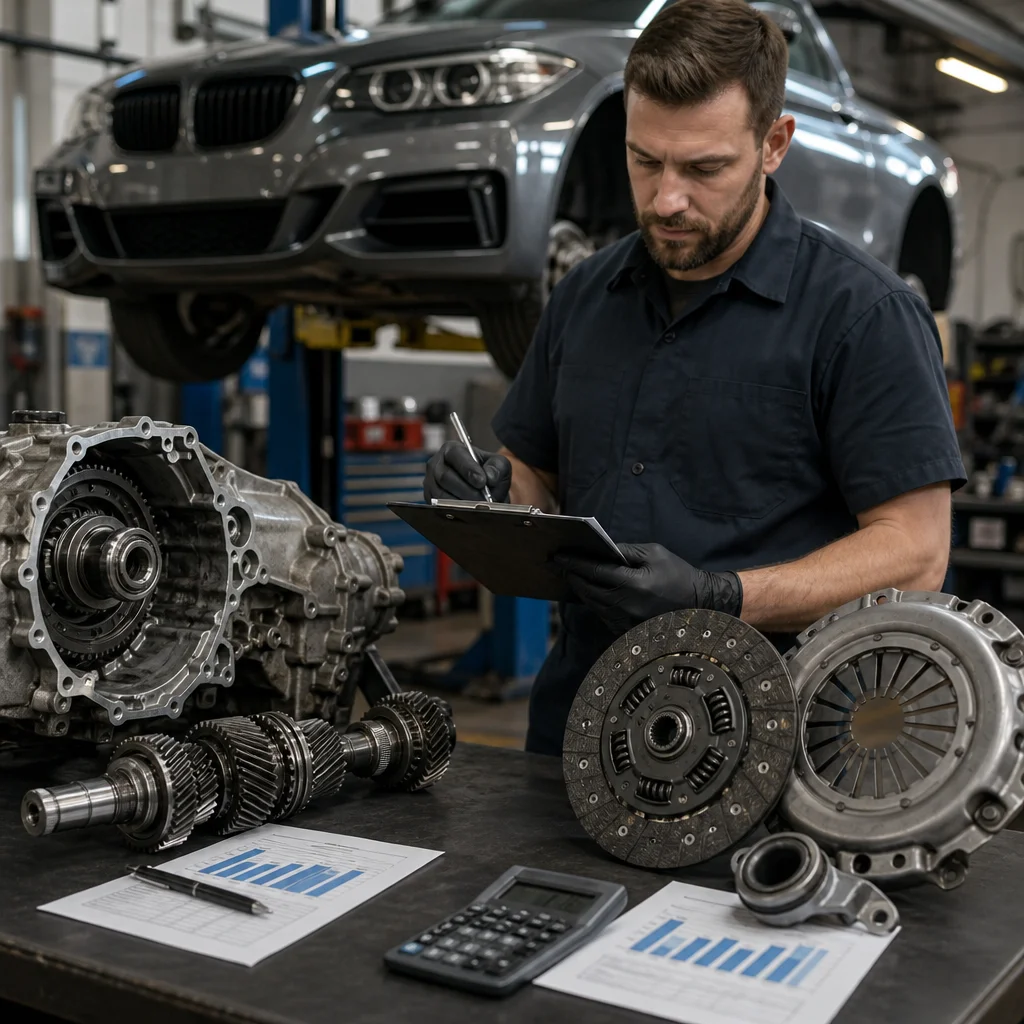
We also inspect the clutch slave cylinder and hydraulic lines during this service. Hydraulic clutch systems can develop micro-leaks that create soft pedal feel, and addressing these prevents future problems.
If your transmission is mechanically sound but your clutch has simply worn out, this targeted approach restores smooth shifting and responsive engagement without the expense and complexity of a full rebuild.
Cost Comparison: Rebuild vs. Replacement Decisions
Transmission rebuilds typically range from $3,500 to $5,500 at our shop, depending on BMW model and component damage severity. This covers all labor, OEM parts, seals, gaskets, and our warranty.
Clutch replacement alone runs $1,200 to $1,800, including flywheel replacement, labor, and all necessary hardware.
Here’s where diagnostic accuracy matters financially: Replacing a clutch when your transmission actually needs rebuilding doesn’t solve your problem and wastes money. Conversely, rebuilding a transmission when a $1,500 clutch replacement would suffice is unnecessarily expensive.
We’ve seen owners make this mistake when they trust shops that skip proper diagnostics. The money saved upfront through incomplete diagnosis often multiplies when the core problem resurfaces weeks later.
Our diagnostic fee is $150, which applies toward any repair work you authorize. This investment prevents costly misdiagnoses.
Our Transmission Rebuild Expertise and Standards
We specialize in BMW transmissions across multiple generations. Whether you own a vintage manual E46 M3, a modern DCT-equipped F80, or anything in between, we understand the specific engineering and rebuild requirements.
Our technicians hold manufacturer certifications and access BMW technical bulletins and service documentation that generic shops simply don’t have. When we rebuild a transmission, we’re not improvising; we’re following the precise specifications that BMW engineers designed.
We also maintain relationships with specialty suppliers who provide OEM and OEM-equivalent components. This matters because transmission part quality directly correlates with durability and performance.
Every rebuild exits our shop dyno-tested. We don’t just confirm it shifts smoothly; we verify that power delivery meets specifications under load.
Performance Upgrades During Transmission Service
Transmission service creates an opportunity for thoughtful performance enhancements. If your clutch is already being replaced, upgrading to a higher-performance clutch that handles more power is straightforward.
Some owners combine transmission work with ECU remapping. A reprogrammed engine management system can extract additional horsepower, but this increased power demands a clutch capable of handling it. Timing these modifications together is efficient and economical.
We discuss these options during your diagnostic consultation. Not every BMW owner wants performance upgrades, and that’s completely valid. Our role is presenting the opportunity and letting you decide what matches your goals and budget.
Preventing Future Transmission and Clutch Issues
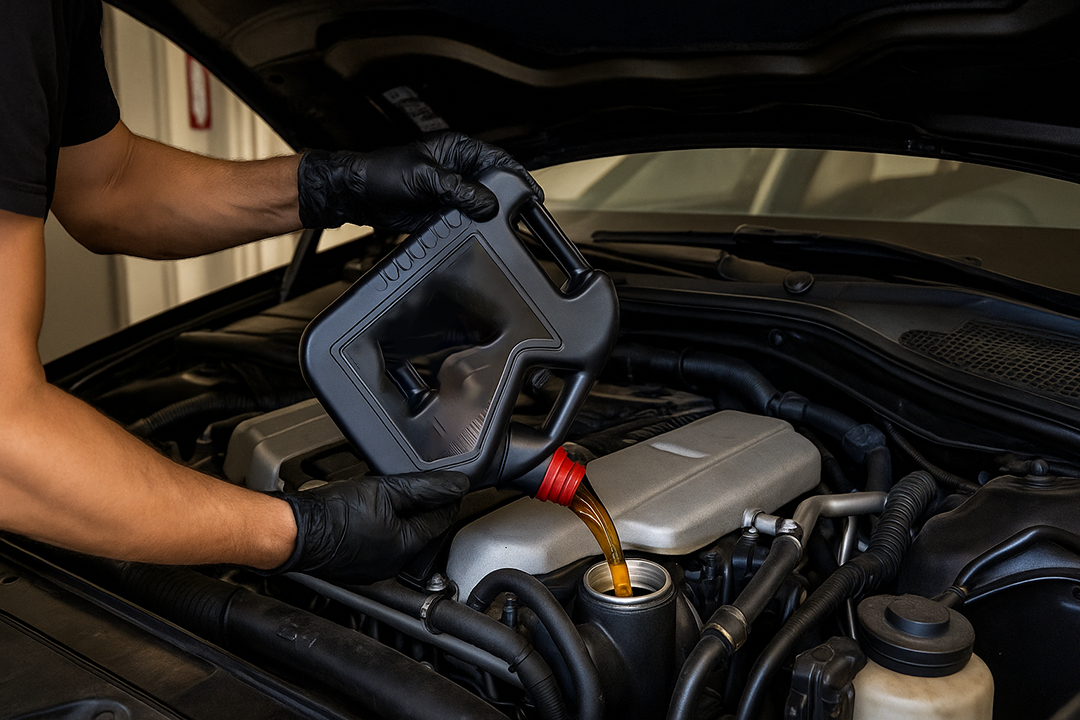
Transmission longevity depends on consistent maintenance. Fluid changes at BMW-specified intervals prevent contamination buildup that accelerates internal wear. We perform transmission fluid analysis as part of our comprehensive maintenance programs.
Smooth driving habits extend clutch life significantly. Aggressive engagement from complete stops, riding the clutch on hills, and riding the clutch during traffic all accelerate wear. Conservative driving practices maximize component lifespan.
Monitor your transmission temperature. Modern BMWs display this on the instrument cluster. If transmission temperatures consistently exceed 110 degrees Celsius, it signals that cooling systems or driving conditions are stressing the drivetrain.
Address transmission warning lights immediately rather than hoping they resolve. Early intervention often prevents expensive failures.
Why We’re Your BMW Transmission Specialists
We’re veteran-owned and operate as BMW specialists, not generalists trying to service everything. This focus means our technicians have worked on hundreds of BMW transmissions, not dozens scattered across other brands.
We invest in diagnostic equipment, technical training, and OEM parts inventory because our reputation depends on getting transmission work right. Transmission failures are expensive and frustrating; we take that seriously.
When you bring your BMW to us for transmission concerns, you’re working with technicians who understand your vehicle’s engineering at a depth that generic shops can’t match. That expertise translates to accurate diagnostics, appropriate repair recommendations, and quality work that keeps your BMW performing reliably.
Contact us to schedule your transmission diagnostic evaluation. We’ll identify exactly what’s happening with your drivetrain and recommend the most practical solution for your specific situation.