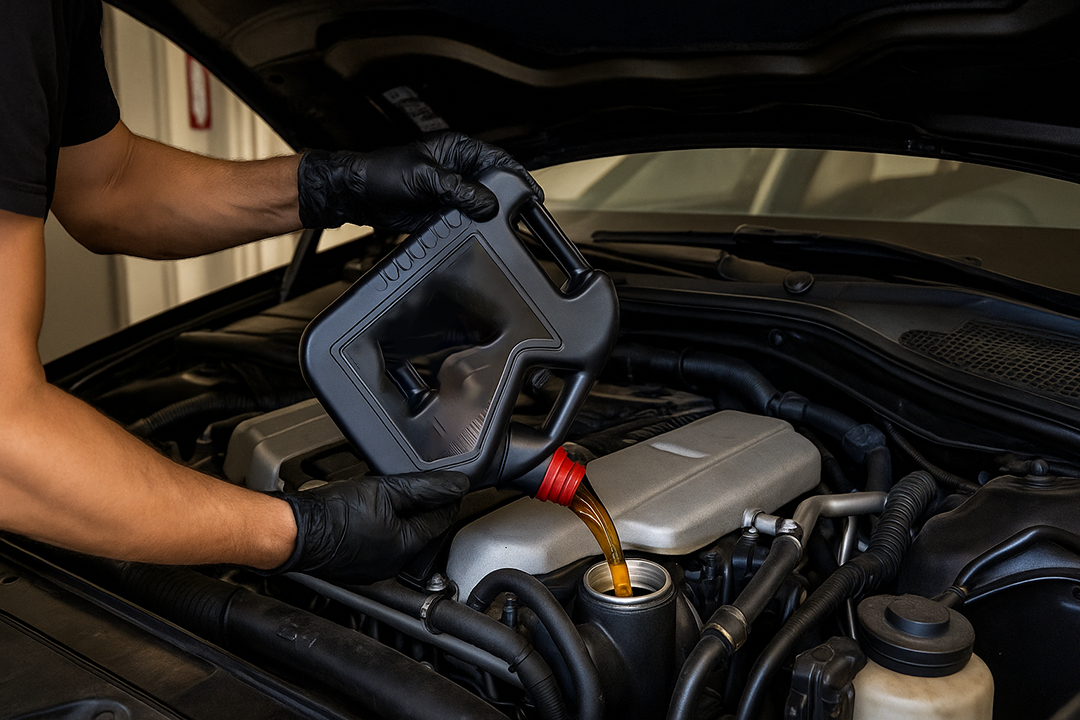
Repairing an exhaust manifold leak means finding where exhaust escapes, then checking the flange and mounting hardware before replacing the gasket. A tick that fades as the engine warms is a common clue, not proof. If exhaust enters the cabin, stop driving and have the car inspected before using it again.
Is a Tick That Fades When the Engine Warms Up Harmless?
A tick that quiets as the engine warms can point to a leak between the manifold and cylinder head. Heat expands the manifold and may narrow the gap enough to reduce the sound. A quieter engine does not confirm that the joint has sealed.
The aluminum cylinder head and a cast iron or stainless steel manifold expand at different rates. Repeated heating and cooling stresses the mounting studs and can distort the flange. A freezing Golden morning can make an existing gap more noticeable at startup.
Does Any Ticking Under the Hood Point to a Lifter?
A lifter or valve tick can sound similar, but it often persists when warm and may change with oil pressure. It does not leave exhaust soot around the manifold joint. Sound alone is not enough to distinguish the faults.
Before buying parts, check the pattern and look for physical evidence:
- Listen during a cold start and again after the engine warms. Note how the sound changes.
- With the engine off and cold, look for black soot around the manifold-to-head joint. A heat shield may conceal the leak; do not reach around hot exhaust components.
- Note whether the tick changes with engine speed or load. Both exhaust and valvetrain noises can follow engine speed, so this observation is a clue rather than a diagnosis.
- Scan for stored codes and inspect live fuel trims. A lean reading needs investigation before a sensor is replaced.
Is Exhaust Smell in the Vents Just a Nuisance?
No. A leak near the firewall or cowl can let exhaust enter through the ventilation system’s fresh-air intake, particularly while the vehicle is stopped. Carbon monoxide is odorless, so the strength of the exhaust smell cannot tell you whether the air is safe.
When to Stop Driving Now
If exhaust comes through the vents, pull over safely, shut off the engine and move into fresh air. Do not drive again until the source has been inspected; arrange transport rather than driving to the shop. If anyone develops a headache or dizziness after possible exposure, call emergency services.
When a Scheduled Inspection Is Enough
A brief cold-start tick without cabin fumes or a change in how the engine runs can generally wait for a scheduled inspection. Book it soon, and never idle the vehicle in an enclosed garage. To discuss the symptoms, contact EuroX Performance or call (303) 562-1800.
Does Mountain Driving Just Work the Engine Harder?
A sustained climb on Floyd Hill or toward the Eisenhower Tunnel keeps a turbocharged engine under load longer than ordinary level-road driving. The exhaust manifold stays hot during the climb, then cools as engine load drops on the descent. Repeated temperature changes contribute to stud fatigue and flange distortion.
Golden sits at approximately 5,675 feet. At that elevation, a turbocharger must work harder to maintain the same intake manifold pressure than it would at sea level. For European vehicles regularly traveling from Golden or Evergreen onto I-70, mountain use is relevant diagnostic history. It does not, by itself, prove why a manifold failed.
Will a New Gasket Fix a Manifold Leak?
A gasket can fix the leak if the mating surfaces and hardware are sound. If the flange is warped or a stud no longer provides enough clamping force, replacing the gasket alone leaves the cause untouched. Escaping exhaust can then concentrate heat at the damaged joint.
A lasting repair checks the joint before selecting parts:
- Measure flange flatness with a straightedge and feeler gauge against the manufacturer’s limits. A distorted flange may need machining or replacement.
- Replace fasteners where the service information requires it, and inspect the remaining hardware for damage.
- Tighten fasteners in the specified sequence and stages. Correct torque matters because the gasket needs even compression.
- Inspect heat shields and corroded hardware. Colorado road treatments, including magnesium chloride, can contribute to corrosion around exposed exhaust components.
Can Muffler Paste or Epoxy Seal a Turbo Flange?
No. A turbo flange needs sound mating surfaces and the specified gasket or sealing arrangement, held together with correct clamping force. Paste cannot flatten a warped flange or replace a broken stud.
Ordinary repair epoxy is unsuitable for exhaust manifold temperatures. Exhaust cement may temporarily mask some leaks elsewhere in an exhaust system, but it is not a structural repair for a manifold or turbo flange. A patch can fail as the joint heats and moves.
Does a Lean Oxygen Sensor Reading Mean the Sensor Is Bad?
No. A leak upstream of an oxygen sensor can draw outside air into the exhaust during pressure pulses. The sensor detects that oxygen, and the engine control unit may add fuel in response. Poor fuel economy or rough running can follow even when the sensor itself works correctly.
Check the leak location alongside fuel trims and sensor live data before ordering a replacement. Our check engine light diagnostics address the underlying fault rather than treating a code as a parts recommendation. The service engine soon light guide explains what a steady warning light can mean.
Can a Cracked Cast Manifold Be Welded at Home?
A cracked cast iron manifold is generally unsuitable for a home weld. Successful cast iron welding requires controlled preheating and cooling; poor temperature control can create additional cracks. Closing the crack also does nothing to correct a warped sealing flange.
Replacement is usually the practical choice for a cracked cast turbo manifold. Machining may correct flange distortion on an otherwise serviceable part, but it does not repair a crack. The decision depends on the manifold’s condition and the manufacturer’s repair requirements.
Does a Broken Stud Just Need an Extractor?
A corroded stud in an aluminum cylinder head requires controlled extraction. Drilling off-center can damage the head’s threads, and a broken extractor makes removal harder. Depending on access, a technician may use a drilling guide and left-hand bits, with controlled heat to help release the corrosion bond.
Some studs can be removed with the head installed. Others require thread repair or head removal, so a broken stud does not automatically mean an engine rebuild.
EuroX Performance’s ASE-certified technicians use dealer-level tools for European and exotic vehicle diagnostics and repairs. If inspection reveals damage requiring more extensive engine work, our engine rebuild services explain that offering.
Frequently asked questions
Can I still drive with an exhaust leak?
Do not keep driving if exhaust enters the cabin; stop safely and arrange an inspection before using the vehicle again. A brief cold-start tick without fumes or running problems can generally wait for a scheduled inspection. A noise that worsens under load or a warning light accompanied by rough running needs prompt assessment.
How much does it cost to replace a cracked exhaust manifold?
The cost depends on the vehicle and access to the manifold, especially if the turbocharger must be removed or studs have broken. Diagnosis must also establish whether the manifold needs replacement or whether the fault is confined to its gasket and hardware. Ask for a written estimate identifying the required parts and any extraction or machining work.
Is an exhaust manifold leak dangerous to drive with in winter?
Yes, a manifold leak can allow exhaust, including odorless carbon monoxide, into the cabin in winter or any other season. Running the ventilation blower can draw fumes through the fresh-air intake if the leak is nearby. If you smell exhaust inside, stop safely, shut off the engine and move into fresh air. Call emergency services if anyone develops symptoms of possible exposure.
Can a patch paste get me through the winter?
Paste is not a dependable repair for an exhaust manifold or turbo flange because it cannot restore a flat sealing surface or correct clamping force. Heat cycling can make the patch fail while the original fault remains. Have the flange and fasteners inspected before choosing a gasket or replacement manifold.