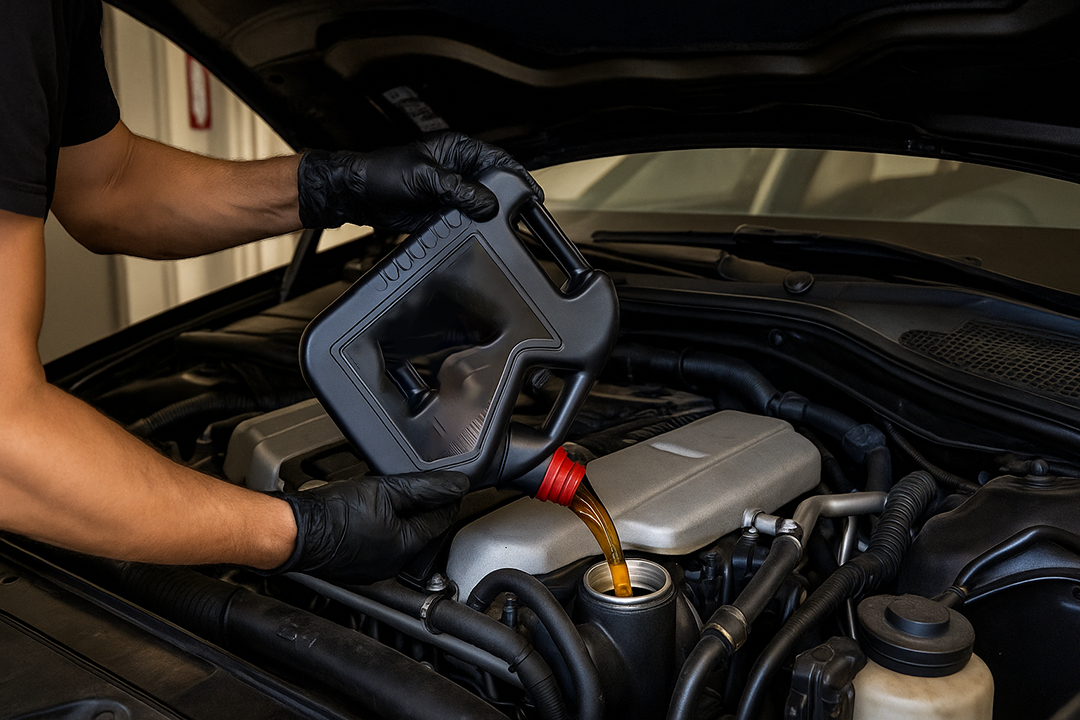
An oil pan gasket replacement cost averages $933 to $1,037 nationally, according to Kelley Blue Book, but that figure is not a quote for your car. On a European all-wheel-drive, access can add substantial labor. The gasket itself is usually the cheap part, and the work needed to reach it drives the bill.
Why does a leak show up on the first freeze?
Cold weather can reveal an existing leak as an aging rubber or silicone seal hardens and contracts. Golden’s first freezing nights may make a slow seep more noticeable, but a new puddle does not establish which seal failed.
Check the oil level before starting the engine. Pan gaskets degrade over time rather than wearing at a predictable mileage, so routine oil changes are often when a leak first becomes visible.
How do you tell a pan leak from a valve cover or filter housing leak?
Oil runs downhill. A valve cover or filter housing leak can leave oil along the pan seam, so a wet pan alone is not enough evidence to replace its gasket. Diagnosis should follow this sequence:
- Check the drain plug and washer. A loose plug or damaged sealing surface can resemble a gasket leak.
- Clean the affected area so fresh oil can be traced.
- If the source remains unclear, add compatible UV dye to the oil and operate the vehicle as directed by the technician.
- Inspect under UV light to locate the source, rather than just the lowest drip.
Oil near the transmission may point to the rear main seal, but location alone cannot confirm it. That seal is separate from the pan gasket and requires a different repair.
Our guide on diagnosing oil leaks without tearing down the engine walks through that sequence in more detail, and our BMW oil pan gasket DIY-or-pro piece covers when a home repair makes sense.
Can you keep driving, and what should you do this week?
A small seep with a stable oil level is different from an active leak. Have a technician assess whether driving is appropriate; topping off the oil does not make every leak safe. Plastic undertrays can catch oil, so an empty driveway does not prove the engine is retaining it.
If the oil is below the minimum mark, correct the level with the specified oil before operating the engine. Stop the engine if the oil-pressure warning appears. A burning oil smell or smoke warrants stopping safely and calling a shop for guidance.
Low oil can damage engine bearings and timing chain tensioners. Stop-leak additives do not repair a cracked pan or restore a failed gasket, and they are not a substitute for confirming the leak source.
What does an oil pan gasket replacement cost right now?
Kelley Blue Book’s national average has no drivetrain breakdown. The September 2026 RepairPal figures below provide context, but none establishes the price for your particular BMW, Audi, Mercedes-Benz or Porsche.
| Source | Figure | What it describes |
|---|---|---|
| Kelley Blue Book national average | $933 to $1,037 | National figure without a platform or drivetrain breakdown |
| RepairPal Honda Accord estimate, updated September 3, 2026 | $488 to $685 total; labor $417 to $611; parts $71 to $74 | A vehicle-specific estimate, not a European AWD benchmark |
| Aggregator citing RepairPal data dated September 3, 2026 | $583 to $798 total; labor $455 to $668; parts $128 to $130 | General replacement estimate |
| AutoZone’s Fel-Pro gasket listings for common applications | $13.99 to $73.99 | Gasket only, excluding labor and other materials |
These figures are reference points, not a minimum or maximum. A readily accessible pan can cost much less to reseal than one obstructed by an AWD driveline. Compare quotes for the same vehicle and repair scope, including required hardware.
Why does dropping the subframe drive up the labor?
On some longitudinal AWD layouts, the front subframe obstructs pan removal. The engine may need support while that structure is lowered. Depending on the model, other parts may also need to move, and not every European car needs this.
What has to come off first
Ask which components must move and whether the quoted hours include that access work. A single labor line is not inherently wrong, but the shop should be able to explain the factory procedure behind it. Engine orientation and drivetrain layout matter more than a generic estimate.
Why seized subframe bolts need care
Colorado highway crews rely on liquid magnesium chloride and traction grit along US-6 and C-470, and both accelerate undercarriage corrosion. Seized subframe hardware can complicate removal, particularly after years of Colorado winters.
Forcing a corroded bolt can break it in the mounting threads. The technician should assess its condition before removal and explain any additional work that becomes necessary.
For more on the components involved, see our drivetrain services in Golden, CO.
Which bolts and gaskets have to be replaced?
The factory repair information determines which fasteners are reusable. Many European applications specify single-use pan or subframe bolts, including torque-to-yield fasteners that stretch during tightening. Replace those bolts as specified rather than choosing by appearance.
The engine design also determines the seal. Some pans use a formed gasket; others require manufacturer-specified liquid sealant. The application instructions matter, especially sealant placement and any required waiting period before adding oil. Both mating surfaces must be cleaned before assembly.
Inspect the pan while it is removed. Cast aluminum pans can crack around bolt bosses, particularly if over-tightened. Replacing the gasket will not seal a crack in the casting.
What should an oil pan repair quote show before you approve it?
The estimate should explain why the pan needs resealing and what access work the vehicle requires. Ask for these details before authorizing removal:
- How the leak source was confirmed and which other sources were ruled out.
- Whether the drain plug and sealing washer are sound.
- Labor that accounts for any required subframe or component removal.
- Replacement hardware required by the factory procedure.
- The specified gasket or sealant.
- Inspection of the pan for cracks or damage.
- Correct oil refill and a leak check after assembly.
If the pan is sound, replacement of the entire pan needs a separate explanation. The invoice can still legitimately include fresh oil and the bolts the procedure calls for, because the gasket is not always the only part needed.
For a leak on your European vehicle, call EuroX Performance in Golden at (303) 562-1800 or request an assessment through the contact page. Our ASE-certified technicians use dealer-level diagnostic tools and OEM parts.
Frequently asked questions
How much does an oil pan gasket replacement cost on a BMW, Audi or Mercedes in 2026?
There is no reliable single price across those makes. Kelley Blue Book lists a national average of $933 to $1,037 without a drivetrain breakdown, so it is not a model-specific 2026 estimate. Your quote should reflect your engine and the access work it needs.
Why does my quote come in well above what an online estimator says?
A general estimate may not reflect your vehicle’s repair procedure. Some longitudinal AWD layouts require subframe lowering or other substantial access work before the pan can be removed. Ask which operations account for the labor difference.
Do the subframe bolts have to be replaced when the subframe is dropped?
Replace any bolts the manufacturer identifies as single-use or torque-to-yield. Other fasteners need inspection for corrosion or damage. Not every subframe bolt has the same replacement requirement.
How can I tell if it’s the oil pan gasket or the valve cover gasket leaking?
The engine needs to be cleaned and checked for fresh oil at its source. If a visual check doesn’t settle it, a UV dye test can trace the leak. Oil collecting under the pan may have traveled from the valve cover.
Can a cracked oil pan or a stripped drain plug look like a gasket leak?
Yes. Check the drain plug and its sealing surface before approving pan removal. A cracked cast aluminum pan can also leak, and a new gasket will not repair that crack.
Can I keep driving with a leaking oil pan gasket?
That depends on how fast it leaks and where the oil is going. A small seep may allow limited driving after a technician’s assessment, but an active leak needs prompt attention. Stop the engine for an oil-pressure warning, and call a shop if you notice smoke or a burning oil smell.