Table of Contents
- When Your Engine Needs More Than a Quick Fix
- Why European Engines Demand Specialized Knowledge
- Our Approach to Complete Engine Diagnostics
- The Precision Rebuild Process We've Perfected
- ECU Remapping and Performance Integration
- Transmission Rebuilds: Completing the Power Package
- OEM Parts and Manufacturer Specifications Matter
- Warranty and Long-Term Support You Can Count On
- Real Results from Our European Vehicle Clients
- Getting Started with Your Engine Rebuild
When Your Engine Needs More Than a Quick Fix
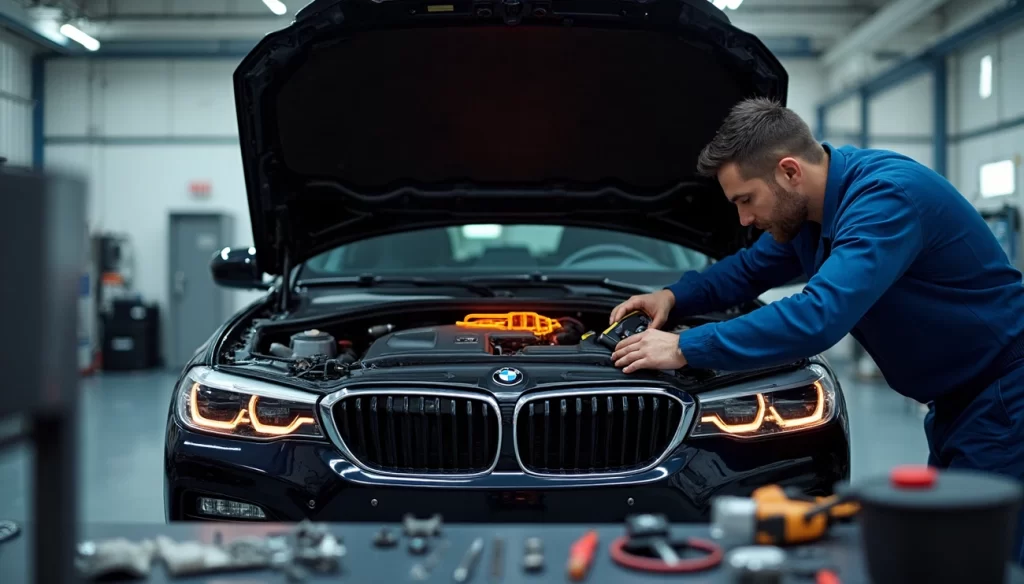
Your European performance vehicle isn’t like other cars on the road. When the engine starts showing signs of serious trouble, a standard shop’s generic approach won’t cut it. You might notice metal shavings in the oil, loss of power, rough idle, or warning lights that persist despite routine maintenance. These symptoms signal internal engine damage that demands precision diagnostics and expert hands.
We’ve seen owners attempt quick fixes at chain shops only to return weeks later with bigger problems. A temporary seal, a software reset, or a basic gasket replacement might mask the issue temporarily, but without addressing root causes, you’re headed toward catastrophic failure. European engines, especially high-performance variants, operate with tighter tolerances and higher combustion pressures than standard vehicles. A half-measure approach risks leaving you stranded and facing even costlier repairs.
The difference between a quick band-aid fix and a proper engine rebuild services lies in comprehensive diagnosis and commitment to restoration standards. When your engine needs serious work, precision matters. This is where specialized knowledge and veteran-level attention separate lasting solutions from temporary workarounds.
Why European Engines Demand Specialized Knowledge
European manufacturers engineer their engines to exacting standards that differ fundamentally from American or Asian counterparts. BMW’s high-revving inline-six engines, Porsche’s flat-six designs, and Audi’s turbocharged four-cylinders each have distinct mechanical characteristics, material compositions, and performance parameters. These aren’t generic powerplants; they’re precision instruments that require technicians who understand their specific architecture and engineering philosophy.
We’ve spent years building expertise in European engine design because standard ASE certification and general repair training simply don’t cover the depth required. A BMW M50 engine uses different bearing specs, oil circulation paths, and valve train dynamics than a comparable American V8. Porsche air-cooled engines demand knowledge of cooling systems and thermal management that’s completely foreign to technicians trained only on conventional engines. Missing these details during a rebuild guarantees performance issues and premature failure.
Our technicians study manufacturer technical bulletins, attend specialized training, and work exclusively with European vehicles. We understand which components are prone to failure on specific models, what torque specs matter for each fastener, and how minute variations in assembly technique affect long-term reliability. This specialized knowledge isn’t learned at generic trade schools; it comes from focused experience and continuous study.
Our Approach to Complete Engine Diagnostics
Before we recommend any rebuild work, we perform comprehensive diagnostics that go far beyond reading fault codes. Our facility uses dealer-level diagnostic technology alongside mechanical inspection to identify the root cause of engine problems. This multi-layered approach prevents unnecessary work and ensures we address actual failures rather than symptoms.
Our diagnostic process includes:
- Computer scan and freeze frame data analysis to identify fault origins
- Compression testing to assess cylinder health and ring seal integrity
- Borescope inspection to visualize internal engine conditions without disassembly
- Oil analysis to detect metal particles, coolant contamination, and wear patterns
- Thermal imaging to pinpoint heat distribution anomalies
- Mechanical inspection of external components for leaks, damage, and wear
This thorough evaluation takes time, but it prevents rebuilding components that don’t actually need replacement. We’ve had customers arrive expecting complete engine rebuilds only to discover through proper diagnostics that targeted repairs could restore function at a fraction of the cost. Conversely, we’ve identified major problems that initial inspections at other shops completely missed.
Your diagnostic report includes detailed findings, photographs, and clear recommendations with cost estimates for each option. You’ll understand exactly what’s failing, why it matters, and what we propose to fix it.
The Precision Rebuild Process We’ve Perfected
Once diagnostics confirm rebuild necessity, our process follows manufacturer specifications without compromise. We don’t rush this work, and we don’t cut corners on quality.
Our rebuild protocol involves:
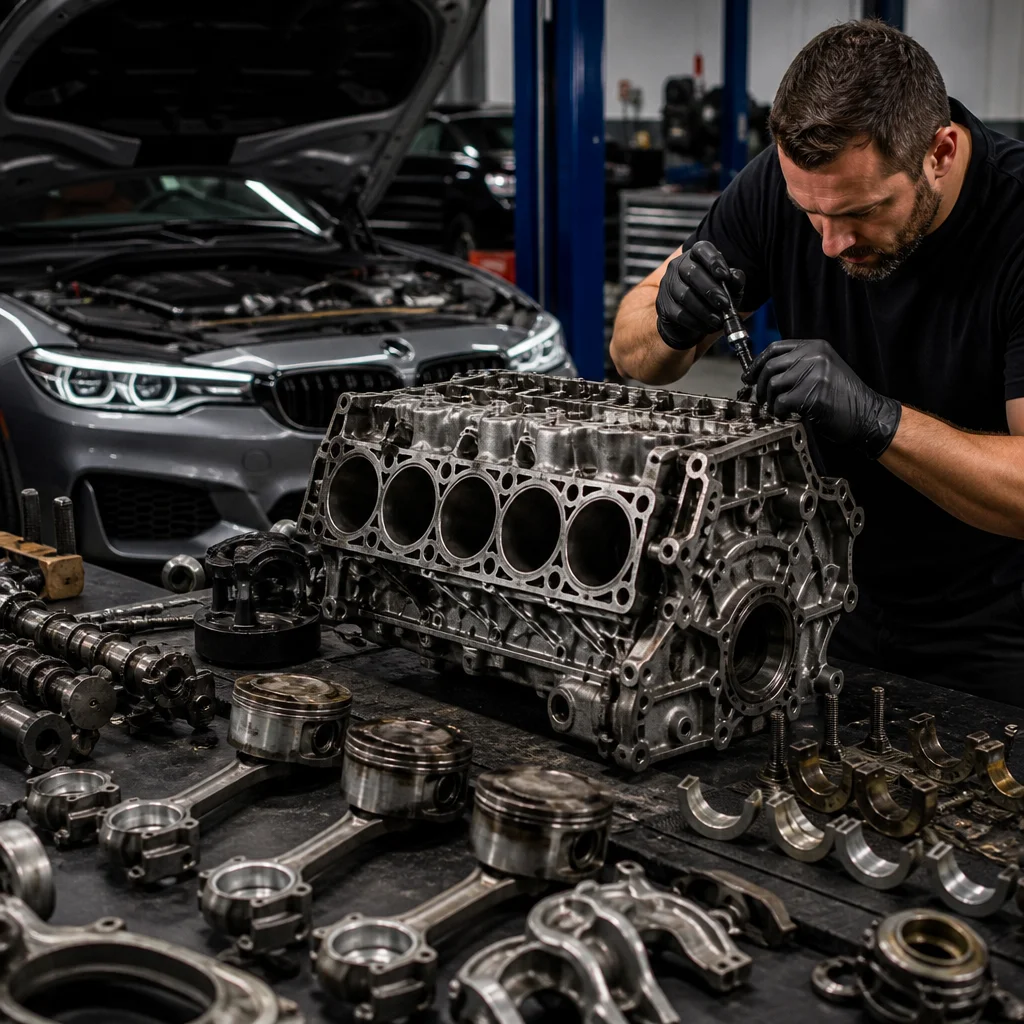
- Complete engine removal and initial disassembly with detailed component documentation
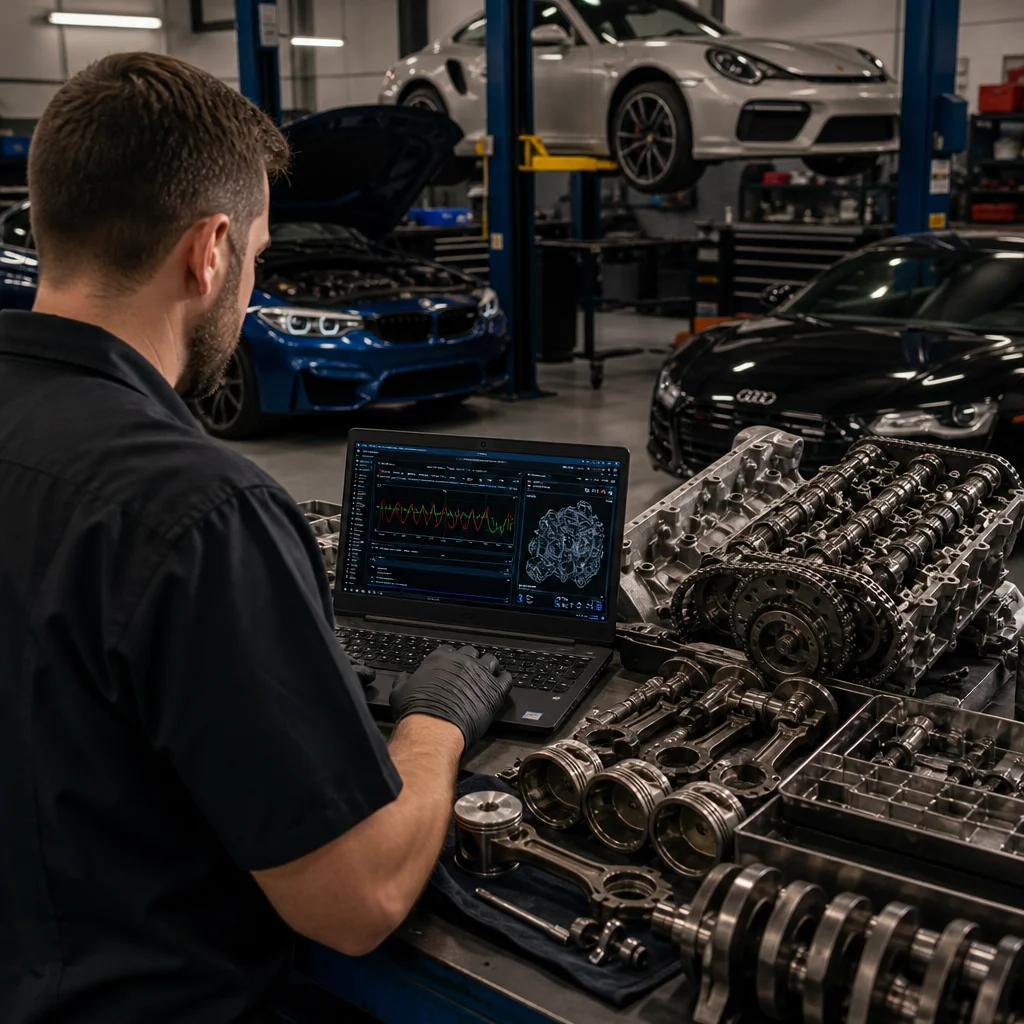
- Ultrasonic cleaning of all parts to remove contaminants and verify surface condition
- Bore honing to precise specifications for optimal ring sealing
- Crankshaft and camshaft inspection with dimensional verification
- Block and head pressure testing to confirm integrity
- Selective component replacement based on wear analysis, not blanket new parts
- Reassembly using torque specifications, alignment marks, and OEM assembly procedures
- Valve adjustment and clearance verification to exact tolerances
- Initial run-in testing before final installation in your vehicle
We source quality remanufactured components where appropriate and OEM parts where original equipment ensures proper function. This balanced approach delivers reliability without unnecessary expense. Every rebuilt engine receives bench testing before installation to catch any assembly issues while the engine is still accessible.
ECU Remapping and Performance Integration
A rebuilt engine performs best when its electronic control system matches the mechanical improvements. We offer ECU remapping services that optimize fuel injection, ignition timing, and boost pressure (on turbocharged engines) to complement your rebuild and unlock performance potential.
European vehicles with modern engine management systems benefit significantly from this integration. A stock ECU map was calibrated for a fresh engine operating at factory power levels. Your rebuilt engine, with restored compression and optimized internal geometry, can safely handle enhanced programming. Performance gains typically include increased horsepower and torque, faster throttle response, and improved fuel efficiency under normal driving conditions.
Our remapping uses professional tuning software and dyno testing to verify results safely. We don’t employ aggressive off-the-shelf tunes that sacrifice longevity for maximum numbers. Instead, we develop conservative maps that respect your rebuilt engine’s health while delivering noticeable performance improvements.
Transmission Rebuilds: Completing the Power Package
A precision engine rebuild pairs perfectly with transmission work when needed. Your European vehicle’s transmission handles power transfer from your rebuilt engine, and if it’s worn or damaged, it can’t effectively deliver the performance you’ve just invested in restoring.
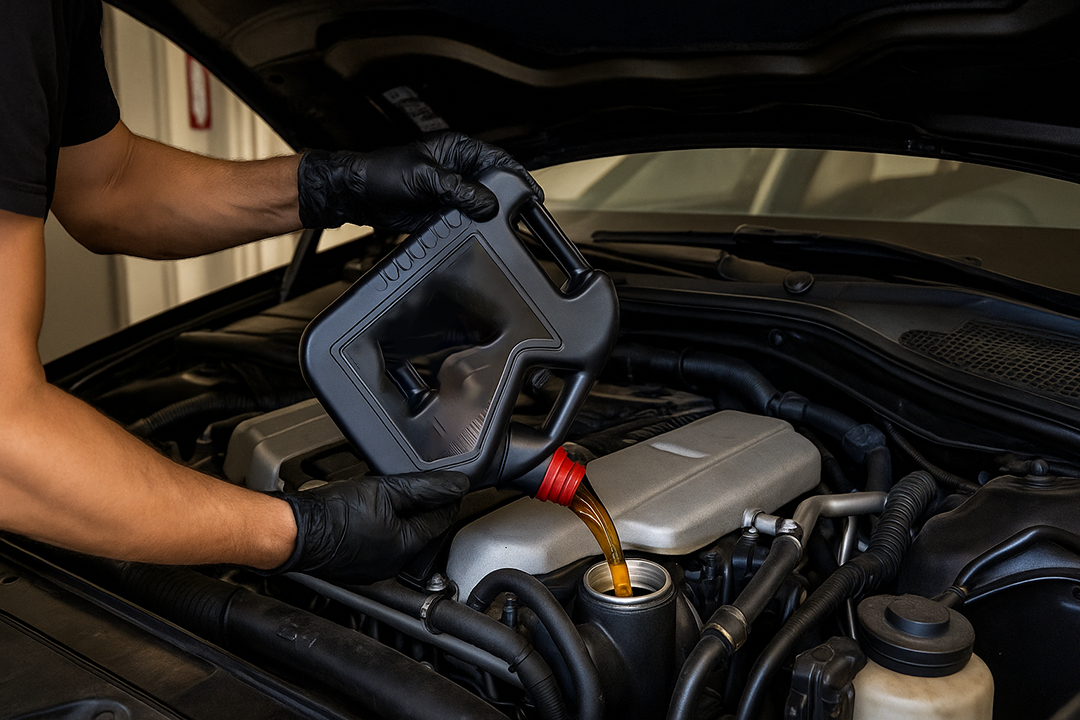
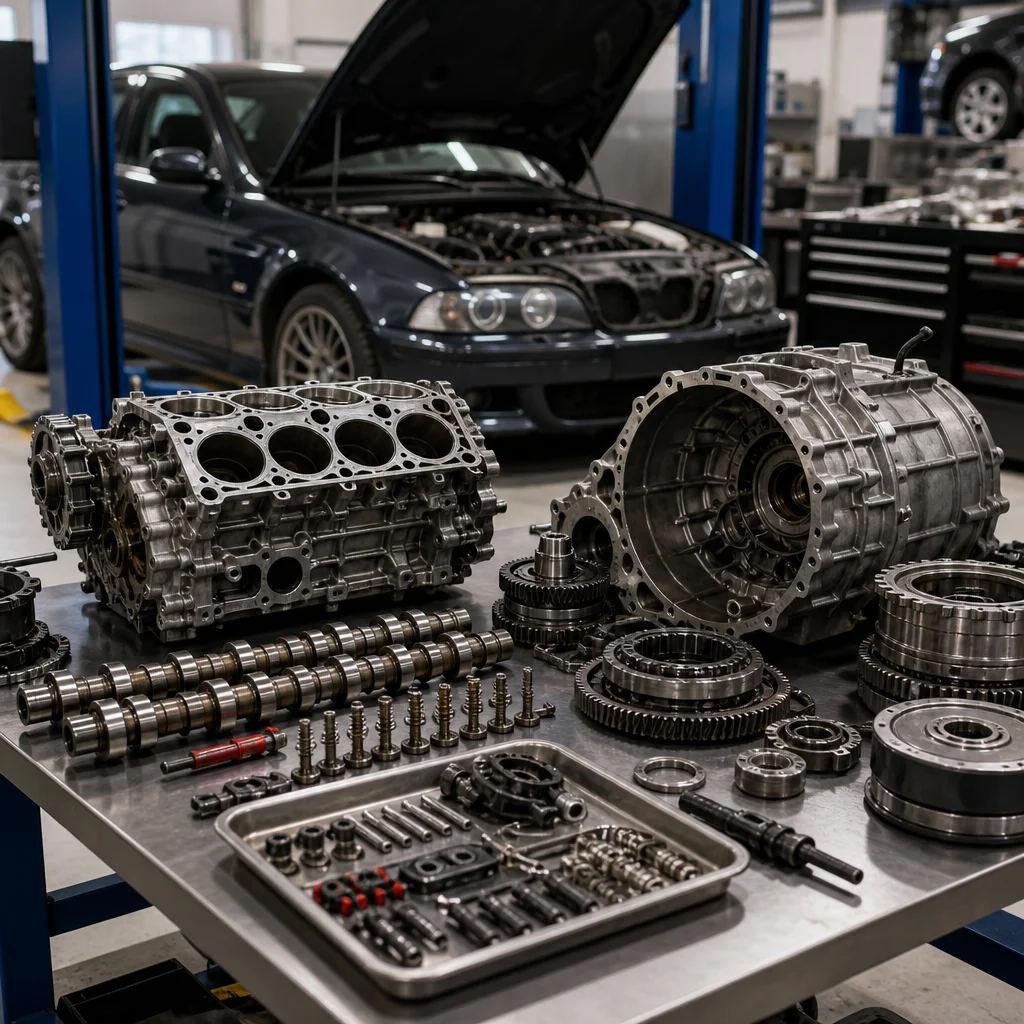
We offer comprehensive drive train diagnostics and transmission rebuild services using OEM specifications. Automatics, manuals, and dual-clutch systems each require specialized expertise and manufacturer-specific procedures. We rebuild transmissions to original specifications using quality OEM components, proper filter selection, and fluid that meets exact manufacturer requirements.
Many European vehicles benefit from coordinated engine and transmission work. A manual transmission rebuild can include clutch system restoration, while an automatic rebuild addresses valve body issues, seal degradation, and solenoid problems. Completing both systems simultaneously ensures your vehicle operates as an integrated, high-performance machine rather than a patchwork of partial repairs.
OEM Parts and Manufacturer Specifications Matter
We never compromise on specification compliance or parts quality. Your European vehicle was engineered with specific component characteristics, and deviations cause reliability issues regardless of price savings.
This commitment includes:
- OEM gaskets and seals matched to exact applications (not universal equivalents)
- Correct fastener grades and specifications (not just “close enough” substitutes)
- Manufacturer-approved lubricants and coolants (fluid compatibility matters)
- Precise torque sequences and specifications (not approximations)
- Correct component assembly order (specific to each engine design)
We maintain relationships with OEM suppliers and authorized distributors to ensure access to genuine parts and the technical support that accompanies them. Some components are worth sourcing as remanufactured OEM units rather than new aftermarket alternatives, and we make those decisions based on reliability data and engineering knowledge rather than cost alone.
Your rebuilt engine documentation includes a complete parts list showing exactly what was replaced, what was reused, and what components were sourced from OEM suppliers versus quality remanufactured options.
Warranty and Long-Term Support You Can Count On
We stand behind our work with comprehensive warranty coverage that reflects our confidence in our rebuilds. Our warranty terms address both parts and labor, covering manufacturing defects and workmanship issues.
Beyond the warranty period, we remain available for follow-up support. Regular service maintains your rebuilt engine’s health, and we’re here to troubleshoot any concerns that arise. We maintain detailed service records for your vehicle, so any future technician has complete rebuild documentation and the full history of components used.
This long-term commitment means you have a trusted resource for your vehicle’s ongoing care, not just a one-time repair transaction.
Real Results from Our European Vehicle Clients
Our rebuild work has restored performance to BMWs with failed turbocharger seals, rebuilt Porsche engines showing bearing wear, and addressed serious Audi engine problems that other shops couldn’t properly diagnose. Owners consistently report that their vehicles handle like new once rebuild and tuning work is complete.
One client with a 2015 BMW M235i arrived with a rough-running engine and P0011 fault codes indicating camshaft timing issues. Initial diagnosis at a chain shop suggested replacing the camshaft variable valve timing solenoid. Our diagnostics revealed internal bearing wear and scoring on the camshaft itself. We completed a full rebuild with precision bore work and valve train restoration, integrated ECU optimization, and the owner reported performance surpassing the car’s original condition. That vehicle now has 15,000 miles on the rebuild with zero issues.
These results happen because we properly diagnose problems, use correct parts and specifications, and integrate all systems for optimal performance.
Getting Started with Your Engine Rebuild
If your European vehicle is showing engine trouble, the first step is scheduling a comprehensive diagnostic evaluation. Bring your vehicle to our Golden, CO facility and we’ll perform the multi-system analysis that identifies exactly what you’re facing. We’ll provide a clear, honest assessment with options and costs.
You’re not obligated to proceed with rebuilds after diagnostics; many owners find that understanding the actual problem helps them make informed decisions about repairs versus replacement. Whatever you decide, you’ll have the technical information needed to move forward confidently.
Contact us to schedule your diagnostic appointment and take the first step toward restoring your European vehicle’s performance and reliability.