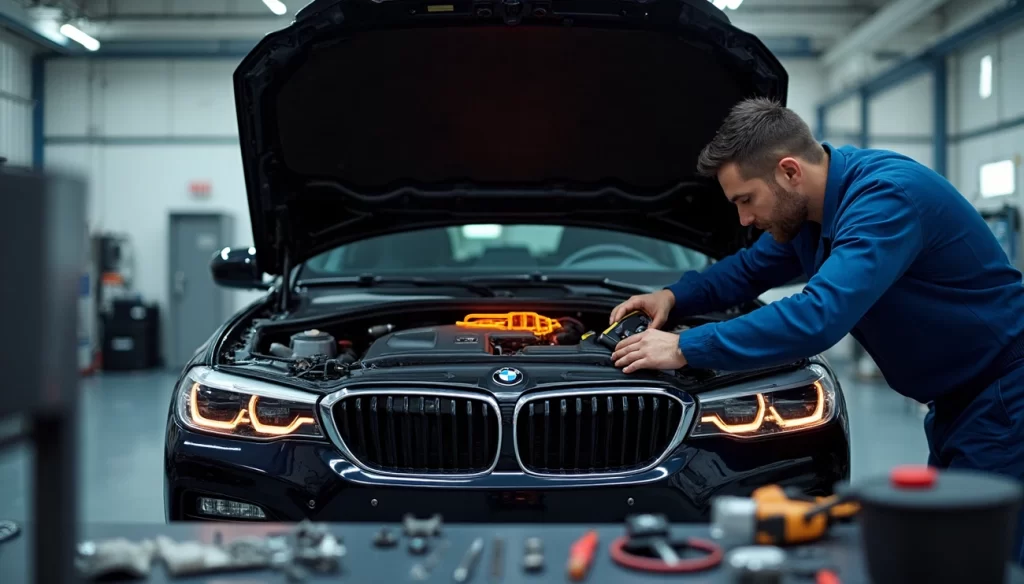
Repairing a secondary air injection fault starts with testing the system, not replacing a noisy pump. A whine that stops about a minute after a cold start is usually normal. A pump that keeps running, fails to run when commanded, or triggers a fault code needs diagnosis before parts are replaced.
On a freezing November morning in Wheat Ridge, the first start may be the only time you hear the pump. Note any change from its usual sound or running time. That pattern helps a technician distinguish normal cold-start operation from a fault.
What the Secondary Air Pump Does on a Cold Start
The secondary air pump sends fresh air into the exhaust to help the catalytic converter reach operating temperature sooner. The added oxygen helps oxidize unburned fuel and carbon monoxide during warm-up, reducing cold-start emissions.
The pump typically runs for roughly 30–90 seconds, depending on the vehicle and operating conditions. The engine computer commands it on when coolant temperature meets manufacturer-specified conditions. You may hear it on a cold morning but not when restarting your Audi, BMW, Mercedes-Benz, or Porsche after a drive.
Is the Whine Normal or a Sign of a Failing Pump?
A steady whine that stops after about a minute can be normal. Changes from the vehicle’s usual pattern deserve attention, particularly when accompanied by a check engine light:
- The pump runs substantially longer than it normally does.
- It runs on warm restarts when the manufacturer’s operating conditions do not call for it.
- It remains silent when a diagnostic tool commands it on.
- The engine computer stores a secondary air injection fault.
Common codes fall within the P0410–P0418 range, with P2440-series codes on some platforms. A code identifies a detected condition, not necessarily a failed pump. Its diagnostic procedure must match the vehicle.
If the check engine light flashes or the engine misfires badly, stop driving and call a professional. Raw fuel or exhaust odor inside the cabin also warrants stopping safely. Those symptoms should not be dismissed as a secondary air pump problem.
Why Freezing Mornings Wear the Pump Out
Moisture can damage a pump long before the motor stops. Exhaust contains water vapor that condenses as it cools. If a faulty valve allows that moisture back into the pump, water can collect around the bearings and corrode the motor.
Freezing conditions add stress to a water-contaminated system. For an owner in Golden or Evergreen, a pump that struggles on the first cold start needs inspection for moisture intrusion, not just a replacement motor. A changing whine alone does not prove water damage; the valve and air passages need checking.
Why the Fault Disappears at the Shop
The drive to the shop can warm the engine enough to prevent another normal pump operating cycle. A technician may need the engine to cool before reproducing the fault under the correct conditions.
Bring a recording of the sound if you can capture it safely, along with a short log:
- The outside temperature when you started the engine
- How long the noise lasted and whether it stopped on its own
- Whether it happened only on the first start or on warm restarts too
- Whether the check engine light stayed on or flashed
- Any raw fuel or exhaust odor
What the Combination Valve Does and Why It Goes With the Pump
The combination, or combi, valve controls air delivery into the exhaust and prevents exhaust from flowing back toward the pump. Its one-way sealing function protects the pump from exhaust heat and moisture.
A valve that no longer seals can ruin a replacement pump. When a pump has failed from exhaust backflow or water contamination, replacing the damaged pump without addressing the valve leaves the cause in place. Inspect the hoses as well, especially damaged sections or low points where water collects.
Valve replacement should be addressed with the pump repair, following the vehicle’s service procedure. The estimate should explain how the repair will prevent moisture from reaching the new pump.
Check the Relay and Wiring Before Condemning the Motor
A silent pump does not prove the motor has failed. Electrical testing should establish whether the pump receives the power and ground it needs:
- Command the pump on with a suitable diagnostic tool and check whether the control circuit responds. A relay click alone does not prove its contacts can carry current.
- Inspect the fuse. If it has blown, determine why rather than repeatedly replacing it.
- Test power and ground at the pump under load. Missing voltage requires tracing the supply circuit; excessive resistance can also prevent operation.
- Check whether the relay switches off correctly. Welded contacts can keep the pump running until it overheats.
- Evaluate the motor after confirming that its electrical supply meets manufacturer specifications.
A pump running continuously needs prompt attention because the electrical fault can destroy an otherwise serviceable motor. Installing another pump without correcting that fault risks the same damage.
Why Deleting the System or Drilling the Pump Does Not Fix It
A block-off plate or an ECU flash that disables the system is not a repair. The Clean Air Act, section 203(a)(3)(A), 42 U.S.C. §7522, prohibits removing vehicle emissions-control equipment.
Drilling a drain hole in the pump housing does not restore a failed valve or correct an electrical fault. It alters the housing while leaving the source of contamination unresolved. Repair the cause of the failure rather than modifying the pump to manage its symptoms.
How Readiness Monitors Decide the Colorado Emissions Test
For vehicles subject to OBD-based emissions inspection, the check engine light is only part of the picture. The computer also reports readiness monitors, which show whether emissions-system self-tests have completed. An illuminated emissions warning light or incomplete monitors can prevent a passing result, subject to the applicable inspection rules.
Clearing codes or disconnecting the battery can reset readiness monitors. The secondary air monitor needs the correct cold-start conditions to run, so completion may take several cold mornings. Clearing the light immediately before testing does not establish that the repair worked.
Before arranging a Colorado emissions inspection, check the state’s current requirements for your vehicle and registration address. Have the readiness status checked after repair rather than assuming that a light staying off means every monitor has completed.
What a Proper SAI Repair Includes and What to Ask For
Ask what evidence identifies the failed component before approving replacement. A diagnosis should connect the stored fault to test results, including:
- Whether the pump operates when commanded
- Whether the fuse and relay function correctly
- Power and ground measurements at the pump
- Whether the combi valve seals against exhaust backflow
- Whether hoses are damaged or contain water
The written estimate should name the failed parts and explain any related valve or hose work. Access varies between European models, so labor depends on the installation as well as the component being replaced. After repair, confirm the pump runs and the readiness monitors complete.
EuroX Performance in Golden, Colorado, uses dealer-level diagnostic tools and OEM parts, with work performed by ASE-certified technicians. For a cold-start whine accompanied by a warning light, review our check engine light diagnostics, then call (303) 562-1800 or request a diagnosis. Include when the noise occurs so we can discuss the cold-start conditions needed to assess it.
Frequently asked questions
What does the secondary air injection check valve do?
The check valve prevents exhaust from flowing backward into the secondary air pump. If it fails open, hot exhaust and moisture can reach the pump. Its sealing function should be checked when investigating a contaminated or failed pump.
Does a P2445 code always mean a dead pump?
The code’s definition and diagnostic procedure differ by manufacturer, so read the service information for your exact vehicle. The code alone does not establish whether the pump motor or its electrical supply has failed.
Can I drive with a secondary air injection code?
An isolated secondary air fault with a steady check engine light is usually not an immediate breakdown emergency, but it needs diagnosis. Stop driving if the light flashes, the engine misfires badly, or raw fuel or exhaust odor enters the cabin. A pump that keeps running also needs prompt attention to prevent overheating.
Will a secondary air injection code fail emissions?
A secondary air fault that turns on the check engine light can prevent a passing OBD-based emissions inspection. Incomplete readiness monitors can also prevent a pass under applicable program rules. Check Colorado’s current requirements and verify readiness after the repair.
How much does a secondary air pump repair cost?
The cost depends on the failed component and the labor required to reach it. A damaged valve or water-contaminated hoses can add work beyond pump replacement. Ask for a written estimate tied to diagnostic findings before approving parts.