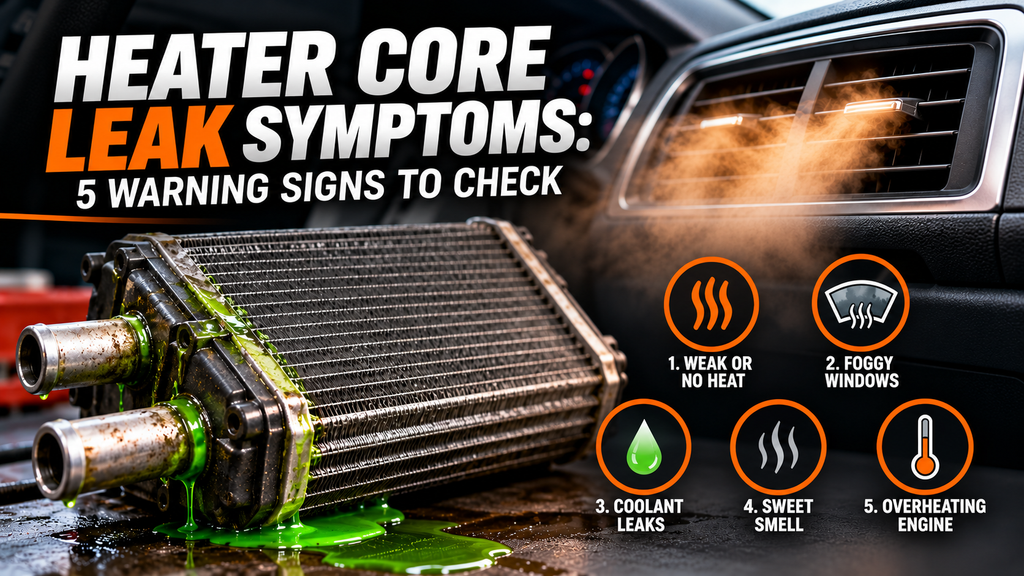
Classic heater core leak symptoms include an oily chemical film on the inside of the windshield, a sweet syrupy smell from the air vents, damp passenger carpeting, and an unexplained drop in your coolant expansion tank. When a pinhole develops in the heater core matrix, pressurized hot coolant escapes directly into the climate control housing as vaporized ethylene glycol. As that mist blows against cold windshield glass, it forms a greasy residue that smears instead of clearing.
Your vehicle’s heater core functions as a compact radiator mounted inside the dashboard HVAC box, circulating hot coolant from the engine to warm the cabin. Operating at an elevation of 5,675 feet in Golden, Colorado, lower atmospheric pressure lowers fluid boiling points and increases pressure stress across plastic end tanks and metal seams. A sudden autumn freeze in Jefferson County turns a hairline fracture into thick interior fog before you even leave your driveway.
Why Your Windshield Foams with Greasy Fog on Cold Mornings
When pressurized hot coolant escapes through a damaged heater core, it does not simply pool at the firewall. The high temperature of the fluid flashes into an airborne mist within the sealed climate housing. Activating the defroster forces this atomized vapor directly against the cold glass.
How Pressurized Antifreeze Turns into Cabin Vapor
Modern European engines operate at high cooling system pressures, frequently between 1.2 and 2.0 bar (roughly 17 to 29 psi). When a seam splits or a pinhole punctures the core matrix, engine heat immediately vaporizes the escaping antifreeze. The defroster blower pulls air across this damaged core and forces that superheated vapor straight onto the windshield, where it condenses into a stubborn chemical film. Understanding your broader coolant leak repair cost starts with confirming whether fluid is leaking internally into the climate box or externally in the engine bay.
Why Standard Glass Cleaner Smears Glycol Residue
Unlike water vapor, which evaporates as cabin temperatures climb, ethylene glycol is oily and viscous. Exterior wiper blades cannot touch it because the residue coats the interior glass. Wiping the inside with a dry microfiber cloth or generic glass cleaner smears the glycol across the pane, scattering headlights and streetlamps into a blinding glare.
The Sweet Maple Syrup Smell and Damp Passenger Carpets
A failed heater core leaves unmistakable sensory clues inside the cabin. Because the heating assembly connects directly to the engine’s closed cooling loop, interior symptoms develop quickly:
- A distinct maple syrup scent: Ethylene glycol produces a sweet, syrupy smell as it vaporizes under high temperatures, venting directly through the defrost and dash registers.
- Saturated front passenger flooring: Escaping fluid drains to the base of the plastic climate casing and seeps past the housing seals, soaking the foam backing and carpet beneath the glove box.
- Crusty colored mineral residue: Dried coolant leaves behind a chalky crust around floor vents and firewall kick panels.
- Persistent drop in coolant volume: Unexplained fluid loss in the engine expansion tank without exterior puddles on the ground indicates coolant is collecting inside the cabin.
Inhaling Atomized Coolant in an Enclosed Cabin
That sweet vent smell is a clear warning sign. Antifreeze vapor contains atomized ethylene glycol, a toxic chemical compound that acts as a respiratory irritant inside a closed passenger compartment. Running the heater under these conditions circulates toxic mist, causing throat irritation and headaches while leaving a sticky residue over interior trim.
Coolant Pooling Under the Front Passenger Footwell
In most European architectures, the climate housing sits right above the passenger-side floor pan. Coolant pools inside the plastic casing until it overflows past the sponge gaskets, dripping behind the glove compartment. If ignored, the fluid saturates the thick floor underlayment. In modern Audi and BMW platforms, this floor pan also houses sensitive body control modules, which can short out when submerged in conductive fluid. You can check our answers to frequently asked questions to learn more about how physical leaks impact onboard electrical systems.
Sloshing Sounds Behind the Instrument Cluster
A heater core leak breaks the cooling system’s hydraulic seal. As the engine cools overnight, air gets pulled into the high points of the cooling circuit. On a cold start, accelerating draws these trapped air pockets through the core passages, creating an audible gurgling or sloshing sound behind your instrument cluster.
How to Tell a Heater Core Leak from Blend Door and Evaporator Faults
Not every climate control issue indicates a failed heater core. Uneven vent temperatures, musty air, or weak airflow often stem from independent sub-assembly faults. Pinpointing the exact cause avoids tearing into the dashboard needlessly.
| Symptom | Failed Heater Core | Stuck Blend Door Actuator | Clogged Evaporator Drain |
|---|---|---|---|
| Windshield Film | Oily, greasy chemical haze | None; normal humidity only | Clear condensation that dries |
| Cabin Odor | Sweet, maple syrup scent | Neutral cabin air | Musty, sour mildew |
| Coolant Level | Drops steadily over time | Remains stable and full | Remains stable and full |
| Passenger Carpet | Soaked with colored, slippery fluid | Completely dry | Damp from clear standing water |
Coolant Leak vs Stuck Blend Door Actuator
If your climate system blows lukewarm air despite the engine reaching operating temperature, check the blend door actuator first. European multi-zone climate systems use electric servo motors with small plastic drive gears to adjust the mixing flaps. A stripped gear leaves the flap stuck in the cold position. However, a failing actuator motor produces faint clicking behind the dash and never causes coolant loss or greasy glass.
Blocked Evaporator Drain Mildew vs Glycol Vapor
Your air conditioning evaporator naturally pulls moisture out of the cabin air, draining liquid water through the floor pan. When road debris clogs the rubber drain tube at the firewall, that water backs up into the bottom of the HVAC casing. It smells musty, which is completely different from the sweet scent of boiling antifreeze. Clearing the drain tube resolves standing water, whereas a leaking heater core requires replacement.
Restricted Airflow and Cabin Air Filter Replacement Service
When airflow feels weak across every fan speed, a dirty cabin filter is usually the issue. Over months of mountain driving, filters pack full of pine needles and road dust. Routine cabin filter service restores airflow volume, but a fresh filter cannot stop glycol vapor from coating your windshield if the core itself is cracked. If your vehicle also struggles with warm summer air or slow defrosting, comprehensive auto AC repair in Golden, CO ensures both sides of your HVAC unit operate within manufacturer specifications.
Why Windshield Coolant Glare Is Dangerous on Mountain Commutes
An internal cooling leak creates an acute driving hazard on steep mountain grades. Heading down Lookout Mountain or commuting along the I-70 corridor requires clear forward visibility. Autumn brings sharp freezes to the Foothills, prompting drivers to switch on their defroster right after starting the car.
When vaporized ethylene glycol hits cold glass, it turns an entire windshield opaque in seconds. The defroster fan accelerates the filming process. Running the wipers only clears outside road spray while the chemical film remains bonded to the interior glass. When morning glare or oncoming headlights strike this oily layer, visibility drops to zero. If sweet-smelling vapor fills the cabin or your glass fogs over rapidly, pull over immediately and turn off the climate blower.
Can You Drive with a Leaking Heater Core or Use Stop Leak Additives?
Driving with a leaking heater core risks severe engine failure. Because the heater core is integrated into the engine’s primary cooling circuit, losing fluid behind the dash deprives the engine block of necessary coolant volume.
The Destructive Impact of Chemical Stop-Leak on European Radiators
Pouring chemical stop-leak additives or pellet sealers into an expansion tank damages European engines. These powerplants rely on tight heat exchanger passages, calibrated electronic thermostat valves, and auxiliary electric circulation pumps. Stop-leak products react to air exposure by turning into thick, gummy sludge. Instead of permanently repairing a leaking core, the sealant plugs the radiator tubes, jams electronic thermostat valves, and burns out auxiliary pumps.
Depressurization, Coolant Loss, and Engine Overheating Risks
A heater core rupture destroys the hydraulic integrity of your cooling circuit. As pressurized coolant escapes into the HVAC box, the system loses holding pressure, dropping the boiling point of the remaining fluid. Trapped air pockets migrate into the cylinder head, creating hot spots that can warp aluminum cylinder heads, blow head gaskets, or ruin an engine block. Neglecting a cabin leak quickly turns a climate repair into a major failure that demands a complete engine replacement.
The Reality of European Dashboard Removal and Climate Diagnostics
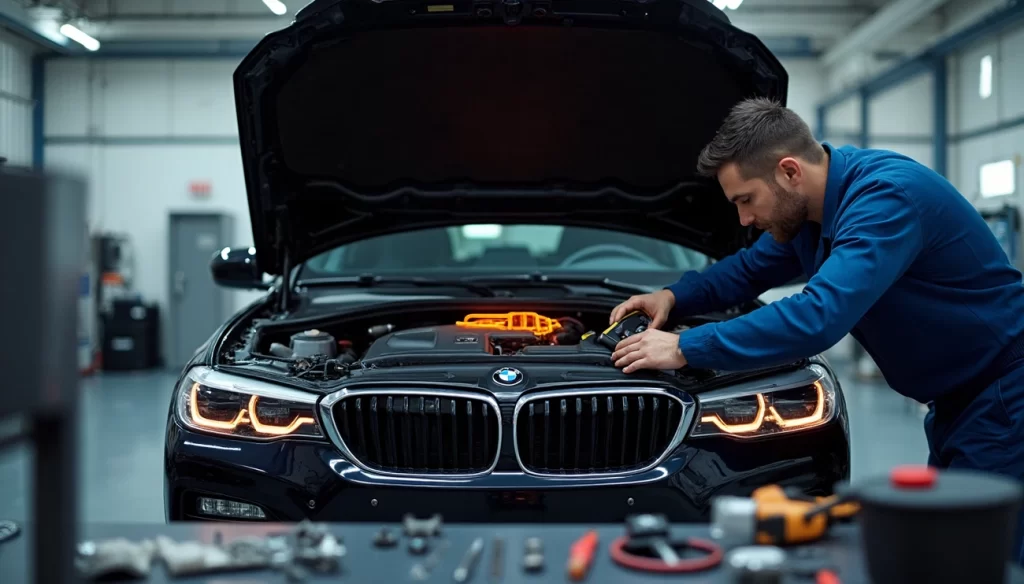
Diagnosing and replacing a leaking heater core in a modern BMW, Audi, Mercedes-Benz, or Porsche requires meticulous teardown. The heater matrix sits encapsulated in the center of the cabin firewall, buried beneath the dashboard structural carrier.
- Static cooling system pressure testing: Technicians connect a pressure tester to the expansion tank with the engine cold, pressurizing the system to factory specifications. If the gauge drops while the engine bay shows zero external drips, checking the HVAC condensation drain confirms an internal heater core breach.
- Refrigerant recovery and system evacuation: Because the heater core and air conditioning evaporator share a single plastic HVAC casing, technicians evacuate the AC refrigerant charge before disconnecting lines at the firewall.
- Structural interior disassembly: Technicians remove the center console, shift linkages, steering column shrouds, instrument cluster, and main structural dashboard carrier. Modern European interiors contain delicate wiring harnesses and electronic bus lines that require careful documentation and disconnection.
- Core replacement and casing decontamination: The HVAC box is unbolted from the firewall, split open, cleaned of residual glycol deposits, and fitted with an OEM replacement heater core and fresh sealing gaskets.
- Harness reassembly and precision torquing: Structural supports, climate duct servos, and wiring looms are reinstalled to factory alignment specifications. Our technicians handle intricate automotive electrical services in Golden, Colorado to ensure every switch, harness clip, and sensor connects securely without interior rattles or loose contacts.
- Vacuum filling and leak verification: The engine cooling system is filled using a vacuum-assist tool to eliminate air locks, followed by a secondary pressure test to ensure total system integrity before road testing.
Static Cooling System Pressure Testing on a Cold Engine
Proper diagnostics eliminate guesswork before interior trim is touched. According to a technical repair guide on heater core leak symptoms published by AutoZone, connecting a cooling system pressure tester directly to the expansion tank reveals whether the circuit maintains its rated operating pressure. If the tester shows a steady pressure drop and the water pump, thermostat housing, and radiator hoses are dry, inspecting the interior condensation drain confirms escaping glycol.
Preventing Future Leaks with Fresh Coolant and Corrosion Inhibitors
Heater core failures frequently stem from degraded coolant. Engine coolant contains chemical corrosion inhibitors that break down over time and heat cycles. When the fluid degrades, it turns acidic and attacks the thin aluminum tubes through corrosion and electrolysis. Flushing your cooling system with manufacturer-specified European fluid every 30,000 to 50,000 miles preserves chemical balance and protects internal metal passages from pinhole leaks.
Frequently Asked Questions
What causes an oily film on the inside of my windshield when I turn on the defroster?
The oily film is vaporized ethylene glycol escaping from a leaking heater core inside your climate control housing. When you turn on the defroster, the blower pushes this hot chemical mist onto the cold glass, where it condenses into a greasy film that smears when wiped.
Can a bad blend door actuator mimic heater core leak symptoms?
A failing blend door actuator causes uneven vent temperatures by leaving internal mixing flaps stuck, but it cannot cause coolant loss. A stripped actuator motor will never produce a sweet syrup smell, greasy glass residue, or damp passenger-side carpeting.
How can you tell if a heater core is leaking versus a clogged cabin air filter?
A clogged cabin air filter restricts total airflow volume and smells like dusty road dirt. A leaking heater core produces distinct chemical symptoms, including a strong maple syrup aroma, oily defroster film, and wet antifreeze pooling beneath the passenger floor mats.
Will chemical stop-leak additives safely seal a leaking heater core?
No. Chemical stop-leak additives and pellets should never be used in modern European cooling systems. These products harden inside narrow radiator passages, clogging electronic thermostat valves and ruining electric auxiliary water pumps.
Can driving with a leaking heater core cause my engine to overheat?
Yes. The heater core is an active part of your engine’s pressurized cooling circuit. Leaking coolant causes continuous fluid loss and depressurization, introducing air pockets into the engine block that trigger rapid overheating and cylinder head damage.
If your defroster coats your windshield in an oily haze or your cabin smells of sweet coolant, avoid driving blind through the Foothills. Book an inspection with EuroX Performance in Golden or call (303) 562-1800 for an accurate climate diagnostic and cooling system pressure test.